tv review
Reviews of politics-centered TV series about White House politicians, cybersecurity, history, controversies and more.
The "Benefits Cliff"
The System Is Not Cash, It Is Replacement For a family of five in Salem, Oregon, the low-income support system is not built primarily on direct cash transfers. It is built on a small number of high-impact programs that function as after-tax purchasing power, replacing major expenses rather than adding to pre-tax income. This distinction matters because it changes how the system must be evaluated. Income is taxed before it becomes usable, while benefits replace costs that would otherwise require after-tax dollars. That means these programs effectively operate as a parallel income structure, but one that is locked into specific categories such as food, housing, childcare, and healthcare rather than flexible cash.
By Peter Thwing - Host of the FST Podcastabout 19 hours ago in The Swamp
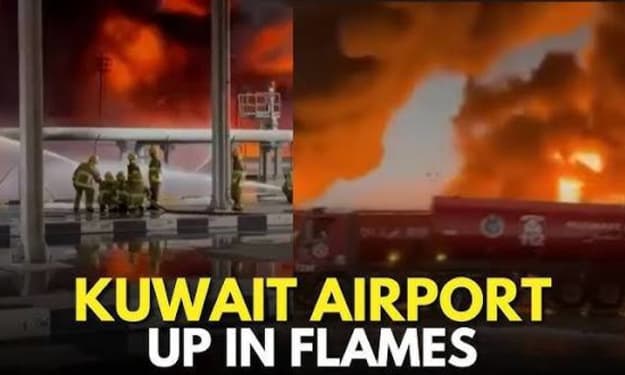
Kuwait Airport Hit by Iranian Drone Strikes
Reports claim that Kuwait International Airport was targeted by Iranian drone strikes, raising serious regional security concerns. Authorities are assessing damage and ensuring passenger safety. The incident highlights escalating tensions in the Middle East, with fears of wider conflict growing as international leaders call for restraint and diplomatic solutions.
By shaoor afridi8 days ago in The Swamp
The Economic Shockwaves of Middle East Conflict
Dubai has long been regarded as a global hub for gold trade and finance, but the ongoing conflict in the Middle East has begun to shake even its strongest economic pillars. With flight operations disrupted and regional instability rising, the ripple effects of war are now being felt across multiple sectors—from energy and aviation to tourism and global finance.
By Ibrahim Shah 13 days ago in The Swamp
Why the United States Temporarily Eased Sanctions on Iranian Oil
In a surprising and strategically calculated move, the United States recently decided to temporarily ease sanctions on Iranian oil exports. This decision comes at a time when global energy markets are under immense pressure due to escalating tensions around the Strait of Hormuz—one of the world’s most critical maritime chokepoints for oil transportation. The move, though limited in scope and duration, reflects the complex balance between geopolitical strategy and economic necessity.
By Ibrahim Shah 16 days ago in The Swamp
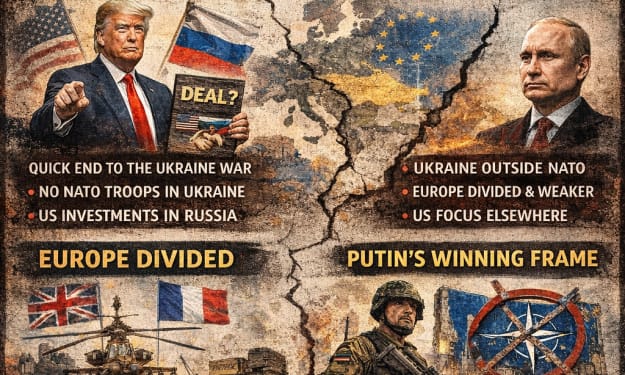
IS Russia Winning Ukraine War?
For much of the conflict, Europe framed Ukraine’s struggle as a clear case of resistance against Russian aggression. The narrative was straightforward: Ukraine was defending sovereignty, and Europe stood firmly behind it. However, by 2026, the situation has evolved into something far more complex. The war is no longer just about Ukraine—it has become a broader strategic test for Europe itself. At the center of this test lies what analysts are calling the “Trump Conundrum.”
By Ibrahim Shah 20 days ago in The Swamp
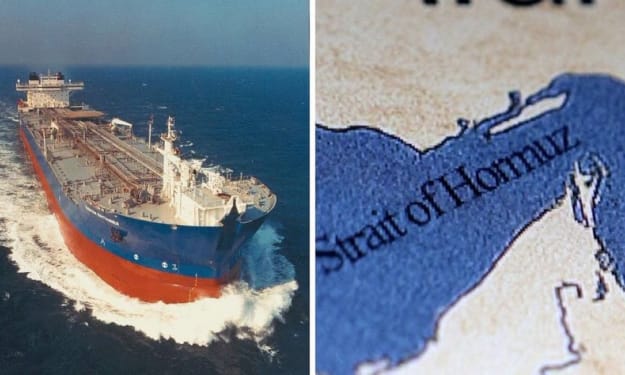
The Strait of Hormuz
Introduction The Strait of Hormuz is one of the most important maritime passages in the world. It connects the Persian Gulf to the Gulf of Oman and eventually the Arabian Sea. Because it is the main route for oil exports from the Gulf region, millions of barrels of oil pass through it every day. This makes the strait a vital artery for global energy supplies and international trade.
By shaoor afridi20 days ago in The Swamp
The decline of the West and the rise of ‘the Rest’ will lead to a new world order
As Donald Trump rampages through the global economic system with his tariff war and throws the United States’ commitment to NATO into serious doubt, fears – even panic – are mounting about the collapse of world order. Part of the anxiety stems from how suddenly these changes appear to have unfolded. In the aftermath of the 2008 global economic crisis, what was often described as the US-led liberal international order seemed alive and well, though not without challenges.
By Ibrahim Shah 21 days ago in The Swamp