
Benjamin Netanyahu's Corruption Cases
A Simple Guide to the Charges Against Him

Introduction
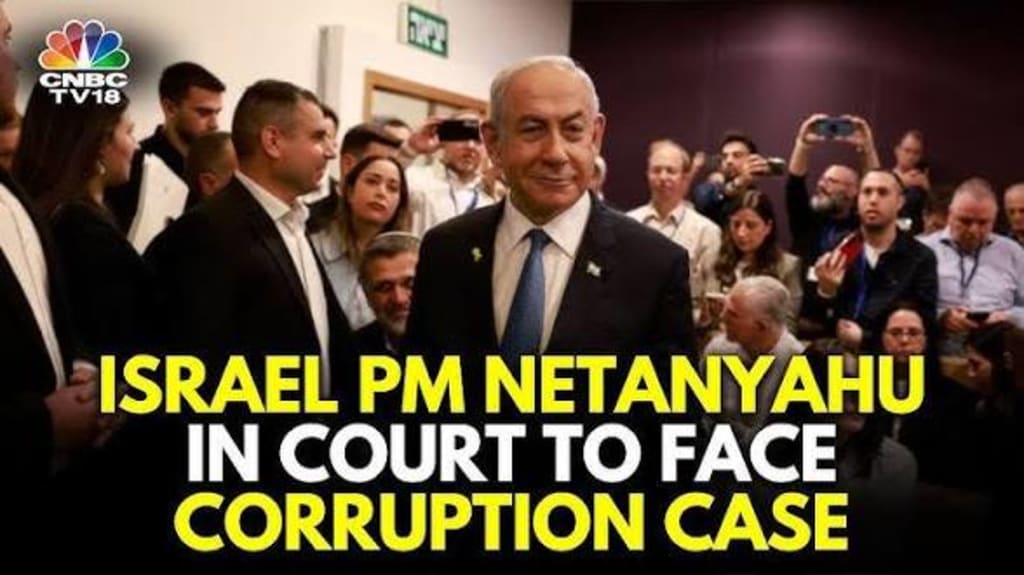
Benjamin Netanyahu, one of Israel’s longest-serving prime ministers, has been at the center of a major legal battle that has drawn global attention. The corruption cases against him are complex, but they can be understood in simple terms by breaking them down into three main investigations. These cases—known as Case 1000, Case 2000, and Case 4000—include allegations of bribery, fraud, and breach of trust.Benjamin Netanyahu faces corruption charges including bribery, fraud, and breach of trust. The cases involve alleged favors to media owners and wealthy businessmen, raising major political and legal challenges in Israel.
Background of the Investigation
The investigations into Netanyahu began several years before formal charges were filed. Israeli police conducted extensive inquiries into his relationships with wealthy businessmen and media owners. In November 2019, Avichai Mandelblit, who was Israel’s Attorney General at the time, officially indicted Netanyahu.
Despite the serious allegations, Netanyahu has consistently denied all charges, claiming they are politically motivated and aimed at removing him from power.
Case 1000: The Gifts Affair
Case 1000 focuses on allegations that Netanyahu and his wife received expensive gifts from wealthy individuals. These gifts reportedly included luxury items such as cigars, champagne, and jewelry.
The prosecution claims that these gifts were not merely tokens of friendship but were given in exchange for political favors. For example, Netanyahu is accused of helping businessmen with visa issues and other benefits.
- Key Charges:
- Fraud
- Breach of trust
This case raises questions about the ethical boundaries between personal relationships and political responsibilities.
Case 2000: The Media Deal
Case 2000 revolves around an alleged agreement between Netanyahu and a newspaper publisher. According to investigators, Netanyahu discussed the possibility of receiving more favorable media coverage in exchange for limiting the circulation of a rival newspaper.
Although the deal was never fully implemented, the discussions themselves are considered problematic under Israeli law.
- Key Charges:
- Fraud
- Breach of trust
This case highlights concerns about media influence and the potential misuse of political power to shape public opinion.
Case 4000: The Bezeq-Walla Affair
Case 4000 is the most serious of the three and includes allegations of bribery. It involves Israel’s largest telecommunications company, Bezeq, and a news website associated with it.
Prosecutors allege that Netanyahu, while serving as communications minister, granted regulatory benefits to the company. In return, he is accused of seeking positive media coverage for himself and his family.
- Key Charges:
- Bribery
- Fraud
- Breach of trust
Because it involves direct allegations of bribery, this case is considered the most significant and potentially damaging.
The Trial and Legal Process
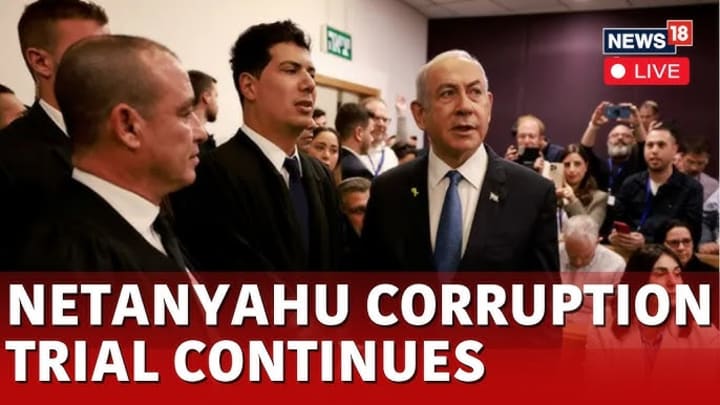
Netanyahu’s trial began in May 2020 in Jerusalem. It has involved hundreds of witnesses and extensive legal arguments from both sides. The process has been slow, reflecting the complexity of the cases.
Netanyahu has pleaded not guilty to all charges. His legal team argues that there is no concrete evidence of wrongdoing and that the accusations are based on weak interpretations of his actions.
As of now, the trial is still ongoing, and no final verdict has been reached.
Political and Public Impact
The corruption cases have deeply affected Israeli politics. They have led to public debates about leadership, accountability, and the rule of law. Supporters of Netanyahu believe he is being unfairly targeted, while critics argue that no leader should be above the law.
The cases have also contributed to political instability, including multiple elections in a short period.
Conclusion
The corruption cases against Benjamin Netanyahu are among the most significant legal challenges faced by a sitting leader in modern history. While the allegations are serious, the final outcome will depend on the court’s judgment.
For now, these cases serve as an important example of how democratic systems handle accusations against powerful figures—balancing justice, politics, and public trust.
About the Creator
Sk
"I am a passionate writer, crafting books and articles on Vocal Media, exploring human experiences, stories, and creative reflections."
The Forsyth House Fire
Since 1851, Forsyth House has stood on the corner of Union Street and Gordon Street in the heart of Glasgow. Its iconic, or was... because on Sunday 8th of March, 2026, a fire broke out in a small, seemingly un-named shop in the building and tore all that history down. As I write, the rubble is still unsettled and the street is still blocked off. Central Station is quiet on the upper level, and around 30 small businesses have quite literally gone up in smoke.
By S. A. Crawford16 days ago in The Swamp
Difficult Night for Israel: Netanyahu.
Israeli Prime Minister Benjamin Netanyahu described Iran's bombardment of Dimona and Arad as a "difficult night" for the Jewish state. Dimona houses Israel's nuclear programme and alleged nuclear weapon armaments. Arad, another settlement not far from Dimona, was also hit badly. Why did Iran strike Dimona in particular? Earlier on, Iran's nuclear site Natanz had been attacked by either US or Israeli munitions or both. So Iran struck back in kind at a nuclear facility in Israel. The IAEA, or the International Atomic Energy Agency, stated that there appeared to be no nuclear leakage from Natanz. And as for Dimona, the Iranian projectiles missed the nuclear site and landed around the area adjacent to the nuclear site, not direct hits. Israel never signed the nuclear non-proliferation treaty and is very coy about whether it has nuclear weapons or not. Therefore, the IAEA wouldn't be allowed to inspect the nuclear facilities. So, because the Iranian projectiles missed the Domina nuclear site, one would suspect there is no danger of leakage.
By Nicholas Bishop7 days ago in The Swamp



Comments
There are no comments for this story
Be the first to respond and start the conversation.