new world order
With our new president comes a New World Order. A guided tour through dramatic shifts in political thought and power struggles that inform our future.
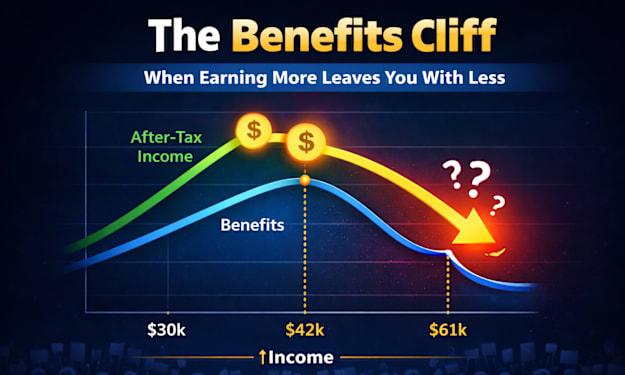
The "Benefits Cliff"
The System Is Not Cash, It Is Replacement For a family of five in Salem, Oregon, the low-income support system is not built primarily on direct cash transfers. It is built on a small number of high-impact programs that function as after-tax purchasing power, replacing major expenses rather than adding to pre-tax income. This distinction matters because it changes how the system must be evaluated. Income is taxed before it becomes usable, while benefits replace costs that would otherwise require after-tax dollars. That means these programs effectively operate as a parallel income structure, but one that is locked into specific categories such as food, housing, childcare, and healthcare rather than flexible cash.
By Peter Thwing - Host of the FST Podcastabout 9 hours ago in The Swamp
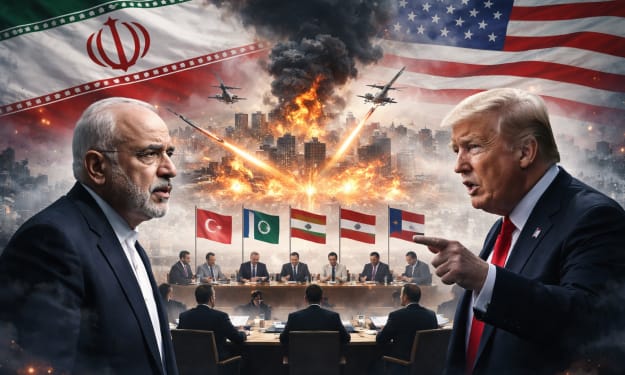
Four Countries Four Different roles in peace talk of US -Iran War
In the current global landscape, the Middle East has once again emerged as the center of international politics and economic concern. Rising tensions in the region have alarmed major world powers, highlighting the importance of certain countries that possess not only geographical significance but also strategic and diplomatic leverage. Among these, Pakistan, Turkey, Egypt, and Saudi Arabia stand out as key players capable of influencing the course of events.
By Ibrahim Shah a day ago in The Swamp
A New War Between Pakistan and India May Start Very Soon
The relationship between Pakistan and India has long been marked by tension, conflict, and fragile peace. As two neighboring nuclear-armed nations with a complex history, even the slightest escalation between them draws global concern. In recent times, rising political disagreements, border tensions, and strong national sentiments have once again sparked fears that a new war could begin very soon.
By shaoor afridi2 days ago in The Swamp
Alleged F-35 Shot Down.
In war, all sides put out propaganda to big up their own side and belittle their enemy. From the beginning of time right up until this Iran war, this has been the way of things. It shows something animalistic in humans, something primordial that connects deep to our primate core. Like gorillas beating their chests, making themselves look bigger and mightier than their rivals. We humans still do this, but with propaganda. Some propaganda is truthful, some propaganda is a mixture of truth and lies, and other propaganda is downright deception. All to make it look like we are winning and our enemies are losing. It's simple, primitive, but effective.
By Nicholas Bishop2 days ago in The Swamp
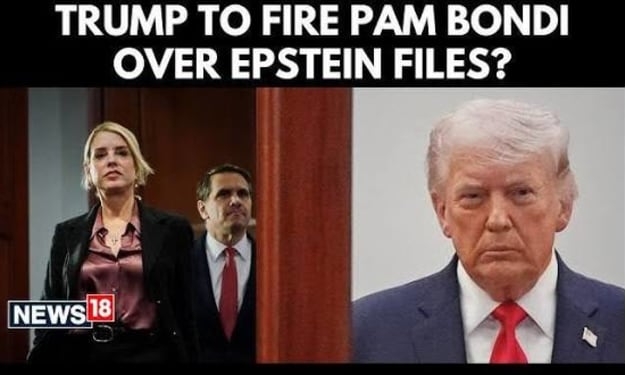
Why Did Donald Trump Remove Pam Bondi?
Introduction The sudden removal of Pam Bondi from her position as Attorney General by Donald Trump has sparked intense debate across political and legal circles. Bondi, a long-time loyalist and political ally of Trump, was widely seen as someone who aligned closely with his agenda. Yet, despite this loyalty, she was dismissed—raising an important question: why would Trump remove someone so closely tied to his administration?
By shaoor afridi3 days ago in The Swamp
No King Rallies in America.
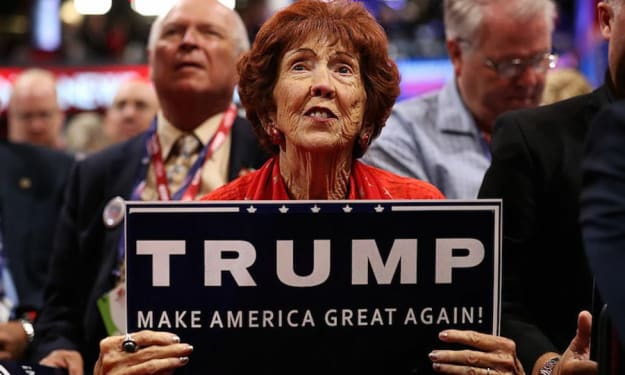
Trump has been compared to the Dictator King of Tudor times, Henry 8th. Henry the 8th's court was full of gossip of who was in and who was out when it came to the king's favour. The king was probably mentally unstable, with fits of anger, and changing his mind or being inconsistent. People remained loyal to him out of fear, a court of yes men and women. People were afraid to tell the king the truth or the error of his ways lest they upset him. The same system seems to operate in the Court of King Donald. Trump is a self-obsessed man who wants all eyes on him, who lashes out when things don't go his way, a little like the Tudor King.
By Nicholas Bishop6 days ago in The Swamp
Saudi Arabia East- West Petroline
The Middle East has long been the center of global energy politics, with its vast oil and gas reserves shaping not only regional dynamics but also the priorities of major world powers. However, in recent years, a critical question has emerged: should the world continue relying on a few strategic maritime chokepoints for energy transportation, or is it time to develop alternative routes?
By Ibrahim Shah 7 days ago in The Swamp
Of Course Trump Looks Up To Jackson
Andrew Jackson, the 7th President of the United States (1829–1837), was another of our presidents who owned slaves. He has often been cited by former President Donald Trump as an inspiration, with some observers noting similarities between their leadership styles and controversial policies. Both are accused of displaying racist tendencies in public, both wanted a Cabinet of loyalists, each had a Department of War (Trump’s Defense Department was renamed to this in late 2025), and each had accusations of infidelity by Cabinet members in that Department, causing public scandals. Unlike Jackson, who ran his administration like the military commander that he was, Trump lacks military experience.
By Andrea Corwin 8 days ago in The Swamp
War, Diplomacy, and Power Politics:
The ongoing tensions between Iran and the United States have entered a complex and multidimensional phase, where military escalation and diplomatic maneuvering are unfolding simultaneously. While the battlefield remains active, a parallel track of negotiations, mediation efforts, and summit proposals is gaining momentum, signaling that global powers are seeking to prevent a full-scale regional war.
By Ibrahim Shah 10 days ago in The Swamp
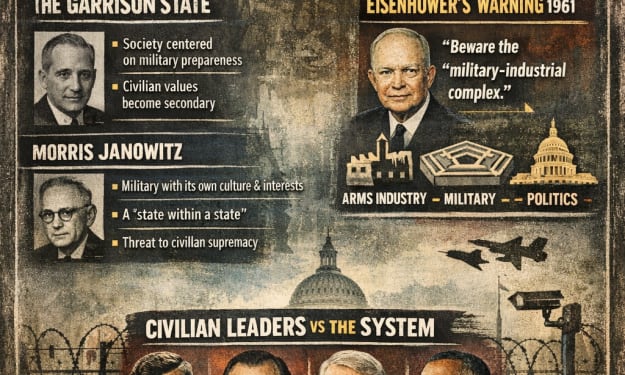
Militarization, Civilian Authority, and the Challenge to Democratic Governance
In modern political systems, one of the most subtle yet profound transformations occurs when societies gradually internalize a military mindset. This shift is not always visible, nor does it happen abruptly. Instead, it unfolds quietly, as civilians begin to perceive the world through the lens of security, threat, and strategic competition. Over time, the distinction between civilian and military leadership can erode, raising critical questions about the future of democratic governance.
By Ibrahim Shah 10 days ago in The Swamp