
AI in Healthcare: Transforming Modern Medicine and Patient Care
AI in Healthcare

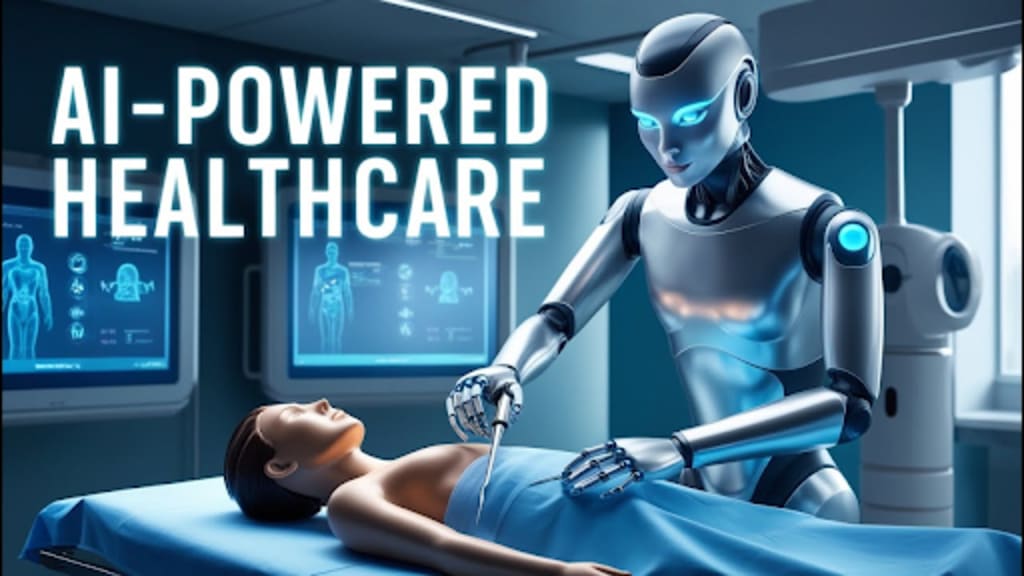
The rapid advancement of technology has reshaped nearly every industry, but few areas have experienced as profound a transformation as medicine. Over the past decade, artificial intelligence has moved from a futuristic concept to a practical tool that supports doctors, improves diagnostics, and enhances patient outcomes. Today, AI in healthcare is not just an innovation—it is becoming a foundation for smarter, safer, and more efficient medical systems around the world.
Healthcare systems face enormous pressure. Growing populations, aging societies, limited medical staff, and rising treatment costs make it difficult to deliver high-quality care consistently. In this challenging environment, intelligent systems are helping bridge gaps by analyzing data, supporting decision-making, and streamlining processes. The result is a more responsive and data-driven approach to medicine that benefits both patients and providers.
Understanding the Role of Artificial Intelligence in Medicine
Artificial intelligence refers to computer systems designed to perform tasks that typically require human intelligence. These tasks include recognizing patterns, understanding language, predicting outcomes, and learning from data. In medical settings, AI systems are trained using vast amounts of clinical data such as medical images, laboratory results, electronic health records, and research studies.
Unlike traditional software that follows fixed rules, AI models improve over time as they process more data. This ability to learn makes them especially useful in medicine, where new discoveries and complex patient cases require constant adaptation. From identifying diseases in early stages to recommending personalized treatment plans, intelligent algorithms are reshaping clinical workflows.
Improving Diagnostic Accuracy
One of the most significant contributions of AI in healthcare is in the field of diagnostics. Accurate and early diagnosis can dramatically increase survival rates and reduce treatment costs. However, interpreting medical images or complex laboratory data can sometimes be challenging, even for experienced professionals.
AI-powered imaging tools can analyze X-rays, MRIs, CT scans, and pathology slides with remarkable precision. These systems detect subtle abnormalities that may be difficult for the human eye to notice. For example, algorithms trained on thousands of radiology images can identify early signs of cancer, lung diseases, or neurological disorders within seconds.
In addition to imaging, AI is helping in predictive diagnostics. By analyzing patterns in patient records, systems can identify individuals at high risk for conditions such as diabetes, heart disease, or stroke. This allows healthcare providers to intervene earlier and implement preventive strategies before complications develop.
Personalized Treatment and Precision Medicine
Every patient is unique, and treatments that work for one individual may not be effective for another. Precision medicine aims to tailor healthcare based on genetic, environmental, and lifestyle factors. Artificial intelligence plays a crucial role in this approach by processing massive datasets that would be impossible for humans to analyze manually.
By examining genetic information alongside clinical data, AI systems can suggest personalized treatment options. For example, in oncology, algorithms help determine which therapies are most likely to be effective based on a patient’s tumor profile. This reduces trial-and-error prescribing and increases the likelihood of successful outcomes.
Moreover, intelligent systems can monitor patient responses in real time. Wearable devices and remote monitoring tools collect continuous health data, which AI analyzes to detect changes or warning signs. Physicians can then adjust treatment plans quickly, improving safety and effectiveness.
Enhancing Hospital Efficiency and Workflow
Hospitals often struggle with overcrowding, long waiting times, and administrative burdens. A large portion of healthcare professionals’ time is spent on documentation and routine tasks rather than direct patient care. AI-driven automation is helping reduce this workload.
Natural language processing tools can convert spoken notes into structured medical records, saving time for doctors. Intelligent scheduling systems optimize appointment bookings and resource allocation, ensuring that operating rooms and diagnostic equipment are used efficiently. Predictive analytics can also forecast patient admission rates, helping hospitals prepare staff and supplies in advance.
By improving operational efficiency, healthcare facilities can lower costs and focus more attention on patient-centered care.
Supporting Drug Discovery and Medical Research
Developing new medications is a lengthy and expensive process that can take years of research and billions of dollars in investment. Artificial intelligence is accelerating this process by analyzing chemical compounds, biological data, and clinical trial results more quickly than traditional methods.
Machine learning models can identify potential drug candidates by predicting how different molecules will interact with disease targets. This significantly reduces the time required for early-stage research. During clinical trials, AI helps identify suitable participants and monitor outcomes, improving both speed and accuracy.
The ability to process vast scientific literature also enables researchers to uncover hidden connections between diseases, genes, and treatments. As a result, breakthroughs that once seemed distant are becoming more achievable.
Remote Care and Virtual Assistants
Access to healthcare remains limited in many rural or underserved areas. AI-powered chatbots and virtual health assistants are helping bridge this gap. These systems can answer basic medical questions, provide symptom assessments, and guide patients on whether they should seek professional care.
Telemedicine platforms integrated with intelligent tools allow doctors to evaluate patients remotely. AI can analyze patient-reported symptoms and vital signs before the consultation begins, making virtual appointments more efficient. For individuals with chronic conditions, remote monitoring systems provide continuous oversight without requiring frequent hospital visits.
This approach not only improves convenience but also reduces the burden on healthcare facilities.
Ethical Considerations and Challenges
Despite its benefits, the integration of artificial intelligence into medicine raises important ethical and practical concerns. Patient data privacy is a major issue, as AI systems require access to sensitive medical information. Ensuring secure storage and responsible data use is essential to maintain trust.
Another challenge is algorithmic bias. If training data lacks diversity, AI systems may produce less accurate results for certain populations. Developers and healthcare organizations must work carefully to ensure fairness and inclusivity in their models.
There is also the question of accountability. While intelligent systems can assist in decision-making, final responsibility must remain with qualified medical professionals. AI should support doctors, not replace them.
The Future of Intelligent Healthcare Systems
Looking ahead, AI in healthcare is expected to become even more integrated into everyday medical practice. Advances in robotics may enable more precise surgeries, while improved predictive models could detect diseases years before symptoms appear. As technology continues to evolve, collaboration between engineers, clinicians, and policymakers will be crucial.
Education and training will also play an important role. Healthcare professionals must understand how to interpret AI-generated insights and combine them with clinical judgment. When used responsibly, artificial intelligence can strengthen—not diminish—the human element of medicine.
Conclusion
The healthcare industry stands at a pivotal moment. With growing demands and complex challenges, innovative solutions are essential. AI in healthcare offers powerful tools to improve diagnosis, personalize treatment, enhance operational efficiency, and accelerate research. While ethical considerations must be addressed carefully, the potential benefits are immense.
Rather than replacing doctors, artificial intelligence serves as a supportive partner—an advanced analytical assistant capable of processing information at unprecedented speed. As technology continues to mature, it promises to create a more proactive, precise, and patient-centered healthcare system for future generations.
In the coming years, the thoughtful integration of AI in healthcare will likely define the next era of medical progress, bringing hope and improved outcomes to millions worldwide.
About the Creator
Muhammad Hanzla
I am SEO expert. I have 2 year experience in SEO field.I am working at SEO Company in Lahore, Pakistan.
Keep reading
More stories from Muhammad Hanzla and writers in Lifehack and other communities.
Why the Right Rug Changes Everything
You know that feeling when you step into someone's place and it just feels... right? Like everything belongs there, including you? Sometimes it's your best friend's basement hangout. Other times it's walking into your aunt's kitchen. That cozy vibe you get? More often than not, there's a rug involved.
By Muhammad Hanzlaabout a month ago in Lifehack
Twiddling Your Thumbs: A Simple Habit That Offers Surprising Mental Health Benefits
Thumb twiddling has emotional benefits “Twiddling your thumbs” is an expression that means someone is doing nothing while passing the time away, or they are feeling bored or waiting. The phrase suggests wasting time or idleness but this simple repetitive motion of interlocking fingers and moving the thumbs together in a circular pattern is a self-soothing behavior that psychologists recognize as potentially beneficial for mental health well-being.
By Cheryl E Preston4 days ago in Lifehack
Everyone Is Acting Normally Challenge Winners
In the Everyone Is Acting Normally challenge, something is clearly wrong, but no one stops to name it. Across the shortlist, that wrongness appears as resurrections, surveillance, disappearance, and denial, each treated as part of daily life.
By Vocal Curation Teamabout 13 hours ago in Resources




Comments
There are no comments for this story
Be the first to respond and start the conversation.