
The History of the Italian Colonial Empire in the 20th Century
Remembering Italy's Colonial Empire
The Italian colonial empire dated back to the latter part of the 19th century, when Italy first began to gain additional territories in Africa. Although their empire-building at the time was not always effective, as they were defeated by African countries such as Ethiopia. Britain and France dominated Africa, so there were few worthwhile colonies for the Italians to gain without a colonial war. Nonetheless, expanding the Italian Empire remained a part of Italian foreign policy for decades during the 20th century.
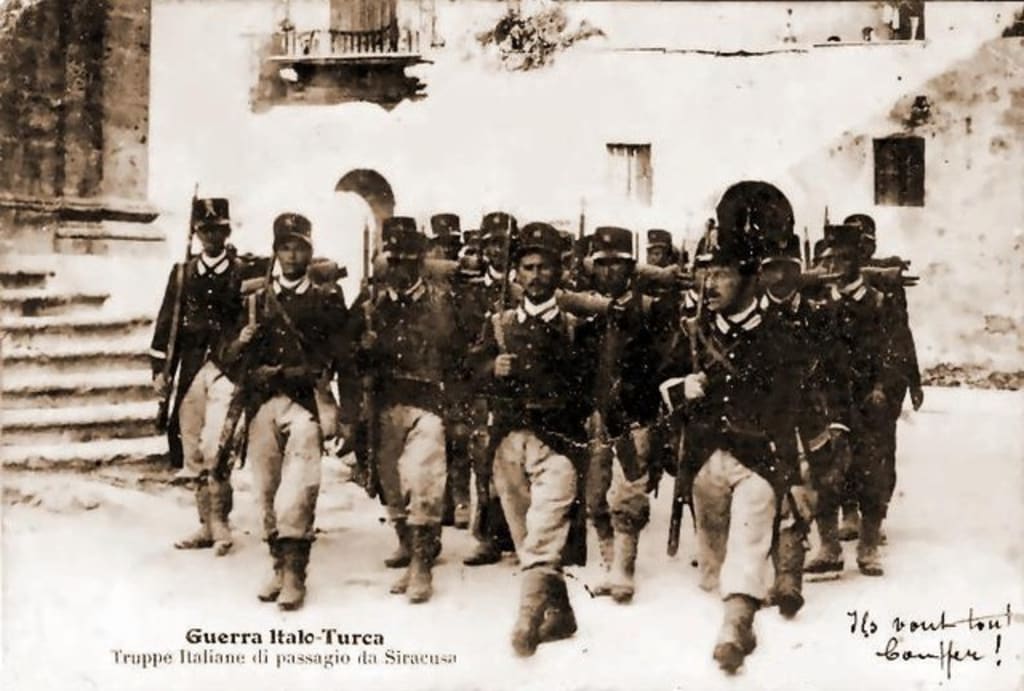
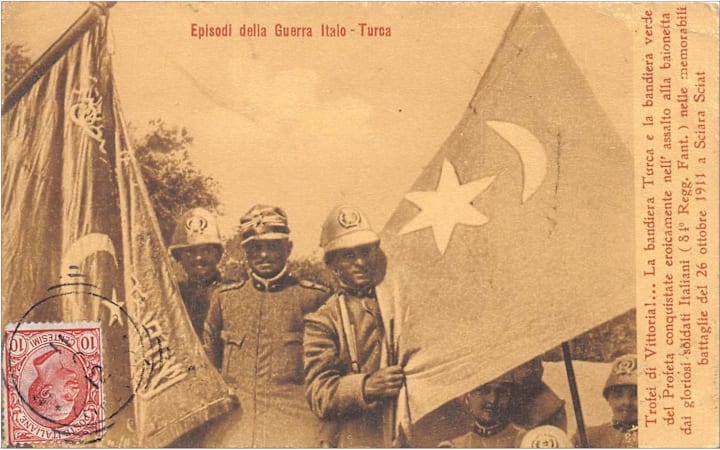
Before the outbreak of the First World War, Italy had one notable colonial victory against the Ottoman Empire. The Italo-Turkish War emerged in 1911 as Italy had claims dating back to 1878 over Turkey’s colony, Libya. The war was a victory for Italy and the Italian Empire, with notable naval victories such as the Battle of Beirut. After the war, the Turkish army withdrew from Libya, and Libya became a colony of the Italian Empire.
Although the Italians had been aligned with Germany before the outbreak of World War I, their war with Germany’s allies, Turkey, highlighted that they might not be reliable. When the war emerged in 1914, the Italians later joined the Entente in 1915. They declared war on Austria-Hungary and Germany, and won a decisive victory against Austria-Hungary at the Battle of Vittorio Veneto in 1918.
With such victories, the Italians were promised additional colonial territory by the Entente after the war. The Italian Empire did gain some additional territory, such as Trieste and Trentino, but it was less than they had expected for their wartime support.
After the war, left-wing parties became increasingly active in Italy. In addition to this, the first Italian Fascist parties were also established in the post-war era, including Mussolini’s National Fascist Party. In 1922, Mussolini led the Fascist march on Rome, which along with the fascists' electoral successes, convinced the king of Italy to support the National Fascist Party and to invite Mussolini to join a coalition. Hereafter, Italian democracy was gradually disbanded as the fascists consolidated.
Expanding the Italian colonial empire was also a key part of Mussolini’s foreign policy. As such, the Italian Empire was expanded during the 1930s, albeit this included only relatively modest additional colonies. In 1936, the Italians occupied Addis Ababa, and the king of Italy became Emperor of Ethiopia. In 1939, the Italian army also invaded Albania in the Balkans. Upon the outbreak of war, the Italian Empire had colonies in both the Balkans and Africa, although it was hardly comparable to the largest European empires.
Italy’s occupation of Albania further highlighted that the Italians were no longer allies of the British and French. During the 1930s, the Italians had established a more formal alliance with Germany, and in 1939, the Pact of Steel was signed by Italy and Germany. However, upon the outbreak of hostilities, the Italians did not join the war.
This changed in 1940 after Germany’s sweeping victories in Poland, Norway, and France left the French on the brink of defeat. The Italians declared war on the British Empire in 1940, and with the French Mediterranean fleet soon neutralized, their chances of victory in the Mediterranean and North Africa were given a boost. A larger empire in the Mediterranean and North Africa was the primary objective of the Italians, and the seizure of the Suez Canal in Egypt could potentially cut Britain’s oil supplies.
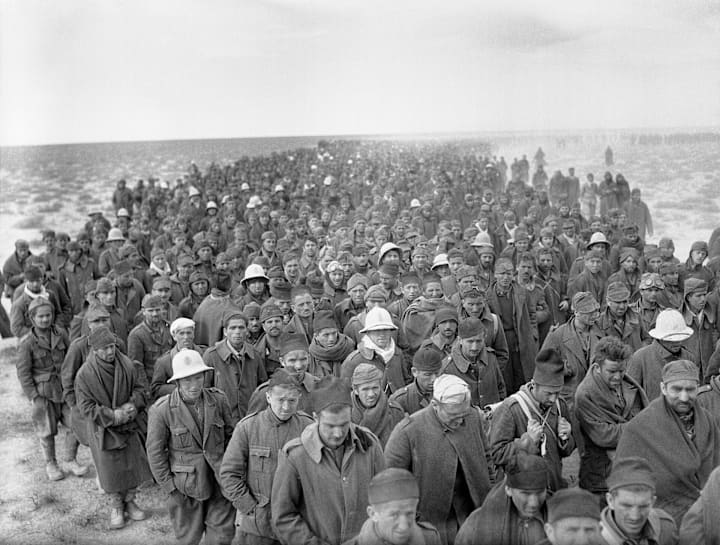
However, the Italian army was soon pushed back into Libya during Operation Compass. Hundreds of thousands of Italian troops surrendered to the British in Libya. Elsewhere, the Italian invasion of Greece was also halted, and the Italian army began to retreat there as well. Later in 1940, the Battle of Taranto was a crushing defeat for the Regia Marina (Italian Navy) that resulted in the loss of three Italian battleships.
Dreams of a greater Italian Empire were only revived when Rommel and German re-enforcements arrived in North Africa in 1941. Rommel established the Afrika Corps, which combined German and Italian divisions. As part of the Afrika Corps, the Italian troops were much more effective, and they pushed the British out of Libya and back into Egypt. At sea, the Italians also had more to celebrate as Maiale manned torpedoes sank two British battleships in shallow water at Alexandria.
This was not enough to ensure victory in North Africa. The defeat of the Afrika Corps at the Battle of El Alamein in 1942 marked the beginning of the end of the Desert War. Thousands of other Italian soldiers who would have been handy in North Africa were lost in the USSR. As further Allied re-enforcements landed, the Axis retreated in Tunisia during 1943 and eventually surrendered. The North Africa Campaign had therefore been lost, and the Italian Empire was in tatters.
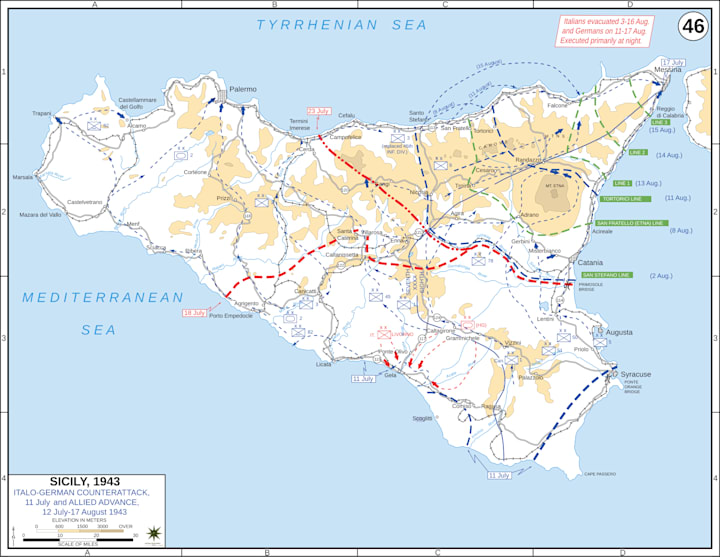
Once the Allies had agreed to invade mainland Italy, Italy's defeat in the war seemed almost certain, but for the potential military support that Germany might provide. In the event, Germany did send additional divisions to halt the Allied advance in Italy, but could not prevent the Allies from landing in Italy. Such military defeats lost the fascists the support of the Italian king; Mussolini was sacked, and Italy was now ready to begin peace talks with the Allies. Civil War in Italy emerged as fascist groups joined with the German army, which still occupied much of northern Italy.
However, the remaining German and fascist strongholds were defeated in 1945. Postwar treaties dissolved the Italian Empire. The Treaty of Italy in 1947 ensured the breakup of the Italian Empire. As such, the Italian Empire was never more than a small European empire in Africa and the Mediterranean, and without the support of the German army, the Italians had no hope of greatly expanding it during the war.
About the Creator
Matthew A
Matthew is the author of Battles of the Pacific War 1941-1945. Battles of the Pacific War is available on Amazon and Lulu in e-book and paperback formats. Check out the book’s blog at battlesofthepacificwar.blogspot.co.uk.
Ghostly Happenings in Colorado
Disturbed Spirits In Denver, an expanse of greenery, Cheesman Park comes with a macabre history since it was once a burial ground known as Mount Prospect Cemetery established by General William Larimer in 1858. The job of exhuming bodies began, and some were left behind resting beneath the park. However, the ghostly spirits don’t wish to rest in peace beneath the park, and visitors here have felt cold touches, seen ghostly children playing at night, and heard a singing lady who disappears when approached.
By Rasma Raisters5 days ago in Horror




Comments
There are no comments for this story
Be the first to respond and start the conversation.