Ancient
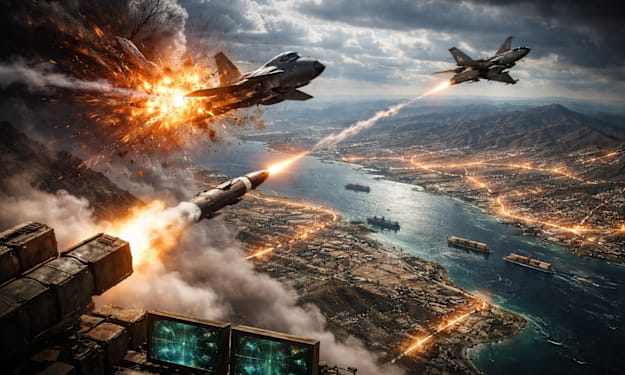
⚠️ Battle Over Hormuz: Iran-US Air Clash
⚠️ Battle Over Hormuz: Iran-US Air Clash Tensions between Iran and the United States have entered a dangerous and unpredictable phase following reports of an intense aerial confrontation over the Strait of Hormuz. Military analysts and global observers are closely watching the developments as claims of fighter jets being shot down, missile launches, and threats to regional infrastructure increase fears of a broader Middle East conflict. The situation is rapidly evolving, and each new development appears to raise the stakes further.
By Wings of Time about 11 hours ago in History
What is Tir na nog?
In Irish mythology, few places are as beautiful and mysterious as Tír na nÓg. Often translated as “the Land of Eternal Youth,” it is one of the most famous realms of the Irish Otherworld. It appears in stories as a place beyond sorrow, aging, and ordinary human time — a land of beauty, abundance, music, and immortal life. Yet beneath that beauty there is also something unsettling about it. Tír na nÓg is not simply heaven, nor is it just a fantasy paradise. It is a place that reminds mortals that the world beyond their own does not follow the same rules.
By The Celtic Spirit- A modern Guide to Celtic Belief and Practiceabout 21 hours ago in History
Why is it called Good Friday?. Content Warning.
The Friday before Easter Sunday, when the secular world acknowledges that "Christians" celebrate the Resurrection of Christ, is known as Good Friday. Not everyone who says they are Christian believes in the Resurrection.
By Cheryl E Prestona day ago in History
Why the Ancient Biblical Texts Differ From the Modern American Bible
Introduction Questions about why the modern American Bible differs from ancient biblical texts are not only understandable but necessary. These differences have been shaped by language barriers, manuscript transmission, political power, theological debates, and historical context. Importantly, confusion often arises from the belief that there was once a singular, unified “original Bible” that later became altered. Historically, this assumption is incorrect.
By TREYTON SCOTT2 days ago in History
Why Did America Drop Atomic Bombs on Japan in 1945?
During World War II, the United States dropped atomic bombs on Hiroshima and Nagasaki in August 1945 to force Japan’s surrender and quickly end the war. American leaders believed this would avoid a long and deadly invasion of Japan, saving thousands of soldiers’ lives. It also demonstrated military power, especially to the Soviet Union. However, the decision remains controversial due to the massive civilian casualties and lasting destruction caused by the bombs.
By shaoor afridi3 days ago in History
The Day the Giant Stopped Moving
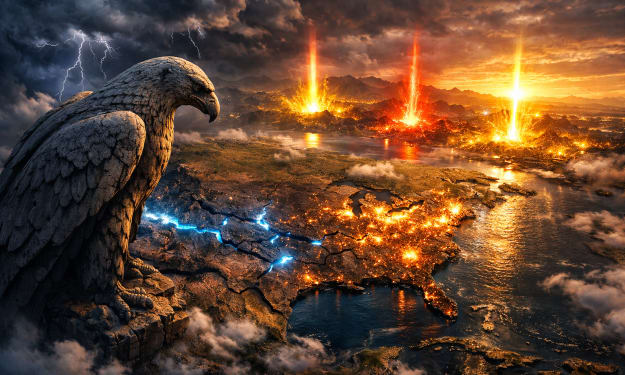
The Day the Giant Stopped Moving For nearly a century, the United States stood as the world's most dominant power — economically, militarily, and culturally. From shaping global trade to leading wars and alliances, America was not just a country; it was the engine of the modern world. But today, many analysts, policymakers, and observers are beginning to ask a serious question: Is America no longer leading the world the way it once did?
By Wings of Time 4 days ago in History
Beyond Fear
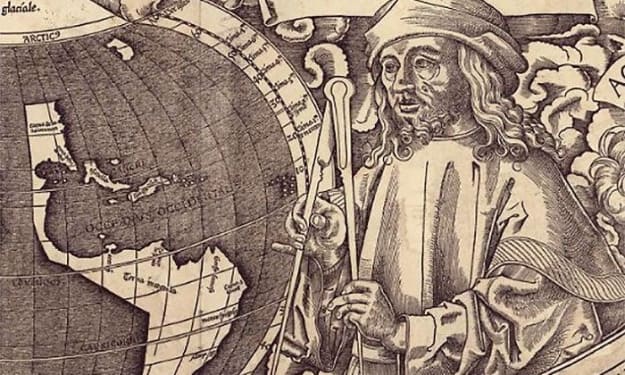
The sea was never silent. It whispered fears, doubts, and sometimes… hope. Christopher Columbus stood alone at the edge of the wooden ship, staring into the endless darkness of the ocean. The waves moved like restless souls, crashing and rising, as if warning him to turn back. But he didn’t. He couldn’t.
By imtiazalam5 days ago in History
The Crusades
On July 15, 1099, after five weeks of siege, Christian Crusaders breached the walls of Jerusalem and embarked on a massacre so extreme that eyewitnesses reported riding horses through streets where blood reached the stirrups, slaughtering every Muslim and Jewish resident they could find regardless of age or gender, and one chronicler recorded that the killers then washed the blood from their hands and walked barefoot to the Church of the Holy Sepulchre to pray and give thanks to God for their victory, seeing no contradiction between worship and genocide.
By The Curious Writer6 days ago in History
The Peloponnesian War
In 430 BCE, the golden age of Athens ended not with a military defeat but with a mysterious plague that killed a quarter of the population including the great statesman Pericles, turning the world's most advanced civilization into a city of corpses stacked in temples and burning in the streets while survivors abandoned morality and law because they believed they were all going to die anyway, and the description by historian Thucydides remains so detailed that modern epidemiologists are still trying to identify what disease destroyed Athens from within while Sparta waited patiently outside the walls.
By The Curious Writer6 days ago in History
Iran’s Mosaic Doctrine Rising
The Mosaic Doctrine: Is Iran Following Israel’s Strategic Playbook? From Defense to Pre-Emptive Intelligence Power In modern geopolitical warfare, few strategic doctrines have shaped intelligence operations like the Mosaic Doctrine, more widely known as the Begin Doctrine. Originally developed by Israeli leadership, this doctrine focuses on preventing enemies from becoming powerful enough to threaten national security — even if that requires covert operations, sabotage, or pre-emptive strikes.
By Wings of Time 6 days ago in History