
A Brief History of the German Empire in the 20th Century
Remembering How the German Empire Lost World War I
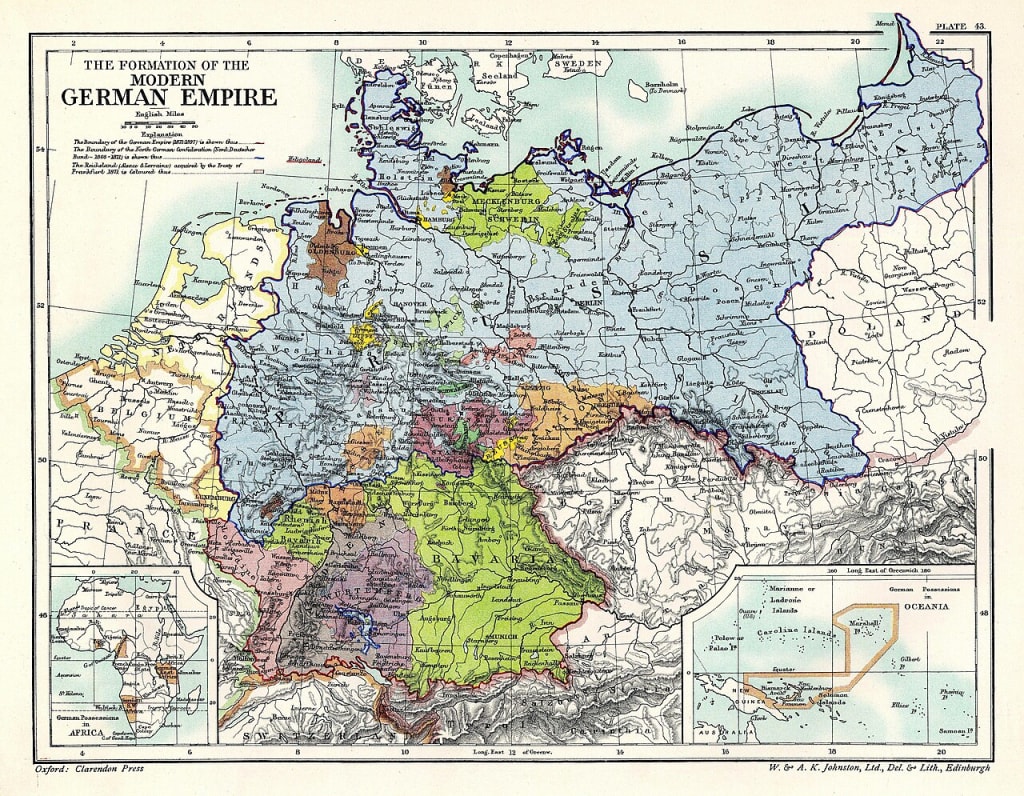
The German Empire had expanded during the 19th century, and by the 20th century, it had colonies in Africa, such as Togoland. However, it would not last that much longer in the 20th century. During the first couple of decades, Germany began to militarize in preparation for a war that would ultimately ensure the demise of the German Empire.
In 1904, the Anglo-Franco Entente in Western Europe, which later combined with Russia to establish the Triple Entente, ensured a new alliance bloc in Europe. The discontinuation of Germany’s Re-insurance Treaty with Russia was partly a factor in the Russians now joining the Entente with France and Britain. In the event of a war with the Entente, Germany would therefore be involved in a war on two fronts.
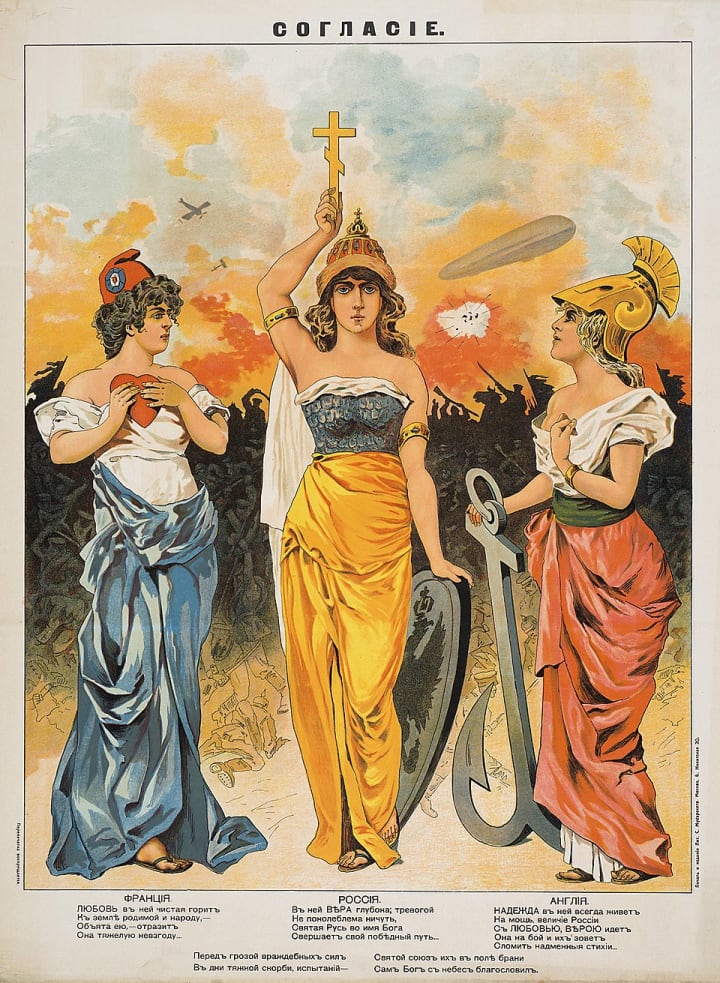
As such, the Schlieffen Plan was drafted, which outlined how Germany could defeat both France and Russia. The plan would involve a quick defeat of France with the majority of the German army, and then, after France had been defeated, the Russians could be beaten in the east. This plan would become the cornerstone of Germany’s military planning for almost a decade afterwards.
That plan did not highlight any potential war with the British Empire. However, despite this, Wilhelm 2nd still greatly encouraged German naval expansion during the period. The Anglo-German naval race was one that ensured an increase in naval investment. After the British had developed the first dreadnought battleships, the Germans would follow with their own dreadnought class of battleships. The race would continue for a number of years, although the Royal Navy would remain the largest in the world. However, the Imperial German Navy was also among the world’s biggest navies.
Colonial disagreements with the Entente would surface twice over Morocco. The first Moroccan crisis emerged in 1905 when the Kaiser threw his support behind Morocco's autonomy at Tangier. Such calls would be followed by the Algeciras Conference in 1906, which ensured that France could keep the colony.
By 1911, further questions regarding Morocco would almost bring war. This was after the Germans sent a gunship into a Moroccan port, and Germany denied France's hold on Morocco again. Eventually, the Germans backed down after being promised rights in the Congo region of Africa.
Peace may have remained, but Germany and the Entente were increasingly wary of the prospect of potential war. Britain and France were now becoming allies and would begin to establish naval agreements. The Russians were also aware that Germany’s alliance with Austria-Hungary could have notable repercussions in Eastern Europe and the Balkans, where they were committed to Serbia.
War in Europe was just a short step away as Germany had consolidated their alliance bloc with the Ottoman Empire and Austria-Hungary. The assassination of Archduke Ferdinand in 1914 ensured that Austria-Hungary declared war on Serbia. This was followed by Russia's declaration of war on Austria-Hungary. The German Empire would declare war on both Russia and France, before Britain also pledged its own support to the Entente.
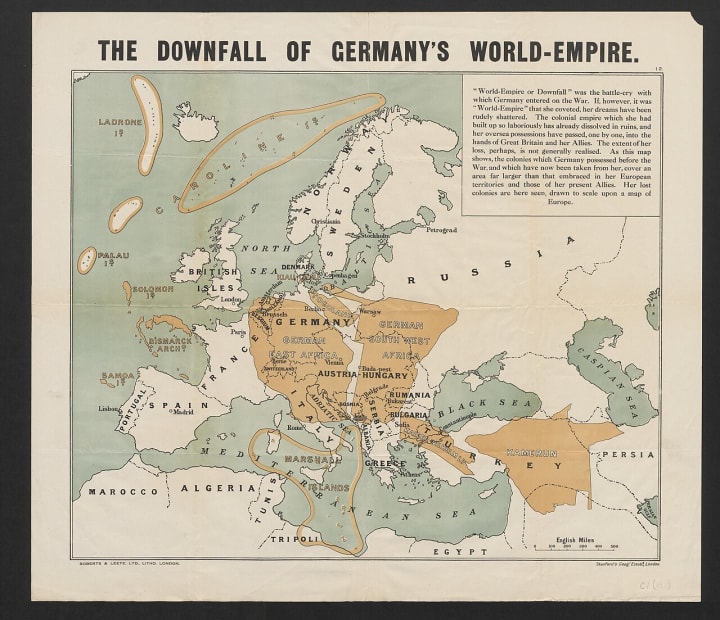
World War I was a war that, in some respects, began well for Germany. Their advance quickly into France, although this was eventually halted at the Marne. However, in Eastern Europe, two noteworthy victories for the German army at Tannenburg and the Manchurian Lakes would ensure a Russian retreat from Prussia in 1914, and left plenty of scope for further German advances in Eastern Europe.
Despite this, there was no scope in the west as the front stalled. Neither side could make any notable gains. More significantly, the Schlieffen Plan had therefore failed as France remained undefeated.
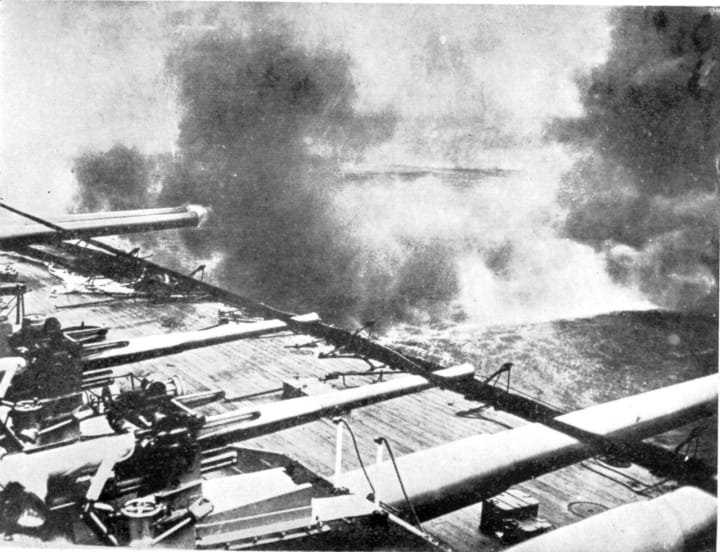
At sea, the Entente had the upper hand, and the Royal Navy’s German economic blockade had an increasing impact. Naval battles such as the Battle of Jutland in 1916 could not be won by the Imperial German Navy. The Austro-Hungarian armies also collapsed in 1916 as the Russians advanced, and only further German reinforcements could ensure that their lines in the east held. Other allies, such as the Ottoman Empire, would begin to crumble and by 1917 were on the verge of defeat as the British occupied Baghdad, and in late 1917, they also took Jerusalem. In addition to this, the Entente was now aided by the Americans, who had declared war on the German Empire during the German U-boat Campaign.
By 1918, the German alliance bloc was beginning to crumble. Only the Treaty of Brest-Litovsk, which ended the war with Russia, gave German victory a glimmer of chance. Now the Germans could reinforce their armies in the west with troops from the east, and with such reinforcements, they began to make swift advances in France. However, the advance could not be sustained, and the French, British, and Americans would begin their own more effective advances. Their victory at the Battle of Amiens ensured the surrender of thousands of German soldiers, and the advance continued up to and beyond the Hindenburg Line.
Germany had therefore lost the war. The German High Command conceded that victory could not be won, and so began to consider an armistice with the Entente. The war ended on November 11, 1918, and not long after this date, Germany would abandon its monarchy after the Kaiser abdicated. In 1919, the Treaty of Versailles was drafted by the Entente, which dissolved the German Empire.
About the Creator
When the Portuguese Turned the Tide of Indian History
The arrival of the Portuguese in India at the end of the 15th century marked a turning point in the history of the Indian Ocean and the Indian subcontinent. What began as an ambitious maritime expedition soon transformed into a powerful political and economic presence that reshaped trade routes, introduced new cultural influences, and altered the balance of power in the region.
By Irshad Abbasi 6 days ago in History
The Years 1810 to 1819 Unveiled: Intriguing Facts and Landmark Events
This quick read is a collection of fun facts, trivia, and historical events from the years 1810 to 1819. Discover the decade’s top news stories, most influential people, notable inventions, retail prices, and much more.
By Gregory DeVictor5 days ago in History
The First Rainbow Baby
Pitter-patter, pitter-patter. The rain fell in rhythmic splatters, slowly slowing, but still constant. Mira rolled onto her side pulling the blanket tight against her ears, but still she could hear chitter-chatter and scurrying feet of the creatures that refused to sleep in the lower decks.
By A. J. Schoenfeld5 days ago in Fiction


Comments
There are no comments for this story
Be the first to respond and start the conversation.