
The Invisible Nuclear Bomb
Strait of Hormuz & Global Economy

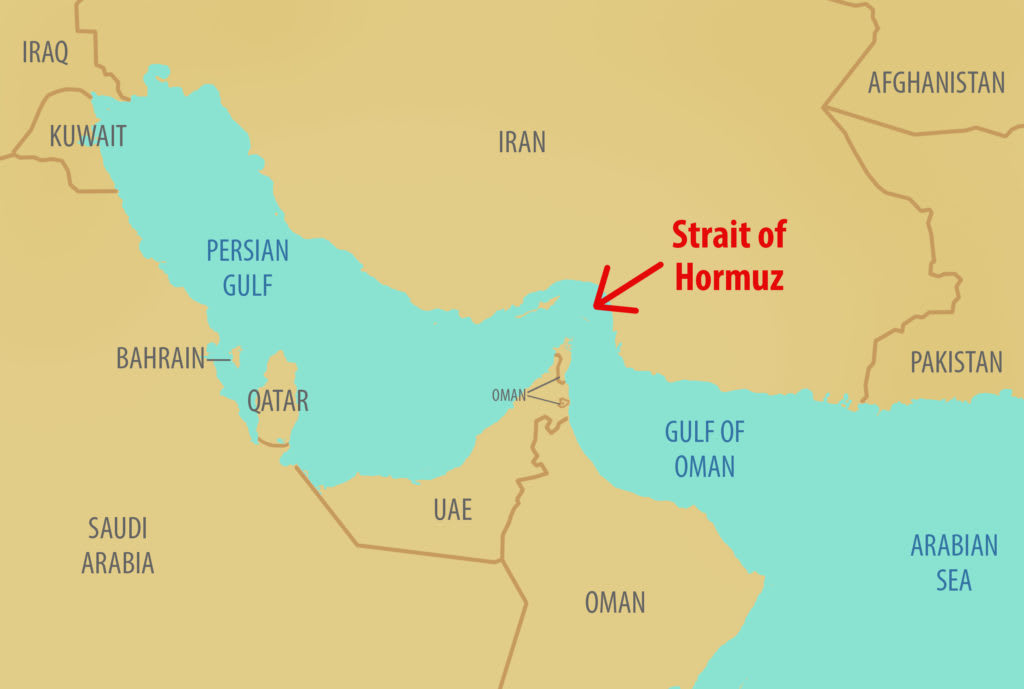
The morning news felt different that day. My coffee was lukewarm, my toast burned, and every headline seemed to hum with tension: “Strait of Hormuz Tensions Rise” and “Global Oil Markets on Edge.” I couldn’t stop thinking about it. This wasn’t just politics—it was my grocery bill, my rent, the cost of driving to work. I realized I had been blissfully unaware of how a tiny stretch of water halfway across the world could grip my daily life like a vice.
I work in a small business that relies on shipping. A client called me, voice tight with worry, asking if our suppliers could guarantee delivery amid rising tensions. I had no answer. That helplessness—sitting on my couch in New York while thousands of miles away the Strait of Hormuz threatened the flow of oil—was startling. I’d never felt a global crisis so personally.
The Strait isn’t wide. It’s barely 21 miles at its narrowest point. Yet it carries about a fifth of the world’s petroleum. Every day, millions of barrels pass through, powering cars, homes, and the very offices where I’ve poured my energy for years. It hit me: a single spark there—a political misstep, a military skirmish—could act like an invisible nuclear bomb, sending shockwaves across the world economy. Prices spike, supply chains tremble, and ordinary people like me feel the ripple in every corner of life.
I remember scrolling through my bank account, calculating how rising energy costs would affect my budget. Should I postpone a small vacation? Should I cut down on groceries? I had never thought about geopolitics as something that touches my wallet so directly, but here I was, crunching numbers in quiet fear.
Yet, it wasn’t just money. It was anxiety. I felt small and powerless, staring at charts I didn’t fully understand. And then I wondered: how many people feel like this every day, silently bracing for events that seem far away but strike close to home? When does awareness become action, and when does it just become worry?
I reached out to a friend who works in energy logistics. He told me about contingency plans, alternative routes, and storage strategies that governments and companies rely on. Listening to him, I realized that the world runs on invisible threads, delicate and precise, that most of us never see. And yet, we are all entangled in them. Every decision at a geopolitical level filters down into our lives. Every spike in crude oil prices changes dinner tables, school trips, and the cost of filling a car tank.
That night, I walked home from the subway, watching the city lights blink on one by one. I thought about my own power—or lack thereof—over events I couldn’t control. And yet, I felt a quiet shift: if I couldn’t control the Strait of Hormuz, I could control how I prepared. I could support policies, educate myself, discuss with friends, and take small steps in understanding. Could I influence something? Perhaps not directly. But could awareness change how I respond? Absolutely.
Reflecting on it now, I realize fear can be transformative. That helplessness I felt in the morning became curiosity in the evening. I started tracking news differently, looking for context rather than panic, understanding the players, the stakes, and the possible outcomes. I began to see how economics, politics, and daily life are inseparable.
Have you ever felt a world event brush against your personal life in a way that startled you awake? Maybe a natural disaster, a sudden market change, or a geopolitical conflict? How did you reconcile your small daily routines with the immense forces moving around you?
The “invisible nuclear bomb” in the Strait of Hormuz is more than a metaphor. It’s a reminder that the global economy is fragile, connected, and profoundly human. And while I can’t command armies or negotiate oil contracts, I can hold a bit of awareness, a touch of understanding, and share that knowledge with others—so that fear doesn’t paralyze, but informs.
As I sit with my cup of tea this evening, I can still feel that tremor of unease. But it’s quieter now, replaced by a sense of engagement and responsibility. The Strait of Hormuz will always be distant, but its effects are never far. And in some small way, that awareness gives me a sense of presence in a world that can often feel beyond comprehension.
About the Creator
John Smith
Man is mortal.
Keep reading
More stories from John Smith and writers in Geeks and other communities.
History of The Three Stooges (Part I: The Beginnings and Columbia Pictures - 1920s-1936)
I have been itching to write about The Three Stooges on Vocal for close to two years, but I couldn't figure out how to do it. I wanted to do it by third Stooge, but that's a bit complicated. I know this much. I was about eight or nine years old when I first saw The Three Stooges. I remember one of my local channels had the Stooges on for hours, and I tried my damnedest to be up for those shorts. I remember that the Family Channel actually had an hour of the Stooges on from 11PM to midnight, and it was the entire library on during that time.
By Clyde E. Dawkins6 days ago in Geeks
Book Review: "The Palace"by Gareth Russell (Pt. 5)
This review covers chapter 18 to the end of the book *** Chapter 18 covers the reign of Queen Anne, the final queen of the Stuart household and mostly seems to look at the idea that she could barely marry, she had lots of miscarriages and in the end the only child she had lived to eleven years' old and so, she had no heir. There were many questions of Queen Anne's marriage, from her husband participating in homosexual affairs to the ideas put forward in the film The Favourite in which it is Queen Anne who is homosexual and promiscuous. Whatever it was, I definitely feel sorry for Queen Anne - everything must have hurt by the end of her reign, too many pregnancies and miscarriages meant her health was declining quickly towards the end. It's quite sad.
By Annie Kapur4 days ago in Geeks



Comments
There are no comments for this story
Be the first to respond and start the conversation.