literature
Geek literature from the New York Times or the recesses of online. Our favorite stories showcase geeks.
Book Review: "Parade's End" by Ford Madox Ford (Pt. 2)
Rating: 4/5 - Not as great as the opening volume, but definitely not worth less than a 4 overall... *** Volume 2, No More Parades goes deeper into the psychological state that war inflicts upon the characters, especially our main character. Tietjens struggles to move nearly 3,000 troops from Rouen to the front, obstructed by strange orders, corrupt supply officers, a French railway strike, and harassment from British Garrison Police targeting Canadian volunteers. Of course, Ford's presentation of war here is that difficulty will always be horrific when people's lives are on the line and yes, people's lives are definitely on the line. As amid administrative chaos and German shelling, a Welsh soldier bleeds to death in Tietjens’ arms. Tietjens has tons of guilt over previously denying him leave to confront his wife’s infidelity. This is reflective of his own position - he too has a wife who has been unfaithful but he cannot confront her because he too has been unfaithful. He didn't know this man's position and he was needlessly harsh to him, denying him one last possibility to make amends or break it off with her. He broods the anger towards his own marriage.
By Annie Kapurabout 4 hours ago in Geeks
Response to 'The Count of Monte Cristo' (Dumas)
There is one main question Alexandre Dumas asks the reader in the book: Are you rich, or is your life rich? Dumas even uses Edmond Dantes to illustrate this. At the beginning of the book, Edmond is poor, but he has his father, Mercedes, and a promotion in a company in which he works for someone who's like a second father to him. When he's rich, he doesn't feel himself enriched.
By Alexandra Fabout 12 hours ago in Geeks
Book Review: "Parade's End" by Ford Madox Ford (Pt. 1)
Rating: 5/5 - A depressed masterpiece of love, loss and wartime terror... *** This is how it happened: Tweet by Me This was exactly how it happened. For my Why It's a Masterpiece series I took a quick reread of my copy of The Good Soldier, which is great because it's short and easy to read. (It's also incredibly depressing but you've read the article on it, you should know). I then thought to myself 'this can't be right...I never got around to reading Parade's End which is considered to be Ford's best work...' and quickly ordered it (it was only a couple of £ and so, nice and cheap). I didn't bother to look it up in any way, shape or form but seemed to assume it would be of similar length to The Good Soldier which can't be more than 150 pages.
By Annie Kapura day ago in Geeks
The Invisible Nuclear Bomb
The morning news felt different that day. My coffee was lukewarm, my toast burned, and every headline seemed to hum with tension: “Strait of Hormuz Tensions Rise” and “Global Oil Markets on Edge.” I couldn’t stop thinking about it. This wasn’t just politics—it was my grocery bill, my rent, the cost of driving to work. I realized I had been blissfully unaware of how a tiny stretch of water halfway across the world could grip my daily life like a vice.
By John Smitha day ago in Geeks
Book Review: "American Poetry: A Very Short Introduction" by David Caplan
Help me, I'm stuck in the Very Short Introduction series and I can't get out! No really, this is becoming the same problem I had a few years ago when I got my limbs caught in the British Library Crime Classics series and ended up reading almost 100 of those books in perhaps a few months. Now, I've managed to find one on American Poetry, I have to say it is probably one of my favourites so far. I mean The Beats is good, but American Poetry has Phillis Wheatley and Emily Dickinson so it is, by default, better. The writer doesn't only display his knowledge of American Poetic History, he also provides some historical accounts of the people who wrote them, commenting on where they fit into the greater American landscape.
By Annie Kapur2 days ago in Geeks
Rereading Review: "Martin Chuzzlewit" by Charles Dickens
Martin Chuzzlewit is one of Dickens' lesser known novels and I'm not going to lie to you but I originally wrote thousands of words for this review before cutting it down. I first read this book (and disliked it) when I was about 20 years' old and I thought that perhaps coming back to it older would make me appreciate the humour more. Spoiler alert: it didn't. I don't like the snide humour of this book, or the attempts at slapstick comedy in atmospheric writing. But I will say that it is satirical and fun and has some of the best examples of writing that the young Dickens had to offer at the time. It may not be in my top five Dickens novels but that's besides the point. Let's take a look at some of my favourite scenes and characters...
By Annie Kapur3 days ago in Geeks
Book Review: "Consuming Passions" by Philippa Pullar
I don't know why I picked this book up, perhaps because it was cheap. But I can honestly say that between this and the book The Feast in which there are multiple poems and writings on food, I have learnt more about food culture from two books than I have learnt at any other time in my life. I was first thinking about splitting this review into 'parts' because the book itself has a lot of information in it. But I don't want to spoil it for you and I think you're all sick of me doing that for now. Fun fact: I'm not going to stop. Consuming Passions starts with the Roman appetite and has some of the best writing about food and eating I have ever read. Some of it is rather beautiful.
By Annie Kapur4 days ago in Geeks
The Island of Dr Moreau by HG Wells
Background and Context: You guys probably already know that 'The Island of Dr Moreau' is my favourite HG Wells novel and it has one of the most twisted storylines in Victorian Fiction. It takes the 'mad scientist' trope and turns it into something that blends it with a classic villain from the movies with a cult leader, drunk off his own sense of power. It's a really short book and really easy to read so please, if you haven't read it yet I would recommend getting stuck into it when you have some time. You definitely will not regret it. I've written multiple things about this book in my previous articles, praising it for its incredible themes and its fantastic blend of Sci-Fi and horror. Something that really characterises the era it was written in.
By Annie Kapur5 days ago in Geeks
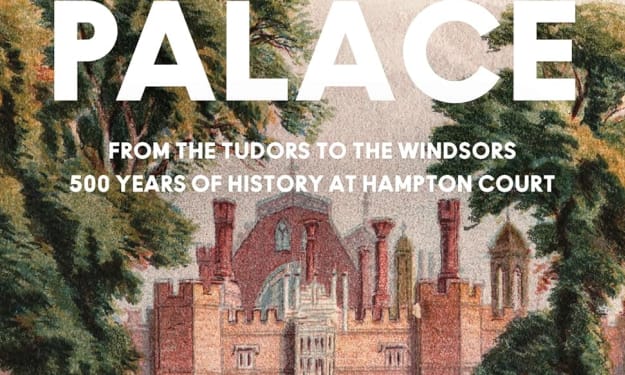
Book Review: "The Palace"by Gareth Russell (Pt. 5)
This review covers chapter 18 to the end of the book *** Chapter 18 covers the reign of Queen Anne, the final queen of the Stuart household and mostly seems to look at the idea that she could barely marry, she had lots of miscarriages and in the end the only child she had lived to eleven years' old and so, she had no heir. There were many questions of Queen Anne's marriage, from her husband participating in homosexual affairs to the ideas put forward in the film The Favourite in which it is Queen Anne who is homosexual and promiscuous. Whatever it was, I definitely feel sorry for Queen Anne - everything must have hurt by the end of her reign, too many pregnancies and miscarriages meant her health was declining quickly towards the end. It's quite sad.
By Annie Kapur5 days ago in Geeks
Book Review: "The Palace"by Gareth Russell (Pt. 4)
This review covers chapter 13 to chapter 17 *** Chapter 13 is the Queen's Bedchamber and covers the sicknesses of King James' wife - Anne. She is consumed by something after the birth of her last child, bleeding and pain is everywhere. But the doctor's don't actually know what it is: is it gout? is it malnutrition? is it something to do with her female reproductive organs? Who knows. Some diagnosed it as dropsy. But it is said that she still came about in public until she could no longer do so - still doing her public duty through intense amounts of pain and fever. Still decked out in jewels more expensive than entire cities in her country.
By Annie Kapur6 days ago in Geeks