
Saudi Arabia Bottled Water Market: Premiumization, Sustainability & Smart Packaging Driving Growth
How rising health consciousness, premium water preferences, and sustainable packaging innovations are transforming consumer demand and growth in the Saudi Arabia bottled water market.


Rising health awareness, an arid climate with limited freshwater access, rapid urbanization, and a booming tourism sector are collectively powering demand for bottled water across Saudi Arabia. According to IMARC Group's latest research, the Saudi Arabia bottled water market was valued at USD 2.8 Billion in 2025. Looking forward, IMARC Group estimates the market to reach USD 5.5 Billion by 2034, exhibiting a CAGR of 7.70% from 2026-2034.
With the country's population expected to grow from 35 million to over 40 million in the coming years, and the Ministry of Environment, Water and Agriculture having allocated USD 80 billion toward water infrastructure projects, bottled water is not a luxury here. It is a daily essential backed by government investment and consumer necessity alike.
Saudi Arabia Bottled Water Market Growth Drivers
- Expanding Retail Infrastructure
Bottled water is becoming easier to find than ever across Saudi Arabia. Modern supermarkets, hypermarkets, convenience stores, and a rapidly growing e-commerce ecosystem have turned bottled water into a near-ubiquitous product across both urban and rural areas. Saudi Arabia's retail market is projected to reach USD 402.7 Billion by 2033, and that expansion directly translates to more shelf space, better brand visibility, and easier access for consumers. Online grocery platforms are adding another layer of convenience, allowing households to stock up without ever leaving home. This broader distribution reach is a key reason more local and international brands are gaining traction in the market.
- Growing Demand for Eco-Friendly Packaging
Consumers across Saudi Arabia are paying closer attention to what their water comes in, not just what is inside. Concern over plastic waste has pushed both brands and regulators to rethink packaging strategies. Biodegradable bottles, recyclable materials, and plant-based plastics are moving from niche to mainstream, driven by a combination of consumer preference and tightening environmental regulations. Brands that align their packaging with sustainability values are earning stronger loyalty and a competitive edge. This is not a temporary trend. As governments globally tighten plastic waste policies, companies that adapt early are positioning themselves for long-term relevance in a market that increasingly rewards environmental responsibility.
- Technological Advancements in Water Filtration
The bottled water segment is undergoing a quiet but significant transformation thanks to better filtration technology. Reverse osmosis, UV treatment, and advanced mineralization processes are helping brands deliver water that meets stringent health and safety benchmarks. A standout example: in May 2024, Pure Beverages Industry Company (PBIC) launched a world-first water treatment technology in Saudi Arabia, developed in partnership with German firm Krones AG. The initiative, aligned with Vision 2030, sets a new quality benchmark for the Kingdom's water sector and signals a broader industry shift toward precision-engineered hydration products.
Saudi Arabia Bottled Water Market Trends
- Arid Climate and Water Scarcity
Saudi Arabia's geography tells a compelling story. With no permanent rivers and heavy reliance on desalination, the country's water landscape makes bottled water a practical necessity rather than a lifestyle choice. Around 67% of Saudi consumers identify safe and clean water as a major environmental concern, according to industry data. The World Resources Institute's projections indicate the entire MENA region could face extreme water stress in the coming decades, a reality that makes reliable bottled water supply more critical with every passing year. As urbanization deepens and populations grow, demand for convenient, safe hydration solutions shows no sign of cooling.
- Health Consciousness and Lifestyle Shifts
Sugary beverages are losing ground, and bottled water is picking up the slack. Younger Saudi consumers and the country's large expatriate population are actively choosing water for its health benefits, pushing demand for premium and flavored variants higher. The premium segment is seeing particularly strong interest, as evidenced by CLEAR Premium Water's acquisition of a majority stake in KELZAI Volcanic Water in December 2023. KELZAI, sourced from volcanic springs, now targets the luxury dining, hospitality, and retail segments. Moves like this reflect a broader consumer desire for variety, quality, and wellness-aligned hydration options across multiple lifestyle settings.
- Rising Tourism and Hospitality Industry
Saudi Arabia's tourism push under Vision 2030 is generating a significant secondary demand for bottled water. The Kingdom recorded a remarkable 73% jump in international tourist arrivals and a 207% increase in international tourism revenues, according to UN Tourism data. Hotels, event venues, and restaurants require enormous volumes of bottled water to serve this growing influx of visitors. Saudi Arabia has also consistently topped G20 rankings for growth in both tourist arrivals and tourism revenues. As religious tourism, cultural tourism, and mega-events become a larger part of the national economic agenda, the hospitality sector will continue to be a reliable and expanding demand driver for the bottled water market.
Segments Covered in the Report:
- By Type: Still Water, Carbonated Water, Flavored Water, Functional Water, Others
- By Distribution Channel: Supermarkets and Hypermarkets, Convenience Stores, Online Retail, Hotels and Restaurants, Others
- By Packaging Size: Less than 500 ml, 500 ml to 1.5 Liters, More than 1.5 Liters
- By Region: Various regions across Saudi Arabia
Recent News and Developments in Saudi Arabia Bottled Water Market
- April 2026: Nova Water deploys AI sensors across smart factories for real-time quality monitoring, achieving zero contamination and raising premium segment consumer trust significantly.
- March 2026: Naqi Water Company completes new Riyadh production line installation with 50% higher capacity than existing plants, boosting local supply amid rising demand.
- February 2026: Major firms expand lightweight PET and biodegradable packaging initiatives, cutting plastic usage while aligning with national sustainability and Green Initiative targets.
- January 2026: Almarai integrates acquired Pure Beverages operations, enhancing Ival and Oska brand distribution through advanced facilities and broader beverage portfolio synergies.
- December 2025: Red Sea Global scales atmospheric water generation technology with SOURCE Global, producing millions of solar-powered bottles annually to address scarcity challenges.
Note: If you require specific details, data, or insights that are not currently included in the scope of this report, we are happy to accommodate your request. As part of our customization service, we will gather and provide the additional information you need, tailored to your specific requirements. Please let us know your exact needs, and we will ensure the report is updated accordingly to meet your expectations.
About the Creator
Kishan Kumar
My name is Kishan Roy and I am a market analyst having 5 years of experience and a skilled researcher with a keen eye for consumer trends and data-driven insights.
Keep reading
More stories from Kishan Kumar and writers in Futurism and other communities.
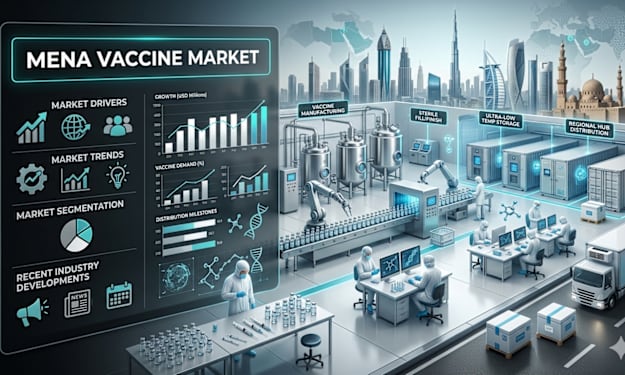
MENA Vaccine Market: Local Manufacturing Surge, Strategic Partnerships & Immunization Expansion
Rising healthcare awareness, increasing immunization programs, and growing prevalence of infectious diseases are driving vaccine demand across the MENA region. Governments and international organizations are investing heavily in vaccination campaigns and healthcare infrastructure to improve accessibility. According to the IMARC Group's latest data, the MENA vaccine market size was valued at USD 2.4 Billion in 2025. Looking forward, IMARC Group estimates the market to reach USD 3.9 Billion by 2034, exhibiting a CAGR of 5.64% from 2026-2034.
By Kishan Kumara day ago in Futurism
How machines can learn from human behaviour
In order to understand where we are and where we are going, we need to understand where we were first. - Susan Fourtane Could a human behaviour simulator be embedded into a robot or online avatar to the point that it’s hard to distinguish between a real person or artificial intelligence? Scientists have been upping the stakes in this “Turing test” for years, to the point that human-mimicking programmes are ready to answer tricky questions, assist people with online shopping or be companions.
By Susan Fourtané 22 days ago in Futurism
Personal Space
For some reason, it seems to be unpopular to have the opinion of wanting personal space. I do very much miss the days when it was illegal to come within 6 feet of anyone else and I would like the earth to go back to that because what the hell is everyone on nowadays?
By Annie Kapur2 days ago in Psyche

Comments
There are no comments for this story
Be the first to respond and start the conversation.