
City of plague:A New Yorker’s pandemic chronicle Pt 20.
The Tenant Who Quietly Disappeared

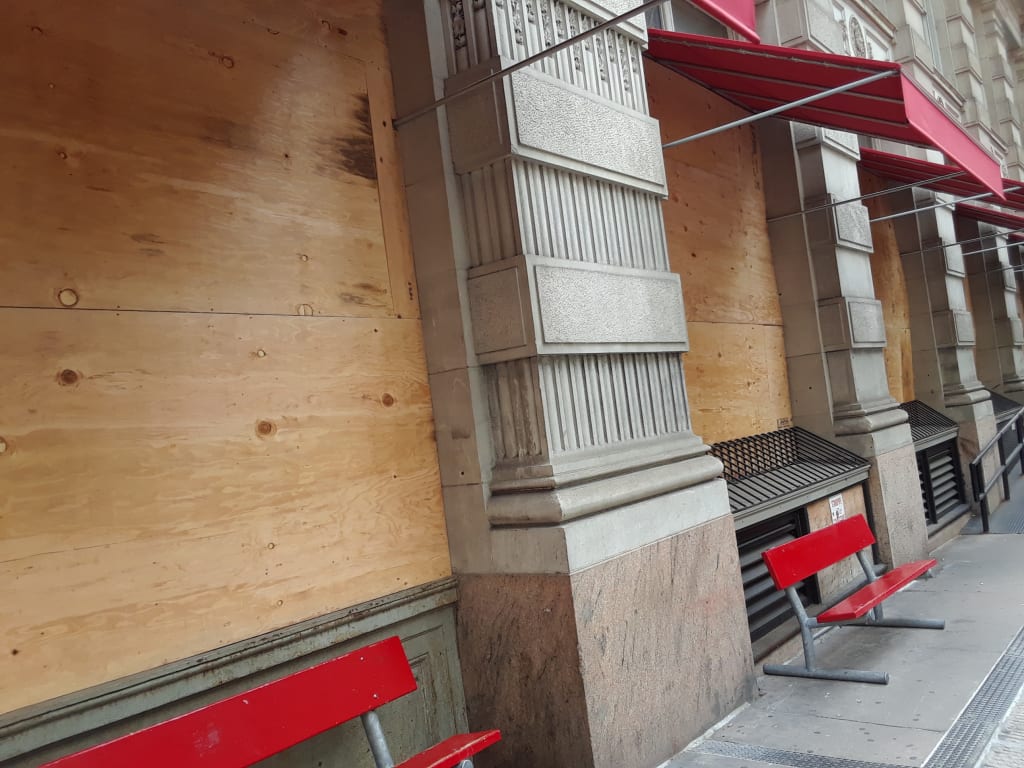
A small farewell in New York that left a lasting sadness during the pandemic
For nearly three months, COVID-19 swept through New York City like an unstoppable storm.
The virus did not simply change daily life—it shattered it.
People stayed home as if hiding from an invisible enemy. Streets emptied. Businesses closed. Anxiety replaced hope, and survival became the only priority.
Factories shut down.
Restaurants closed their doors.
Hotels, theaters, and offices fell silent.
Entire industries simply stopped moving.
Within weeks, millions of workers across the United States lost their jobs. Families that once lived comfortably suddenly faced uncertainty about rent, groceries, and the future.
Life shrank to the walls of our homes.
Days blended together.
The longer the lockdown continued, the more people began asking the same question:
How long can the economy stay frozen?
Even the president began pressing for answers.
By mid-April, President Donald Trump had already started urging states to reopen businesses. Some states welcomed the idea immediately. Others resisted fiercely.
In Michigan, protesters gathered outside the state capitol building. Some even carried rifles while demanding the governor lift the stay-at-home order.
They argued that the economy was collapsing.
That people needed to work.
That freedom itself was at stake.
But across the country, many Americans disagreed.
They believed reopening too early would trigger another wave of infections.
The debate quickly became a difficult moral question:
Which matters more—lives or livelihoods?
Public health experts warned that reopening prematurely could bring disaster. Among them was Dr. Anthony Fauci, director of the National Institute of Allergy and Infectious Diseases.
His voice carried enormous influence.
For weeks, his cautious warnings helped slow the push toward reopening.
But by May, the pressure was building.
Businesses were collapsing.
Unemployment numbers were rising to historic levels.
Eventually even Fauci acknowledged a painful reality: if lockdowns lasted too long, the economic damage might become irreversible.
One by one, states began reopening their economies—some cautiously, others aggressively.
For me, however, the national debate felt strangely distant.
My job belonged to an essential industry.
Our company never fully closed during the pandemic. Work hours were reduced, but the office remained open.
My salary continued.
Financially, my situation remained stable.
But stability can be deceptive.
Because the world around us was quietly changing.
One morning in mid-May, I ran into a tenant named Ford in the hallway of our building.
“Kaide! Long time no see,” he said with a friendly smile behind his mask. “How have you been?”
Because of the lockdown, we hadn’t seen each other for more than two months.
Both of us wore masks.
We stood about six feet apart—the now-famous distance that had become a universal rule.
“I’m doing well,” I replied. “And you?”
“Doing alright,” he said.
Ford was easy to recognize.
He had long shoulder-length hair and carried the relaxed air of an artist. His style was casual and slightly unconventional, the kind of person who never seemed rushed.
He worked in the film industry as a visual effects compositor, someone who helped create the digital magic audiences see on movie screens.
Suddenly he asked, “Kaide, do you happen to have any mail for me in the office?”
I hesitated.
“I’m not sure,” I admitted. “Let me go check.”
“If there is, could you bring it to my room?” he asked politely.
“Of course,” I said.
“I’ll be home all day.”
Back in the office, I began searching through the stack of letters and packages that had accumulated during the lockdown.
Among them, I found a package addressed to Ford.
I picked it up and walked toward his apartment.
When he opened the door and saw me holding the parcel, he smiled broadly.
But as I stepped inside for a moment, something immediately caught my attention.
The room looked chaotic.
Boxes scattered across the floor.
Clothes piled on chairs.
Half-packed suitcases leaning against the wall.
My heart sank slightly.
Ford noticed my expression and laughed awkwardly.
“Yeah… it looks messy,” he said. “I’m moving out.”
The words surprised me.
“You’re leaving?” I asked.
Ford had lived in our building for more than ten years.
He was the kind of tenant every landlord hopes for—quiet, responsible, always paying rent on time.
He never smoked marijuana in the hallways like some tenants did, leaving unpleasant smells that other residents complained about.
He was simply… dependable.
Now he was leaving.
“Yes,” he said calmly. “I’m moving.”
Then he explained.
“People in my industry can work remotely,” he said. “Everything we do is done on computers. Visual effects, editing—it can all happen from home.”
Before the pandemic, working remotely felt optional.
Now it felt necessary.
“If I can avoid leaving the house,” he continued, “why wouldn’t I? It’s safer.”
I understood his reasoning immediately.
In fact, if I had the same option, I might have made the same decision.
Still, I couldn’t hide my disappointment.
“You could keep the room,” I suggested. “Maybe come back after the pandemic ends.”
Ford shook his head gently.
“Kaide, more than twenty thousand people have already died in New York City,” he said.
“Doesn’t that scare you?”
Of course it did.
But I had no answer.
“Besides,” he continued, “no one knows when this will end. Moving feels like the safest choice.”
His logic was impossible to argue with.
Yet a quiet worry began forming in my mind.
If tenants started leaving one after another…
And no new tenants replaced them…
Our company’s income would decline rapidly.
And when income declines, employers rarely keep unnecessary staff.
The thought lingered heavily in my mind.
But there was nothing I could do.
Ford had already made his decision.
“Take care,” I said finally.
“Stay safe.”
The words sounded strangely stiff, even to my own ears.
I was about to leave when Ford suddenly called after me.
“Hey, Kaide—do you want a tape recorder?”
I turned back, puzzled.
“A tape recorder?”
Tenants who move often leave behind things they no longer want. Sometimes they give them away rather than throwing them out.
Ford lifted an old dual-cassette stereo recorder.
“Do you want it?” he asked.
I examined it briefly.
It was an old-fashioned machine—something from another era.
At home, I didn’t even own cassette tapes anymore.
And I rarely listened to the radio.
So the device would be useless to me.
“Thank you,” I said politely. “But you should give it to someone who can use it.”
He nodded and smiled.
Then we said goodbye.
A week before May ended, Ford completely emptied his apartment.
When he left, he slid the room key through the narrow gap under the office door.
Just like that, our long tenant-landlord relationship ended quietly.
No ceremony.
No farewell dinner.
Only silence.
But there was one surprise waiting for me.
Among the mail on my desk, I noticed an envelope with my name written on it.
Inside was a handwritten letter.
I opened it slowly.
As I read the words, my eyes grew warm.
Ford had written to thank me for my work over the years—especially for helping tenants collect their mail, something that technically wasn’t even part of my job.
At the end of the letter, he had enclosed twenty dollars as a small tip.
“A goodbye gift,” he wrote.
I sat quietly for a moment, deeply moved.
I remembered something from years earlier.
When I had first started working for the company, I was still in my probation period.
One day I accidentally placed a piece of mail intended for another building outside Ford’s door.
The names matched, but the addresses were different.
It was a careless mistake.
If my boss had discovered it, I might have lost my job.
Ford could easily have complained.
Instead, he quietly invited me into his apartment and pointed out the mistake.
“Same name,” he said kindly, “but different building.”
He didn’t report me.
He simply helped me correct it.
That small act of kindness saved my job.
After that, Ford became one of the most thoughtful tenants I knew.
Every Christmas, he gave me a small gift.
Sometimes a gift card.
Sometimes a lottery ticket.
Sometimes clothing—a hat, gloves, or a scarf.
Always unexpected.
Always creative.
And during the Chinese Lunar New Year, he followed Chinese tradition and handed me a red envelope.
Sometimes it contained twenty dollars.
Sometimes fifty.
The amount changed every year.
But the gesture meant far more than the money.
Each time he would say, in careful but imperfect Mandarin:
“恭喜发财.”
Gong Xi Fa Cai.
“Wish you prosperity.”
Hearing those words from him always made me smile.
Sometimes it even brought tears to my eyes.
And now he was gone.
Just like that.
A good tenant.
A good person.
Another quiet casualty of the pandemic.
For several nights afterward, I found it hard to sleep.
The building felt emptier.
And so did something in my heart.
About the Creator
Peter
Hello, these collection of articles and passages are about weight loss and dieting tips. Hope you will enjoy these collections of dieting and weight loss articles and tips! Have fun reading!!! Thank you.
Bound by Blood
Nicolas Winters had taken a long time to get everything together, including a storage unit locker from a place no one would go snooping. He'd also need someone who would take care of it in his place. Who, though, could he give it to? Nicolas remembered that he had a cousin on his brother's side of the family who had a son. They would be the perfect person to inherit this curse he had gotten himself into.
By 3rrornightshift3 days ago in Fiction


Comments
There are no comments for this story
Be the first to respond and start the conversation.