
City of plague:A New Yorker’s pandemic chronicle Pt 19.
The Birthday That Didn’t Matter And the Unexpected Gift New York Gave Me
In the Chinese lunar calendar, the first day of the fourth month is my birthday.
Birthdays are strange things. They mark the beginning of a life, a moment that seems enormously important—yet none of us ever choose it. It simply arrives, quietly deciding the starting point of our existence.
Perhaps because of that, I have never been overly sentimental about birthdays.
To me, they always felt a little accidental, even slightly arbitrary. Life itself matters far more than the date it began.
Over the years I developed a simple philosophy: as long as I exist, that is already enough reason to feel grateful.
Maybe my indifference toward birthdays also comes from the many setbacks life has given me. When you’ve experienced enough uncertainty, you stop expecting too much from symbolic celebrations.
A birthday is just another day.
Another step forward.
Another chance to continue.
Even when I was young, I rarely celebrated it. After I married, there were years when I might have forgotten my birthday completely—if my wife and children hadn’t reminded me beforehand.
My wife, however, treats birthdays very differently.
Since the day we married, she has always remembered mine with remarkable care. No matter how busy life became, she never forgot it.
Her sincerity often moves me deeply.
Ironically, I have never been as good at remembering her birthday. In my mind, these formal rituals always felt less important than genuine affection. I rarely prepared elaborate gifts for her, something I still feel slightly guilty about today.
Back in China, she often suggested celebrating my birthday at a restaurant. I would politely decline.
I preferred quiet evenings at home. To me, a successful marriage meant something simple: no arguments, mutual respect, and peaceful daily life. Until reaching fifty years old, making a big event out of a birthday felt almost embarrassing.
After we moved to the United States, the situation changed.
Restaurants were no longer just around the corner like they had been before.
Yet my wife’s enthusiasm never faded.
Every year before my birthday, she would secretly prepare ingredients. On the day itself, she would spend the entire morning cooking.
By lunchtime, the dining table would look almost like a holiday banquet.
Chicken.
Fish.
Pork.
Soup.
And sometimes even a small birthday cake.
I never had the heart to refuse her kindness. Instead, I would praise her cooking and thank her for her thoughtfulness.
In recent years, as we both grew older, her birthday preparations somehow became even more creative. Each time she managed to surprise me again.
Her care filled me with gratitude.
But at the same time, I often felt ashamed that I still occasionally forgot her own birthday.
Marriage, after all, is rarely perfectly balanced.
Like many Chinese families, we follow the lunar calendar for birthdays.
Unlike the Western calendar, the lunar calendar feels closely connected to the rhythm of seasons and nature. For generations of Chinese people, it carries a quiet sense of tradition and continuity.
This year was particularly unusual.
The lunar calendar included a leap fourth month, meaning the fourth month appeared twice.
In theory, that meant I would have two birthdays in the same year.
A rare coincidence.
But fate had other plans.
My first birthday that year fell on April 23rd.
In New York City, it would become one of the darkest days in modern history.
Just days earlier, I had stopped thinking about birthday celebrations entirely. Instead, every morning I checked the pandemic statistics.
Daily infections.
Hospital admissions.
ICU numbers.
Death counts.
The numbers rose relentlessly.
New York had become the global epicenter of COVID-19.
More than ten thousand people were being hospitalized every day across New York State. The death toll was even more horrifying.
On that particular day, more than 800 people died in the state, including nearly 500 deaths in New York City alone.
The scale of loss felt unimaginable.
Hospitals were overwhelmed.
Beds were unavailable.
Ambulances lined the streets.
Patients waited outside emergency rooms for hours.
Some collapsed before they could even enter.
Refrigerated trucks stood outside hospitals, silently serving as temporary morgues.
Whenever I saw those images on the news, a chill ran through my body.
Doctors and nurses were exhausted.
ICU wards overflowed into hallways.
The entire medical system seemed to be operating beyond its limits.
Fear hung over the city like heavy fog.
Yet despite everything, I still had to go to work.
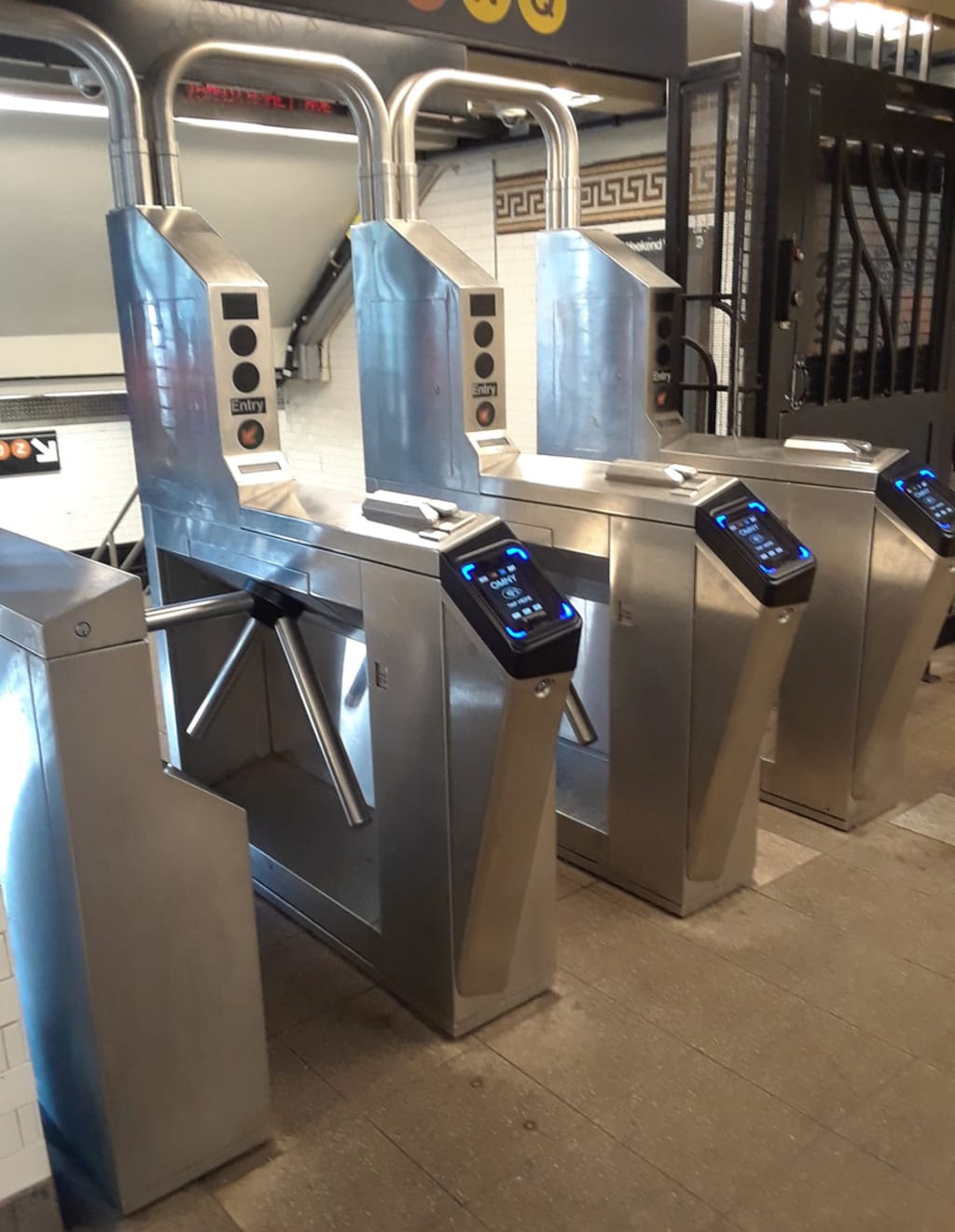
Every morning I took the subway.
And every day the same thought followed me:
What if I bring the virus home to my family?
“Today is your birthday,” my wife reminded me that morning as I prepared to leave.
Her voice carried both warmth and concern.
“After work, maybe you can stop by the supermarket and buy something nice to eat,” she suggested. “Even though times are difficult, you should still comfort yourself a little.”
I shook my head.
“Not this year,” I said.
New York no longer looked like New York.
Times Square—once crowded with tourists and flashing lights—now stood eerily empty.
Chinatown felt even quieter.
Stores had closed.
Restaurants disappeared.
Some businesses were permanently gone.
I almost said the neighborhood felt dead, but I stopped myself. On my birthday, I didn’t want to speak such unlucky words.
My wife tried to encourage me.
“Hard times will pass,” she said gently. “We must believe we can overcome this.”
I sighed.
“Even the bakeries in Chinatown are closed,” I replied. “There isn’t even bubble tea anymore. Forget birthday cake.”
“You could buy a small packaged cake at the supermarket,” she insisted. “Just something symbolic.”
I shook my head again.
“It’s not worth the risk. Crowded places are dangerous right now.”
She looked at me with sadness.
“Doesn’t it feel unfair to spend your birthday like this?”
“No,” I said quietly.
“If I can leave home healthy in the morning and return safely at night, that is already the best birthday gift.”
The subway ride that morning confirmed my fears.
Whenever I boarded a train during the pandemic, I silently prayed for a peaceful journey.
But peace was never guaranteed.
That day, the train had barely traveled halfway when a young white man suddenly entered the car.
He wore nothing but underwear.
His chest was bare.
His hair was messy.
He seemed mentally unstable, muttering to himself before suddenly shouting angry words into the air.
Passengers froze.
Then he lay down across the seats, kicking his legs as if doing exercises.
I felt my heart pounding.
I wore glasses, gloves, a hat, and two masks.
But what if that wasn’t enough?
What if he carried the virus?
Aerosol particles could travel through the air.
My ordinary glasses probably couldn’t protect my eyes.
And my masks had already been reused several times.
I couldn’t guarantee they were still effective.
One by one, passengers began moving away.
When the train stopped at the next station, I quickly stepped into the next car.
For a moment I felt relieved.
Then I noticed another homeless man sleeping across the seats nearby.
The air smelled stale.
Suddenly I understood why the train car had been so empty.
There were homeless people everywhere.
I felt helpless.
For a moment I wished I were a gecko that could climb onto the subway ceiling and escape.
Instead, I stood between the two train cars, breathing the small stream of air leaking through the door.
When I finally returned home that evening, my routine began immediately.
Before stepping inside, I sprayed 75% alcohol on my shoes and clothes.
Then I sanitized my hands.
Removed my jacket.
Removed my mask.
I carefully rolled the used mask inside out and threw it into the trash.
Only after checking everything twice did I allow myself to relax.
I grabbed clean clothes and hurried to the shower.
Hot water poured over me as if washing away invisible enemies.
When I stepped out of the bathroom, something unexpected greeted me.
Dinner was already prepared.
My wife stood quietly by the table.
No special dishes.
No birthday cake.
Just simple home cooking.
Yet in that moment I felt something deeply comforting.
Home.
After everything outside—the fear, the chaos, the uncertainty—home was still warm, safe, and steady.
One month later, the leap fourth month arrived.
Which meant my second birthday of the year.
This time my wife added a special dish: braised pig’s feet.
A traditional meal meant to bring strength and good fortune.
By then, something else had changed too.
The pandemic numbers were falling.
Hospital admissions dropped from thousands to only a few hundred per day.
Daily deaths fell below one hundred.
Hospitals finally had empty beds again.
Nearly thirty percent of ICU capacity had returned.
That day also marked the 60th day since New York had shut down.
And slowly, hope was returning.
I didn’t receive birthday cards.
There were no presents.
Not even a small cake.
But none of those things mattered.
What mattered was something far greater.
New York had begun to see the light at the end of the pandemic.
After months of fear, sacrifice, and endurance, the city was slowly recovering.
For me, that news felt more precious than any gift.
It was the most extraordinary birthday present I could ever imagine.
A century-level gift.
Hope.
About the Creator
Peter
Hello, these collection of articles and passages are about weight loss and dieting tips. Hope you will enjoy these collections of dieting and weight loss articles and tips! Have fun reading!!! Thank you.
Pandora’s Burden
“My brother warned me to not accept gifts from the one who commissioned you,” said Epimetheus to the woman clad in silvery raiments standing at the entrance to the temple. Her silver tiara and the silver rings on her fingers and toes glinted in the firelight cast by torches set on either side of the doorway. Lingering in the shadows, beyond the reach of the flames as she was, he could not tell what she held in her hands. At first what appeared to be a box was perhaps a funerary urn, or maybe merely an apple.
By J. Otis Haas5 days ago in Fiction
Talking Through the Grapevine
Theseus sighed as he picked up a stone and threw it into the ocean. Usually, he would be able to make it skip for at least ten times, even if he was having a bad day. But whether it was because he was sitting on the sand or he just didn’t care, the stone sank with a single plop a half mile away.
By Rebecca Patton6 days ago in Fiction


Comments
There are no comments for this story
Be the first to respond and start the conversation.