Latest Stories
Most recently published stories in Earth.
The Door to Hell
In 1971, Soviet geologists accidentally opened a portal to an underground natural gas cavern in Turkmenistan's desert, and to prevent poisonous gas from spreading, they set it on fire expecting it to burn out in weeks—it's still burning today.
By The Curious Writer20 days ago in Earth
Fast Radio Burst 121102
In 2012, astronomers detected a millisecond burst of radio energy more powerful than anything our Sun produces in an entire day, and when it kept repeating from the same spot in deep space, we realized something extraordinary was sending us signals we cannot explain.
By The Curious Writer20 days ago in Earth
Oil Shock, Solar Surge
This conflict-driven oil shock (Feb–Mar 2026) closed the Strait of Hormuz and cut about 25% of global oil and gas supplies[1]. Prices spiked (Brent ~$100) and Gulf fields shut in[2]. Experts say this crisis proves why renewable energy (solar, wind, batteries, hydrogen) must now be fast-tracked to secure power and cut emissions[3][1].
By Futoshi Tachino20 days ago in Earth
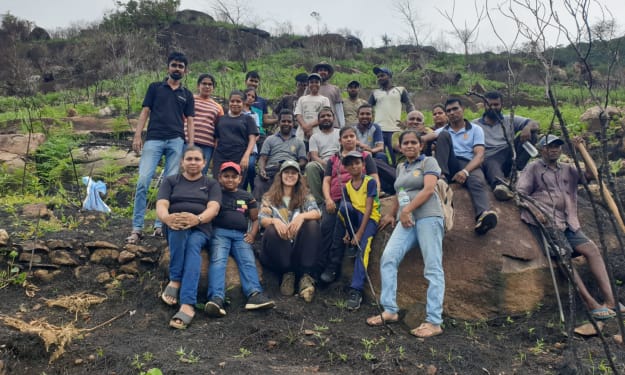
Balangoda Restoration Project: Volunteering for Rainforest Recovery in Sri Lanka. AI-Generated.
In the foothills of Sri Lanka’s wet zone, near the historic town of Balangoda, a quiet but powerful ecological restoration effort is taking shape. The Balangoda Restoration Project, initiated by Rainforest Protectors of Sri Lanka, is working to restore degraded lands back into functioning rainforest ecosystems and volunteers from around the world are invited to be part of this living experiment in regeneration.
By Jayantha Wijesingha20 days ago in Earth
Experiencing Ball Lightning and surviving
A Ball Lightning encounter is unique Ball Lightning is a rare occurrence, with only 5% of the population said to have experienced it. This unusual phenomenon occurs during thunderstorms under the right atmospheric conditions.
By Cheryl E Preston20 days ago in Earth
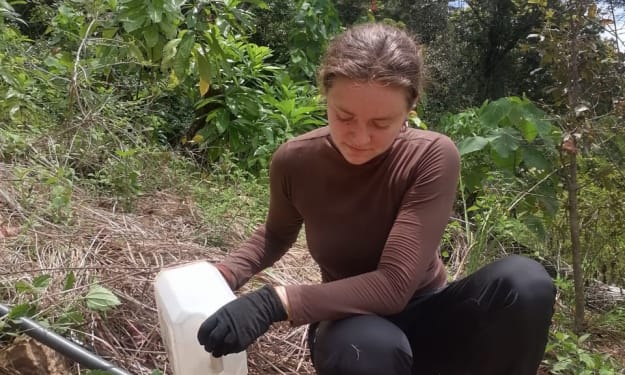
Environmental Volunteering in Sri Lanka
Reforestation and tree planting is one of the best ways to give back to nature. When you travel, you contribute to air pollution in a very big way. Emissions from air travel being one of the main contributors of global warming, everyone who travel should find a way to at least compensate for some of the pollution they are responsible for.
By Jayantha Wijesingha20 days ago in Earth
How to Determine If Your Biochar is High Quality: A Guide to the Key Indicators. AI-Generated.
Biochar production is surging in popularity, driven by its applications in agriculture, carbon sequestration, and industrial filtration. However, not all biochar is created equal. If you have just pulled a batch from your kiln or received a shipment from a supplier, how can you tell if it is actually high quality?
By Bestonpyrolysis20 days ago in Earth
The Star That Keeps Dimming for No Known Reason
In 2015, astronomers analyzing data from NASA's Kepler Space Telescope discovered a star designated KIC 8462852, located about 1,470 light-years from Earth in the constellation Cygnus, that was exhibiting brightness fluctuations unlike anything that had been observed in over 150,000 stars surveyed by the Kepler mission, and the pattern of dimming was so unusual and irregular that it could not be explained by any known natural phenomena including planets orbiting the star, stellar pulsations, or dust clouds, leading some scientists to seriously propose that the dimming might be caused by artificial structures built by an advanced alien civilization, specifically something like a Dyson swarm of solar collectors orbiting the star to harvest its energy, though this explanation while exciting was considered a hypothesis of last resort only to be entertained after all natural explanations had been exhaustively ruled out. The star, which became known informally as Tabby's Star after astronomer Tabetha Boyajian who led the research team studying it, showed dimming events where its brightness dropped by up to 22 percent, far more than could be explained by a planet passing in front of it, which typically causes dimming of only a fraction of a percent, and the dimming events were irregular and aperiodic, meaning they did not repeat on any predictable schedule, and different dimming events had different characteristics with some showing gradual dimming over days and others showing more sudden brightness drops.
By The Curious Writer21 days ago in Earth
The Bloop
NOAA detected an ultra-low frequency sound in 1997 that matched no known animal or geological phenomenon In the summer of 1997, an array of underwater microphones operated by the National Oceanic and Atmospheric Administration (NOAA) detected an extremely powerful ultra-low-frequency sound originating from a remote point in the South Pacific Ocean west of South America, and the sound, which was nicknamed "the Bloop" because of the blooping noise it made when sped up to be audible to human ears, was so loud that it was detected on sensors over 3,000 miles apart, making it the loudest underwater sound of unknown origin ever recorded, and the frequency pattern and characteristics of the Bloop did not match any known geological phenomena like volcanic activity or earthquakes, but intriguingly it did show characteristics similar to sounds produced by living creatures, specifically matching the frequency profile of sounds made by marine animals, though the Bloop was many times louder than the loudest sounds produced by the largest known animal, the blue whale, leading to speculation that it might have been generated by an enormous unknown marine animal far larger than any creature known to science.
By The Curious Writer21 days ago in Earth