Latest Stories
Most recently published stories in Earth.
Pandemic our Teacher
This pandemic has changed the way we live and work, as various health and safety restrictions keep more of us at home more often. The resulting changes to our behaviour are already impacting the environment around us. Air pollution is diminishing, water quality is improving, and snow is becoming more reflective in some areas since the pandemic began.
By Gerald Holmes5 years ago in Earth
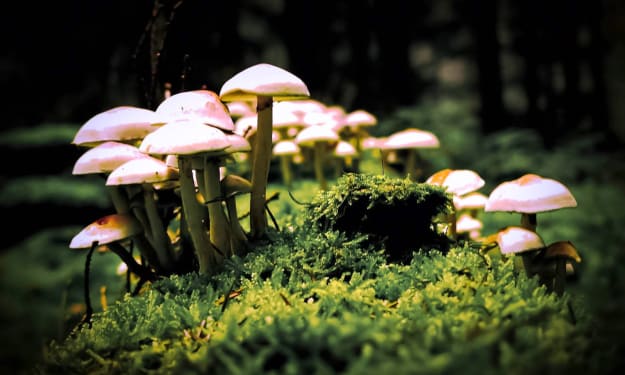
What Is The Secret Behind The Glow of Mushrooms Found in Meghalaya?
Every day on our earth, our scientists keep on finding new discoveries and new things. There are so many amazing things on earth that cannot be understood with any strong evidence as to why this thing is in this way, a similar discovery was found in the forests of Meghalaya. What is this and how was it discovered.
By Russel Jim5 years ago in Earth
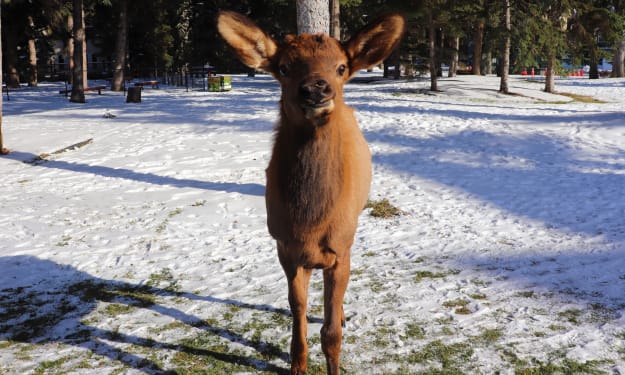
A Natural Smile
I have always considered myself a nature lover and a very novice photographer. The joy that these little furry babies and all unique and special things of the world bring to me is so sharp and childishly pure that trying to capture it for others is incredibly difficult. This little one is one of many new friends I have had the pleasure of greeting along my trip in Canada and I was shocked when I looked back through the many photos to see that I had caught the little lopsided grin I thought that I had imagined.
By Obsidian Words5 years ago in Earth
Dr. Matthew Primous, Horn Fellows' Climate Change Invitational
Since the beginning of droughts, nations have risen to the occasion of finding sources of water. They thought of numerous ways to replenished their source. Ancient Egypt used an efficient concept, they irrigated their land to cause it to flourish. They dug deep trenches into the ground and leveled them to flow water to their crops. Today, we have much more complicated technologies. Why can't we simply change the oceans' water into freshwaters that we can use? This world is made up of two-thirds of water and it is about time we use the technology to sustain our life on this planet. It just does not make any sense that children are dehydrated and nations are still trying to figure out how to end droughts? Nations would even consider buying water to sustain their nation. Water is chemical anyways, made of oxygen and hydrogen. I believe we should try to irrigate the land but also in a way that preserves the territories. We cannot simply destroy beautiful forests and leave homeless millions of animals in exchange for our self-sufficiency. We must think of all the world. We got to think bigger than our matters even national interests. And then we can fight for harmony among living beings when all our needs and wants are considered. Each animal brings to the table, necessities to balance an ecosystem. Humans are a part of the ecosystem and we must play the role of custodian of the ecosystem. We cannot simply force an animal out of the ecosystem because that instability will wreck the culture of the system. We must find our place and every animal place. I believe, in theory, that water is also a filter, it can catch other elements and we should develop it to catch and remove our carbon print. Nothing clears a smug more than the rain that pours down, we must understand nature's strategic courses to plan our technological advancements. The more we rely on nature's tests, the more we avoid making the mistakes of the past. Nature has been managing the world for many years, way before our time and our ancestors' time. There are lessons that we have not understood and have not completely fathom. It is necessary to study them again and again to prevent future ignorance. The minds of the future must understand that the knowledge of science, that science's highest and greatest purpose goes beyond biological, and chemical science. We can no longer blind ourselves in the utopia of previous acclaimed science, we have to venture out and test those hypotheses. We must do the work if we want a sustainable future. It requires like Socrates said, "Question and question and when in doubt question again until you find your answer." It is not enough to gain knowledge, we have to use it appropriately. We don't have to start from scratch, we can build on others' successes to succeed in the universal space of intelligence. Even the Ancient Romans' complicated others' discoveries, they used salt water to make salt by creating salt wells in Africa and used it for currency. We cannot give up on tough discoveries. We must be willing to flex our opinion and flex our experiment. We have to consider others' opinions and filter for reasonable ones. Our reasoning is what makes us different than the animals. Human beings can figure out what they want to do and do it to the best of their knowledge. We must not be mean all and end to all. We must be the preserver and protector of all living beings now and further on
By Distinguished Honorary Alumni Dr. Matthew Primous5 years ago in Earth
Trash Art
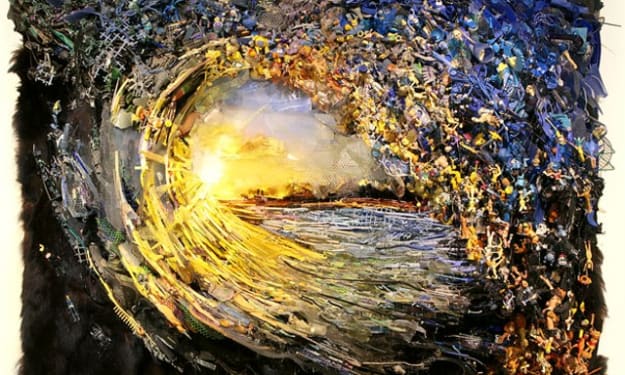
Reusable period panties, remembering our reusable bags at the grocery store, shutting off water between soaping and rinsing, keeping unnecessary lights off, wearing pants a few extra times before washes, buying sustainable products, walking the extra few steps to the recycling, unplugging electronics in disuse, swapping out for energy saving appliances, and on and on and on. There are many ways to slash our carbon footprint. Some methods fulfilling while others can feel downright nerve wracking especially here in the U.S. where recycling and consumption reduction is not a social precedent. It can even be disheartening when you have gone that extra mile and news still tells you it's not enough. We are still burying ourselves in trash and suffocating ourselves in carbon. Hope and change always start on the smallest of levels, though. It starts with the individual and spreads like an idea until it becomes a movement. So how do we turn a ripple into a wave? I think the simple answer is Trash Art.
By E. J. Strange5 years ago in Earth