Khurram Munir
Stories (9)
Filter by community
Defending the Devil
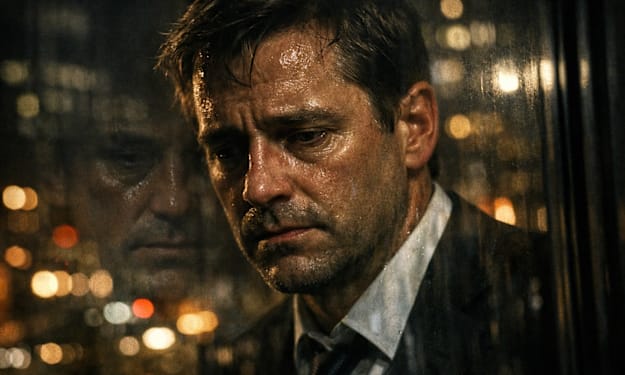
The first time I saw him, I knew exactly what kind of man he was, and that was the problem. Not because he looked like a criminal he didn’t. He looked ordinary, almost forgettable, sitting there in a crisp shirt with his hands folded neatly on the table, as if he were waiting for a job interview instead of a murder trial. His name was Kamran Shah, and he was accused of killing his business partner over a financial dispute that had quietly spiraled into something far darker. I had read the case file twice before meeting him, every page filled with evidence that didn’t scream guilt outright but whispered it in ways only someone trained to listen could hear. When I walked into the consultation room, he looked up at me and smiled, not nervously, not desperately, but with a strange calmness that immediately unsettled me. “You’re my lawyer,” he said, as if stating a fact he had already accepted as inevitable. I nodded, placing the file on the table, studying him more than the papers. “That depends on what you tell me,” I replied. He leaned back slightly, exhaling as though relieved. “I didn’t do it,” he said, too quickly, too smoothly. I had heard those words hundreds of times in my career, but something about the way he said them felt rehearsed, like a line delivered too perfectly. Still, that didn’t matter. My job wasn’t to believe him. My job was to defend him. And that’s exactly what I agreed to do. The trial began two months later, and from the very first day, I understood that this case wasn’t going to be about truth it was going to be about performance. The prosecution came prepared with emotion, painting a vivid picture of betrayal, greed, and violence. They spoke about the victim as a devoted father, a loyal friend, a man who trusted the wrong person. They showed photographs, played recordings, and called witnesses who spoke with trembling voices and tear-filled eyes. It was compelling. It was powerful. And it was dangerous. Because juries don’t just listen to facts they feel them. And feelings can convict faster than evidence ever could. So I did what I had been trained to do. I dismantled their narrative piece by piece, not by proving my client’s innocence, but by questioning their certainty. I challenged the timeline, pointed out inconsistencies in witness statements, and highlighted the absence of direct evidence. There was no murder weapon tied to Kamran, no eyewitness who saw him commit the act, no confession that could seal his fate. Only suspicion, carefully constructed into a story that sounded convincing enough to be true. Every day in court felt like stepping onto a stage where the goal wasn’t to uncover reality, but to control perception. I watched the jury closely, noticing how their expressions shifted not with facts, but with tone, with emphasis, with the subtle art of persuasion. And I played my part well. Too well. Halfway through the trial, something happened that I wasn’t supposed to let matter. A witness came forward unexpectedly a woman who had worked closely with both Kamran and the victim. She testified that she had overheard an argument days before the murder, something about money, about threats, about things getting out of control. Her voice shook as she spoke, but her words were clear. For a brief moment, the courtroom felt different, heavier, closer to something real. When it was my turn to cross-examine her, I stood up knowing exactly what I had to do. I questioned her memory, her timing, her reliability. I pointed out gaps, suggested misunderstandings, planted doubt where certainty had begun to form. And just like that, her testimony lost its weight. She stepped down from the stand looking smaller than before, her truth reduced to something uncertain, something dismissible. As she walked past me, she glanced up, and for a split second, our eyes met. There was no anger in her expression. Just disappointment. That look stayed with me longer than anything else in that trial. By the time we reached closing arguments, the case had become something else entirely. It was no longer about a man who may have taken a life. It was about whether the prosecution had done enough to prove it beyond doubt. And I knew they hadn’t not because the truth wasn’t there, but because I had made sure it couldn’t be clearly seen. I stood before the jury and delivered my final statement with the same confidence I always had, speaking about the importance of justice, the danger of assumptions, the responsibility of certainty. I spoke about doubt as if it were a shield, something noble and necessary, when in reality, it had become a weapon I used to obscure what I already believed to be true. When the verdict came back “Not guilty,” the courtroom erupted in a mix of relief and devastation. Kamran exhaled deeply, his shoulders finally relaxing as if a weight had been lifted. He turned to me and shook my hand, thanking me with a sincerity that felt almost surreal. Across the room, the victim’s family broke down, their grief renewed, their search for closure abruptly ended. I didn’t look at them. I couldn’t. That night, I sat alone in my office, the city lights flickering beyond the glass window, reflecting a version of me I barely recognized. The case file lay open on my desk, filled with arguments I had crafted, strategies I had executed, and a truth I had carefully avoided confronting in court. I thought about everything that had happened, every word I had spoken, every doubt I had created, and for the first time in a long time, I questioned the very thing I had built my career on. I had done my job. I had followed the law. I had upheld the system. And yet, something felt deeply wrong. Because somewhere between justice and performance, the truth had been lost. Not accidentally, but deliberately. And I was the one who had buried it. As I looked at my reflection in the glass, I realized that the courtroom wasn’t the only place where judgment existed. There was another kind of verdict one that didn’t come from a jury, one that couldn’t be appealed or overturned. It was quieter, heavier, and far more personal. And as I stood there in the silence, I understood that while the law had declared my client innocent, there was a part of me that would never believe it and perhaps never forgive it.
By Khurram Munir about 2 hours ago in Criminal
The Guilty Defense
The courtroom was silent except for the slow ticking of the wall clock, each second heavier than the last. Arman Malik adjusted his tie with slightly trembling fingers, something that hadn’t happened in years despite defending criminals of every kind thieves, fraudsters, even violent offenders. But today was different. Today, he wasn’t just defending a client; he was defending a man he knew was guilty. Across the room sat Faisal Qureshi, calm and composed beside two officers, looking more like a victim than an accused. But Arman knew better. He had studied the evidence, not just what was presented in court but what lingered between the lines the inconsistencies, the silence, and most of all, that quiet moment in the dim interrogation room when Faisal leaned forward and said almost casually, “You’re smart, Arman. You know I did it.” That sentence had followed him like a shadow ever since. “Mr. Malik, your closing statement,” the judge’s voice broke through his thoughts, pulling him back into the present. Arman stood, every eye in the courtroom fixed on him, including the victim’s family the mother clutching a handkerchief, her face drained of life. He couldn’t meet her eyes. Clearing his throat, he began, his voice steady from years of practice, “Your Honor, ladies and gentlemen of the jury… the foundation of our justice system is not emotion, not assumption, but proof.” He walked slowly as his words echoed, building the argument he knew would work. “The prosecution has told a tragic story, one that makes us feel anger and sorrow, but feelings are not facts.” Inside, something twisted painfully, a quiet voice questioning him, but he continued anyway. “There is no direct evidence placing my client at the scene, no reliable witness, no undeniable proof only circumstantial pieces arranged to resemble certainty.” Each sentence felt like sealing away the truth he carried. He didn’t need to prove innocence; he only needed to create doubt. That was enough. He glanced at Faisal, who gave a subtle nod, and immediately looked away. “If we begin convicting based on feelings rather than proof, we risk destroying the system meant to protect us all,” he concluded, asking the jury to do what was right, not what was easy. When he sat down, the silence that followed was suffocating. Hours later, the verdict came “Not guilty.” A gasp spread across the courtroom, followed by the mother’s broken cries, sharp and unbearable, while the father stood frozen in silent devastation. Faisal exhaled with relief, a faint smile on his lips. Arman felt nothing or perhaps everything at once. That night, standing alone in his office, he stared out at the city lights, watching life continue as if nothing had changed. Behind him, the case file lay open on his desk. He walked over and closed it slowly. He had won. That was his job. That was what he had always done. But for the first time, victory felt like failure. He picked up a glass of water but paused, catching his reflection in the window not as a successful lawyer, but as a man who had buried the truth. The mother’s cries echoed in his mind, along with that quiet confession and Faisal’s knowing eyes. “You’re smart, Arman. You know I did it.” He closed his eyes. Yes, he knew. And yet he had erased it not with lies, but with skill, with doubt, with the law itself. Placing the untouched glass back down, he realized the question was no longer about the case. It was about him. What was justice if truth could be hidden so perfectly? And what was he… if he was the one who hid it?
By Khurram Munir about 2 hours ago in Fiction
Village of Whispering Lanterns
Village of Whispering Lanterns The Village of Keyara lay nestled between rolling hills and dense firewood forest, a quiet settlement known for its nightly ritual: the lanterns. Every dusk, each home would hang a single lantern outside, not for light, but to hold the whispered hopes of its inhabitants. When evening came, the villagers farmers, weavers, artisans would gather and gently speak dreams into the glass before lighting the wick. At once, the lantern became a glowing vessel, humming softly with warmth and possibility.
By Khurram Munir 9 months ago in Fiction
"Heating the Earth: A Global Temperature Shift"
Opening Warmth The morning sun felt different now denser, relentless, almost tangible. Across continents, thermometers shattered records; the planet's pulse quickened with each rising fraction of a degree. By 2025, every extra slice of warmth had become a global alarm.
By Khurram Munir 9 months ago in Earth
"Degrees of Disaster"
Degrees of Disaster: Every Degree Warms the Danger In a quiet coastal village, the tide once kissed the sea wall at dawn and retreated by midday. But now, each sunrise brings apprehension. Fishermen return to shrinking harbors; wetlands are vanishing under unrelenting waves. The villagers started calling it the “degree that changed everything.” For every fraction of a degree the Earth warms, danger expands not gradually, but exponentially.
By Khurram Munir 9 months ago in Earth
"Warming Earth, Waning Time"
Warming Earth, Waning Time: Unveiling the Science and Consequences of a Changing Climate A hush settled over the planet an unsettling calm, like a world holding its breath. Beneath this silence, however, Earth’s systems were in turmoil. Science has made it clear: our planet is warming faster than ever, and the window to act is rapidly closing.
By Khurram Munir 9 months ago in Earth
"Roar and Howl"
Once upon a time, in a realm between daylight and dream, there lived two sibling spirits named Roar and Howl. Born of the same moonlit breath and the same sunlit sigh, they carved their way through the world with voices that could move mountains and stir oceans.
By Khurram Munir 9 months ago in Fiction
"The Reflection that Stayed
The Reflection That Stayed Marissa had been living alone for two months when she noticed it: her reflection in the full-length mirror in the hallway paused a heartbeat too long. It was subtle, nearly dismissible—an echo of her movement, a half-second delay as she passed. At first she convinced herself it was fatigue, or her mind playing tricks in the early morning hours. But over the following days, her reflection began acting independently.
By Khurram Munir 9 months ago in Fiction
"The Last Animal on Earth Spoke in Dreams
The Last Animal on Earth Spoke in Dreams Four decades past the final meltdown, Earth lay in ruins. Cities lay silent beneath gray skies, forests regrown only in memory, and oceans a distant myth echoed in shattered vessels stranded on dried seabeds. Humanity had withered—broken by its own creation. Only a few scattered survivors clung to life in scattered enclaves, relics of flame and steel amid the ash.
By Khurram Munir 9 months ago in Fiction