
Coaxing the Sinews, Nourishing the Heart
Nurturing the Vitality Within: Why True Flexibility is Grown, Not Stretched

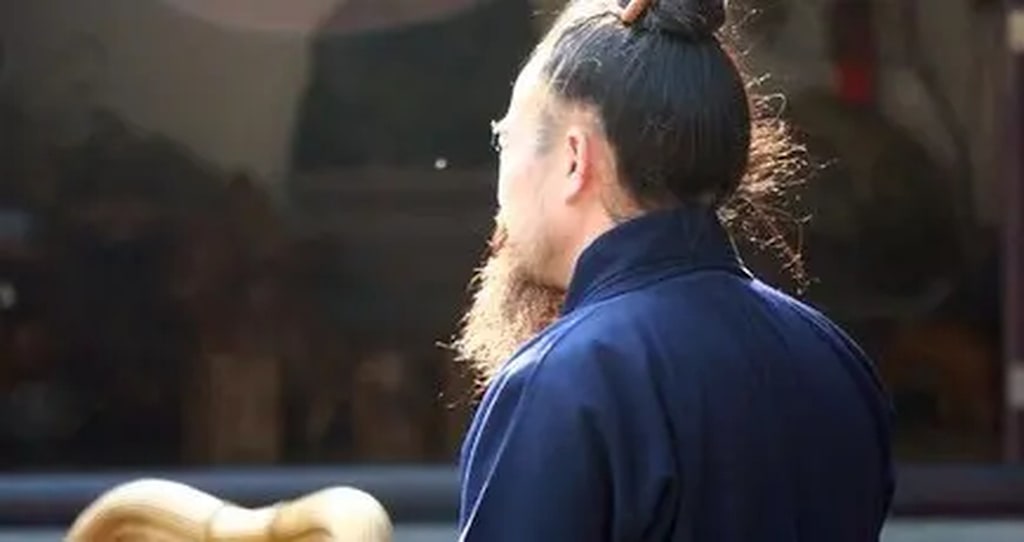
My name is Chen Danian. I’m fifty-seven years old and run a small tuina (massage) clinic near Panjiayuan in Beijing. It’s a modest shop—just two beds, a chair, and a few silk banners on the wall sent by old neighbors as tokens of gratitude. I’ve been at this for nearly twenty years. I won’t claim my skills are legendary, but there is one thing I can promise: anyone who comes to me will never be subjected to reckless yanking or pulling.
This principle goes back to my master.
His surname was Mu. Hardly anyone knew his full name; the neighbors just called him Old Master Mu. He was a practitioner of traditional Chinese medicine in the truest sense, though he wasn't the kind who sat behind a desk writing prescriptions. He was a bone-setter and a "sinew-aligner"—a craftsman who made his living with his hands. After I failed the national college entrance exams at eighteen, I moped around the house for six months. My father pulled many strings to get me apprenticed to the Master so I could learn a trade to feed myself.
I first met him in his small courtyard. He was in his early sixties then, a wiry old man in a faded blue cotton tunic, sitting on a folding stool soaking up the sun. I stood at the gate clutching two bottles of liquor and gave him a respectful "Master Mu." He squinted at me for a long time, neither accepting nor rejecting me. He only said, "Just watch for now."
That "watching" lasted over six months.
During that time, I arrived at the courtyard before dawn every day to sweep, boil water, brew his tea, and hand slippers to the guests. When I was free, I’d squat nearby and watch him work. People came with all sorts of ailments: backs that wouldn't bend, necks that wouldn't turn, knees too painful for walking, or shoulders that couldn't lift. Master never forced any big movements. He would simply rest his hand on the person, feeling slowly, searching gently. Sometimes he’d palpate a single spot for several minutes. Once he found the problem, his hands moved like he was kneading dough—softening and dissolving the tension bit by bit. Guests would walk in grimacing in pain and, more often than not, leave upright and relaxed.
I was young and impatient. After a few months, I started thinking his work was "too slow." Once, a young gym rat came in with a "knot" in his shoulder; his arm would jam halfway up, making him break out in a cold sweat from the pain. While the Master was in the restroom, I decided to take the initiative. I grabbed the young man’s arm and gave it a forceful upward pull. There was a sharp crack. The kid let out a howl, his face turning ghost-white. When the Master returned and saw the situation, his face went ashen. He didn't say a word. He just felt the area for a few minutes, deftly guided the joint back into place, and applied hot towels for a long time before sending the boy on his way.
That night, for the first time, Master Mu invited me to sit and poured me a cup of tea.
"Danian, do you know what mistake you made today?"
I kept my head down, too afraid to speak.
He sighed. "Do you think a sinew is a piece of rope? That you can just yank it straight?"
"I just wanted him to get better faster..." I mumbled.
Master shook his head. He poured the leftover tea onto the brick floor of the courtyard and pointed at the wet patch. "Look at this water. If you splash it, it scatters. If you want it to seep into the cracks between the bricks, you have to wait. It goes in on its own. The sinews (jin) follow the same logic. They aren't meant to be yanked; they are meant to be 'nourished' into health, not stretched into it."
I didn't understand then. I thought he was being mystical. Weren't "sinews" just ligaments and muscle fibers? Didn't the books say stretching increases flexibility? I even secretly consulted sports recovery books full of data on static stretching, dynamic stretching, and PNF. They were worlds apart from what my Master taught.
But I didn't dare talk back. That crack was still ringing in my ears.
The moment I truly "woke up" happened the following autumn.
An elderly woman in her seventies was helped in by her daughter. The old lady couldn't let her right foot touch the ground; even a light tap caused agonizing pain. She had missed a step coming downstairs and sprained it. After a week in bed, the swelling had only worsened. Her ankle was purple and bloated like a steamed bun. Her daughter was frantic, saying two hospitals had taken X-rays and found no fractures, yet the "rest" they prescribed was only making it worse.
Master had her sit on the edge of the bed while he sat on a low stool at her feet, resting her leg on his knee. He didn't rush. He looked at it for a long time, tested the temperature with the back of his hand, and then, with his eyes closed, traced her calf downward with two fingers. He felt it inch by inch until he stopped at the ankle.
"Does it hurt?"
"It’s a throbbing ache... very tight."
"Mmm. The sinew is snagged. The Qi and blood can't get through." Master nodded. He went to the inner room, brought out a bottle of medicinal oil, poured it into his palm, and rubbed his hands together until they were hot before placing them over her ankle.
I squatted nearby, eyes wide. His hands seemed to grow onto her foot. He wasn't kneading or pressing; it was more like he was "coaxing"—can you imagine that? He was using his hands to "coax" the injured sinew. His fingers slid slowly, very slowly, following the path of the fascia, like untangling a knotted ball of yarn. He was patient, unhurried, undoing the twisted fibers bit by tiny bit.
The old lady moaned in pain at first, but after ten minutes, she quieted down. Ten minutes more, and she actually started snoring lightly—she had fallen asleep.
Master didn't stop, but his movements became even slower, so slow I could barely see him moving. He continued for nearly an hour before removing his hands and covering her with a thin blanket.
When she woke up and looked down, she was stunned. The swelling had gone down by half, and the deep purple had faded to a pale, bruised yellow. She tentatively placed her foot on the floor, took a cautious step, and her eyes welled up. "It doesn't hurt... it really doesn't hurt anymore..."
Master waved off her thanks. "Don't rush off. It still needs to be nourished for a few days. Go home and use hot compresses twice a day. Don't walk on it, and don't let anyone massage it. Remember: absolutely no rubbing or yanking. After the heat, keep the foot elevated. The Qi and blood will find their own way through."
After they left, I couldn't help asking, "What technique was that? I couldn't follow it at all."
As he washed his hands, he said, "I didn't use a 'technique.' I just helped her coax that sinew back into a smooth state."
"Coax it?"
"Yes." He looked at me while drying his hands. "That sinew was startled. It twisted and shrank in fear, blocking the flow of Qi and blood. That’s why it swelled and hurt. The more you yank it, the more it panics and the tighter it shrinks. You have to talk to it slowly, let it know no one is trying to hurt it. Then it will let go on its own."
I stood there, speechless.
He continued, "Were you ever chased by a dog as a kid?"
"Yeah," I said.
"The more you run, the more the dog chases. If you stop and slowly crouch down, the dog stops. Sinews are alive, too. They have their own temperaments. You have to work with their nature, not against it."
From that day on, I truly began to learn how to "feel the sinews."
The method my Master taught was the polar opposite of what commercial training centers teach. They teach "stretch wherever it hurts" and spout slogans like "Extend the sinew an inch, extend your life ten years." They egg people on to force themselves into splits or shoulder openers, trying to yank the body open all at once. Master called that nonsense.
"Look at dancers or martial artists," he would say. "They stretch their sinews for decades, and by the time they’re old, they’re falling apart. Ruined knees, ruined hips, herniated discs—they’re everywhere. Why? Because they’ve stretched the sinews until they’re loose and 'dead.' The sinews lose their elasticity and can no longer protect the joints. Bone begins to grind on bone. How can they not break down?"
He gave me an analogy. He said sinews are like rubber bands. A new rubber band is elastic; you pull it, it stretches, you let go, it snaps back. But if you pull it to its limit and keep it taut for months, once you let go, it won't snap back. It’s "dead." Once the sinews are dead, the joints become loose. Things that should be stable become unstable, and things that shouldn't move start shifting. That’s when the trouble starts.
"So, good sinews aren't about length; they’re about 'vibrancy' (huo). A vibrant sinew is elastic, warm, and holds a certain spirit. When you touch it, it feels soft, moist, and springy—not hard, dry, and rigid."
I asked him how to make a sinew vibrant. He gave me four words: Warmth, Softness, Slowness, and Alignment.
Warmth is about temperature. Sinews love heat and fear cold. When a person gets chilled, the sinews are the first to shrink. To have healthy sinews, you must stay warm. My Master wore long sleeves and pants year-round. No matter how hot it got in summer, he wouldn't use air conditioning. He called AC a "wicked wind" that seeps into the bones and makes the sinews shrivel.
Softness refers to the touch. You cannot use brute force. When Master treated people, his hands were always incredibly soft, lighter than kneading bread. He said if the pressure is too great, the sinew resists. Once it resists, it contracts. The harder you push, the tighter it gets. When you lock horns like that, injury is inevitable.
Slowness is the rhythm. Master did everything slowly, like he was in a slow-motion film. He said slowness gives the sinews time to react. If you move too fast, you don't even know what you're touching, and the sinews can't keep up with your rhythm.
Alignment is the direction. You can't go against the grain; you must follow the sinew's path. Master could feel the "flow" of a sinew with his eyes closed—where it started, where it ended, and every curve in between. He said working against the direction is like stroking a cat’s fur the wrong way; you can't blame the cat for biting you.
These four points sound simple, but they are hard to master. I practiced "slowness" alone for two years. Master made me run my fingers through a vat of rice every day, letting the grains slip through one by one—no speeding up, no stopping, no force. I did that for two years before my fingers developed that "slow skill."
Later, I asked him why we had to be so slow.
He said, "If you are fast, you only see the disease, not the person. When you slow down, you can feel the human being. You can feel the temperament of their sinews—where they are tense, where they are afraid, where they are hiding from you. You must earn the sinew's trust before it will surrender its deepest secrets to you."
I’ve chewed on those words for twenty years, and only now am I starting to truly understand.
A few years ago, a young man in his late twenties came to see me. He was a programmer, hunched over a computer all day. His neck was in agony, the back of his head felt numb, and he couldn't sleep. He’d tried everything—massage, chiropractic adjustments, traction, physical therapy. Each time it helped for a day or two, then it would flare up again, worse than before.
I had him sit down and felt his neck. I knew immediately—the sinews in the back of his neck were as hard as rebar. They were corded and rigid, with no elasticity at all. I felt his shoulders, and at the "Well of the Shoulder" (Jianjing point), there was a hard knot. When I pressed it, he winced and pulled away.
"Does it feel great right after a massage, only to snap back a couple of days later?" I asked.
"Yes! Exactly! That’s why I have to go every few days. I can't stand it otherwise."
"And do they press really hard? Do they crack your neck? And do you feel like the more it hurts, the more it's working?"
The young man thought about it and nodded. "Yeah. One guy cracked my neck so loud it sounded like a branch breaking. It felt amazing at the time."
I sighed. "Your sinews weren't ruined by the computer. They were ruined by the massages."
He was stunned.
I told him his sinews were originally just tight and tired—like a person who just needs a rest. But those "heavy-handed" massages are like dragging an exhausted person out of bed and forcing them to work. When a sinew is forced open by brute force, it feels loose, but it's actually been "knocked unconscious." It loses its ability to self-regulate. When it "wakes up" a few days later and realizes the situation is worse than before, it shrinks back even tighter and harder. That is what we call a "rebound."
"Then what do I do?" he asked, panicked.
"You have to nourish it, not 'treat' it."
I gave him a set of rules: First, three times a day, use a hot towel on your neck for fifteen minutes. Swap the towel when it gets cool. Do it until the skin is slightly pink. Second, after the compress, rub your hands until they’re hot and rest your palms against your neck. Move them slowly and gently, like you're cradling a chick that just hatched. No pressure—just let the warmth seep in. Third, wear high, soft collars; don't let your neck catch a breeze. Fourth, use a low pillow so your neck can truly relax.
"No massage? No cracking?" He was skeptical.
"No. If you can control yourself, come back and see me in a month."
A month later, he returned on the dot. When I felt his neck, the sinews had softened significantly. The ridges were still there, but they didn't feel like stones anymore. He told me the first week was the hardest; his neck felt "empty," like something was missing, and he kept wanting someone to crack it. But he held out. He did his hot compresses and gentle rubbing every day. By the second week, he woke up one morning and realized he could turn his head effortlessly. Before, it would jam halfway; that day, it was smooth.
"It didn't get better with a 'pop,'" he said, his eyes bright. "It was slow, like ice melting. I didn't even notice when it happened."
I nodded and added one more thing: "Every morning and evening, raise your arms to the point just before it hurts, hold for three deep breaths, and slowly lower them. Just that. Don't do more. Don't be greedy."
"That’s it?"
"That’s it. Sinews are nourished into health, not stretched into it. If you give them a little warmth and a little patience every day, they will give you back a world of ease."
That young man became a regular at my clinic—not for treatment, but to drink tea and chat. He told me he taught the method to his parents. his father’s knees were bad, so he had him do daily hot compresses and gentle palm-rubbing. Three months later, his father could actually squat down again. The old man cried on the phone out of joy.
Hearing that moved me.
In the grand scheme of things, this is about nourishing sinews. But in a smaller sense, isn't it just about how to live?
Look at people today; everyone wants everything fast—fast money, fast success, fast healing, fast pleasure. When a sinew is uncomfortable, they want to yank it open instantly. When their heart is heavy, they want to forget it instantly. When life is rough, they want to flip the page instantly. But some things cannot be rushed. The more you hurry, the more life twists against you. The more brute force you use, the tighter the knot becomes.
You have to slow down. You have to use warmth. You have to follow the nature of the thing. You have to give it time to dissolve its own tensions.
It’s true for the sinews, and it’s true for the heart.
My Master lived to eighty-three. On the morning he passed, he was still sitting in the courtyard soaking up the sun. By the afternoon, he had slipped away while leaning back in his chair. He had a smile on his face. His body remained soft; his fingers could be gently opened, just as they were when he was alive.
The neighbors said the Old Master went peacefully, without suffering. I knew why. That was the culmination of a lifetime’s work—his sinews were soft, his Qi and blood were flowing, his heart was at peace. When it was time to go, he simply let go.
I’m in my fifties now. I won’t say my skills match my Master’s, but there is one thing I always do: no matter who comes in, I tell them, "Don't be in a rush to get better. Let's take it slow."
"Extending the sinew an inch" isn't an invitation to pull.
Treat it as a living thing with its own temperament. Give it some warmth, some patience, and some respect. When it feels safe, when it knows you aren't going to hurt it, it will relax on its own. It will lengthen on its own. It will soften on its own.
And isn't that the same truth for how we should treat one another?
(The End)
About the Creator
Water&Well&Page
I think to write, I write to think
Keep reading
More stories from Water&Well&Page and writers in Writers and other communities.
Holding the Line for a Hundred-Year Wish
When the phone rang, I was resting on the sofa. That afternoon, I’d helped my neighbor, Old Zhang, carry two bags of cement. Twenty years ago, two bags would have been nothing. But I can't do it anymore; my chest felt tight as soon as I finished, and I had to lie down for half an hour just to catch my breath.
By Water&Well&Pagea day ago in Writers
Earrings
April truly is the cruelest month, especially in Augusta during the first full week, breeding dogwoods and azaleas into dreams of a green jacket on Sunday. I won’t go into it about badges; suffice to say my family received. I was dating some loser the year I was twenty-two or -three, and I was taking him to the Par 3. At least I was until the night before.
By Harper Lewis3 days ago in Writers
Ghostly Happenings in Colorado
Disturbed Spirits In Denver, an expanse of greenery, Cheesman Park comes with a macabre history since it was once a burial ground known as Mount Prospect Cemetery established by General William Larimer in 1858. The job of exhuming bodies began, and some were left behind resting beneath the park. However, the ghostly spirits don’t wish to rest in peace beneath the park, and visitors here have felt cold touches, seen ghostly children playing at night, and heard a singing lady who disappears when approached.
By Rasma Raisters6 days ago in Horror



Comments
There are no comments for this story
Be the first to respond and start the conversation.