
Global Chicken Market Set to Reach $268 Billion by 2033: A Protein Revolution in Motion
Rising demand for affordable, high-protein diets, urban lifestyles, and technological advancements are fueling unprecedented growth in the global poultry industry.

Introduction: A Changing Global Appetite
The global food landscape is undergoing a significant transformation, and at the center of this shift lies one of the most consumed meats in the world—chicken. Once considered a secondary protein source behind beef and pork, chicken has rapidly emerged as the preferred choice for millions worldwide. Its affordability, nutritional value, and versatility have made it a staple in both developed and developing economies.
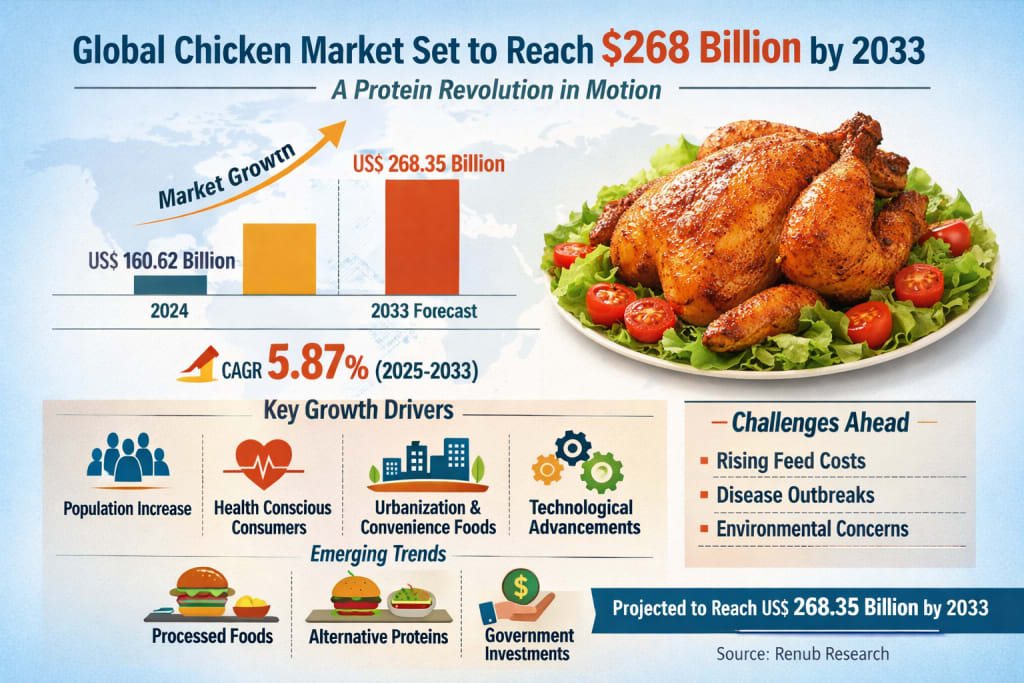
According to recent insights, the global chicken/poultry meat market is projected to grow from US$ 160.62 billion in 2024 to US$ 268.35 billion by 2033, registering a compound annual growth rate (CAGR) of 5.87% from 2025 to 2033 . This growth reflects not just changing dietary patterns but also broader socio-economic developments shaping global consumption.
The Rise of Chicken as the World’s Favorite Protein
Over the past century, chicken has steadily overtaken other meats to become the most consumed animal protein globally. This shift is not accidental—it is driven by a combination of economic, cultural, and health-related factors.
Chicken is relatively inexpensive compared to beef and pork, making it accessible to a larger population base. Additionally, its lower fat content and high protein value have made it a preferred choice among health-conscious consumers. From grilled dishes to fast-food favorites, chicken adapts seamlessly to various cuisines and cooking styles.
The numbers tell a compelling story. With the global population reaching 8.2 billion in 2024 and projected to grow further, demand for efficient and scalable protein sources is increasing rapidly. Poultry farming, being resource-efficient, has become a key solution to feeding this expanding population .
Market Drivers: What’s Fueling Growth?
1. Population Growth and Protein Demand
As the global population continues to expand, so does the need for affordable and sustainable protein sources. Chicken stands out as an efficient option due to its lower production costs and shorter breeding cycles.
Developing nations, in particular, are witnessing a surge in poultry consumption as rising incomes enable consumers to include more protein in their diets. Chicken, being economical, naturally becomes the first choice.
2. Health-Conscious Consumers
Modern consumers are increasingly prioritizing health and wellness. With growing awareness of the risks associated with high-fat diets, many are shifting away from red meat.
Chicken offers a leaner alternative with fewer calories and lower cholesterol levels. It is widely recommended for weight management, heart health, and muscle development, making it popular among fitness enthusiasts and younger demographics.
3. Urbanization and Lifestyle Changes
Urban living has significantly influenced eating habits. Busy lifestyles have led to increased demand for convenient, ready-to-eat, and processed food products.
Chicken fits perfectly into this trend. Products like nuggets, sausages, and frozen meals are not only easy to prepare but also widely available. The rapid expansion of fast-food chains and quick-service restaurants has further boosted demand for poultry-based items.
4. Technological Advancements in Poultry Farming
Innovation is playing a crucial role in transforming the poultry industry. Advances in breeding techniques, feed optimization, and disease management have improved productivity and efficiency.
Modern farming practices ensure higher yields, better quality, and reduced production costs. These improvements are enabling producers to meet growing demand while maintaining competitive pricing.
Regional Insights: A Global Phenomenon
United States
The United States remains one of the largest markets for chicken consumption. Strong demand for affordable protein, coupled with a well-established foodservice industry, continues to drive growth. Processed chicken products, including tenders and deli meats, are particularly popular.
United Kingdom
In the UK, consumer preferences are increasingly shifting toward healthier and ethically sourced food. Demand for organic and free-range chicken is rising, reflecting a broader trend toward sustainability and animal welfare.
Japan
Japan’s poultry market is influenced by its unique culinary culture. Chicken is widely used in traditional dishes like karaage, as well as in modern convenience foods. Steady income growth and urbanization are supporting consistent demand.
Saudi Arabia
In Saudi Arabia, chicken is a dietary staple. The market is expanding rapidly due to population growth and increasing disposable incomes. The demand for halal-certified poultry products is also a key driver.
India
India represents one of the fastest-growing markets for chicken consumption. Changing dietary habits, urbanization, and the expansion of fast-food chains are contributing to increased demand.
The country’s poultry sector has shown remarkable growth, with chicken accounting for over 51% of total meat production. Rising urban spending on processed foods further indicates strong future potential .
Emerging Trends Shaping the Industry
1. Growth of Processed and Convenience Foods
The popularity of ready-to-eat meals is reshaping the poultry market. Consumers are increasingly opting for products that save time without compromising on taste or nutrition.
2. Expansion of Foodservice Industry
Restaurants, fast-food chains, and delivery platforms are major consumers of poultry products. The global expansion of these businesses is directly contributing to increased chicken consumption.
3. Rise of Alternative Proteins
While chicken remains dominant, the emergence of plant-based and lab-grown meat is introducing new competition. In 2023, the approval of cultivated chicken products in the United States marked a significant milestone in food innovation .
4. Government Support and Investments
Governments across the globe are investing in poultry infrastructure to enhance food security and reduce import dependence. For example, Ghana’s substantial investment in its poultry sector highlights the strategic importance of this industry.
Challenges: What Could Slow Growth?
1. Fluctuating Feed Costs
Feed accounts for a significant portion of poultry production expenses—often up to 70%. Price volatility in key ingredients like corn and soybeans can impact profitability and market stability.
2. Disease Outbreaks
The poultry industry is highly vulnerable to diseases such as avian influenza. Outbreaks can lead to large-scale culling, supply disruptions, and loss of consumer confidence.
3. Environmental and Ethical Concerns
As the industry grows, concerns about sustainability and animal welfare are gaining attention. Consumers are increasingly demanding transparency and ethical practices, which may require additional investments from producers.
Competitive Landscape and Industry Developments
The chicken market is highly competitive, with major players expanding their operations and forming strategic partnerships.
Recent developments include:
Expansion of production facilities in Europe and Asia
Strategic acquisitions to strengthen market presence
Partnerships aimed at increasing distribution networks
These initiatives are helping companies scale operations and meet rising global demand.
Future Outlook: Sustained Growth Ahead
The future of the global chicken market looks promising. With increasing population, urbanization, and income levels, demand for poultry is expected to remain strong.
Asia-Pacific is likely to emerge as a key growth engine, driven by rising consumer spending and economic development. Meanwhile, technological advancements will continue to improve efficiency and sustainability.
Despite challenges, the industry’s adaptability and resilience position it well for long-term growth.
Final Thoughts
The global chicken market is more than just a segment of the food industry—it is a reflection of evolving consumer preferences, economic progress, and technological innovation.
As the world seeks sustainable and affordable protein sources, chicken is poised to play a central role. From street food stalls in India to high-end restaurants in Europe, its presence is universal and growing.
The projected rise to US$ 268.35 billion by 2033 is not just a statistic—it is a testament to the enduring relevance of poultry in a rapidly changing world
About the Creator
India Chimney Market Set for Strong Growth as Modular Kitchens Transform Urban Homes
India Chimney Market Size and Forecast 2026–2034 India’s kitchen landscape is undergoing a significant transformation as modern homes increasingly embrace modular kitchen designs and advanced appliances. One of the most visible outcomes of this shift is the growing popularity of kitchen chimneys. According to industry estimates, the India Chimney Market is projected to grow from US$ 893.45 million in 2025 to US$ 1,945.29 million by 2034, registering a Compound Annual Growth Rate (CAGR) of 9.03% between 2026 and 2034.
By shibansh kumar7 days ago in Trader
Algeria Desalination Market Set for Strong Growth Amid Rising Water Scarcity
Introduction Algeria is steadily positioning itself as a key player in water security solutions across North Africa, with desalination emerging as a cornerstone of its long-term strategy. As freshwater resources become increasingly strained due to climate variability, population growth, and industrial expansion, the demand for reliable and sustainable water sources is intensifying. Against this backdrop, the Algeria desalination market is gaining momentum, supported by policy initiatives, technological advancements, and rising investments.
By Sakshi Sharmaa day ago in Trader




Comments
There are no comments for this story
Be the first to respond and start the conversation.