
Electric Scooter Market Trends & Forecast: The Rise of Smart, Sustainable Urban Mobility
How Innovation, Sustainability, and Urban Demand Are Driving a Multi-Billion-Dollar Transformation

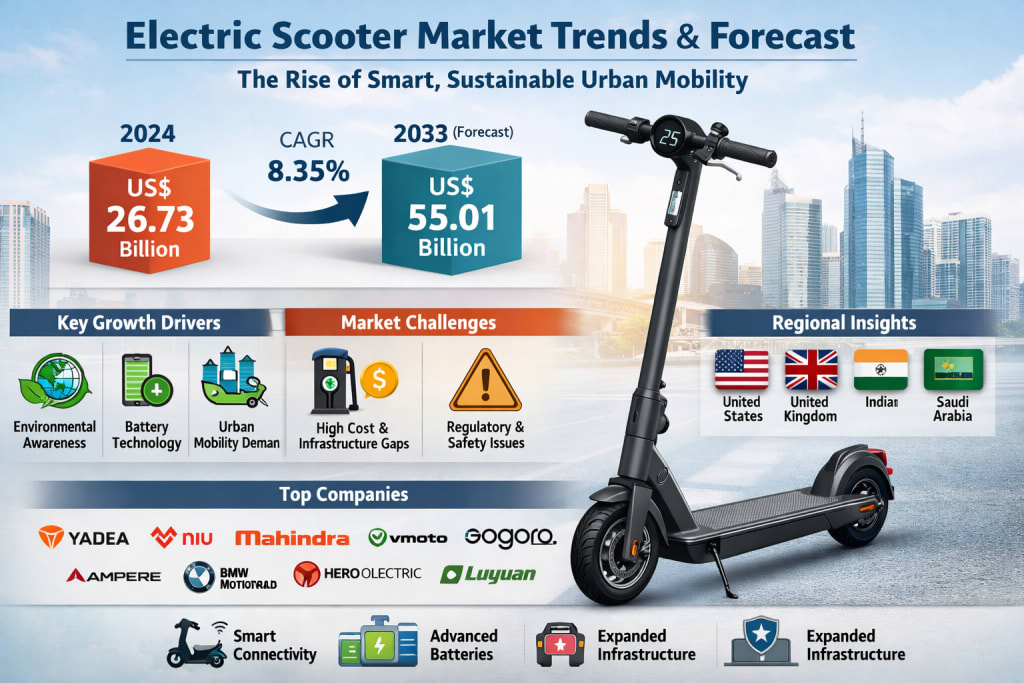
The global electric scooter market is undergoing a remarkable transformation, driven by the convergence of environmental awareness, technological innovation, and the urgent need for efficient urban transportation. As cities grow denser and climate concerns intensify, electric scooters are rapidly emerging as a practical and sustainable alternative to conventional fuel-powered vehicles.
According to recent insights, the global electric scooter market was valued at US$ 26.73 billion in 2024 and is projected to reach US$ 55.01 billion by 2033, expanding at a compound annual growth rate (CAGR) of 8.35% between 2025 and 2033 . This steady growth reflects not only rising consumer demand but also strong institutional support and ongoing advancements in battery and mobility technologies.
Understanding the Electric Scooter Revolution
Electric scooters, often referred to as e-scooters, are compact, battery-powered two-wheelers designed primarily for short-distance travel. Unlike traditional scooters, they rely on rechargeable batteries and electric motors, eliminating the need for fossil fuels. Their lightweight design, ease of use, and affordability make them an increasingly popular choice for urban commuters.
Modern electric scooters come equipped with a variety of smart features such as regenerative braking systems, LED lighting, GPS tracking, and smartphone integration. These features enhance both user experience and safety, contributing to their growing adoption worldwide.
The appeal of electric scooters lies in their ability to address multiple urban challenges simultaneously—traffic congestion, air pollution, and rising fuel costs—while offering a convenient and flexible mode of transport.
Key Growth Drivers Shaping the Market
1. Rising Environmental Awareness
One of the most significant factors driving the electric scooter market is the increasing global concern over environmental sustainability. With transportation being a major contributor to greenhouse gas emissions, consumers and governments alike are seeking cleaner alternatives.
Electric scooters produce zero tailpipe emissions, making them an eco-friendly substitute for gasoline-powered vehicles. Governments across various countries are actively promoting electric mobility through subsidies, tax incentives, and policy support. These initiatives are encouraging consumers to transition toward greener transportation solutions.
Countries such as China and Indonesia have set ambitious targets for electric vehicle adoption, further reinforcing the global shift toward sustainable mobility.
2. Advancements in Battery Technology
Technological progress in battery systems, particularly lithium-ion (Li-ion) batteries, has significantly enhanced the performance and efficiency of electric scooters. These batteries offer higher energy density, longer lifespan, faster charging times, and reduced weight compared to traditional alternatives.
Such improvements have made electric scooters more practical for everyday use, addressing earlier concerns related to limited range and long charging durations. Additionally, innovations such as battery-swapping technology and subscription-based battery models are lowering upfront costs and improving accessibility.
For instance, recent product launches featuring advanced battery solutions demonstrate how manufacturers are focusing on affordability and performance simultaneously.
3. Expansion of Urban Mobility Solutions
Rapid urbanization is creating a growing demand for compact and efficient transportation systems. Electric scooters are ideally suited for short-distance travel, often referred to as “last-mile connectivity.”
Shared mobility platforms, including scooter rental and ride-sharing services, have played a pivotal role in popularizing electric scooters. These services allow users to access scooters on-demand, eliminating the need for ownership and making urban commuting more flexible.
The integration of electric scooters into smart city ecosystems further enhances their relevance, positioning them as a key component of future urban mobility.
Market Challenges Hindering Growth
1. High Initial Costs and Infrastructure Gaps
Despite long-term cost savings, the initial purchase price of electric scooters remains a barrier for many consumers, primarily due to expensive battery components. Additionally, the lack of widespread charging infrastructure poses a significant challenge.
In many regions, especially rural and developing areas, limited access to charging stations reduces the practicality of electric scooters. Addressing this issue will require coordinated efforts from governments, private companies, and infrastructure developers.
2. Regulatory and Safety Concerns
The regulatory landscape for electric scooters varies widely across countries, creating confusion and limiting adoption. Issues such as speed limits, road access, and licensing requirements often differ from one region to another.
Safety concerns also remain a critical challenge. Accidents, poor road conditions, and insufficient protective measures highlight the need for improved regulations and public awareness campaigns. Ensuring rider safety will be essential for sustaining long-term market growth.
Segment Insights: Where the Market Is Heading
48V Electric Scooters
The 48V segment has emerged as a dominant category within the electric scooter market. These scooters strike an optimal balance between performance and affordability, offering higher speed and range compared to lower-voltage models.
Their cost-effectiveness and suitability for daily commuting make them particularly attractive to first-time buyers and budget-conscious consumers.
Folding Electric Scooters
Folding electric scooters are gaining popularity due to their portability and convenience. Designed for easy storage and transport, these scooters are ideal for urban dwellers who need compact mobility solutions.
Their ability to integrate seamlessly with public transportation systems makes them a preferred choice for last-mile connectivity.
Lithium-Ion Battery Segment
Lithium-ion batteries dominate the electric scooter market due to their superior performance characteristics. They enable longer travel distances, faster charging, and enhanced durability.
As battery technology continues to evolve, the Li-ion segment is expected to witness sustained growth, further boosting the overall market.
Personal Use Segment
The personal electric scooter segment is expanding rapidly as individuals seek affordable and eco-friendly commuting options. Features such as GPS tracking, app connectivity, and foldable designs are appealing to tech-savvy consumers.
This segment is particularly strong in urban areas, where traffic congestion and high fuel costs make electric scooters a practical alternative.
Regional Market Insights
United States
The United States electric scooter market has experienced significant growth, driven by urbanization and environmental awareness. Shared mobility platforms have played a crucial role in increasing adoption across major cities.
Government policies supporting green transportation further contribute to market expansion, while innovations such as AI-powered scooters are enhancing user experience.
United Kingdom
In the United Kingdom, evolving regulations are shaping the electric scooter market. Pilot programs and government-backed initiatives are encouraging the use of e-scooters for urban commuting.
The growing focus on reducing congestion and emissions is expected to drive further adoption in the coming years.
India
India represents one of the fastest-growing markets for electric scooters. Rising fuel prices, supportive government policies, and increasing environmental awareness are key drivers.
Local manufacturing and affordable models are making electric scooters accessible to a broader population. Investments by domestic companies are also accelerating innovation and market penetration.
Saudi Arabia
Saudi Arabia is witnessing growing demand for electric scooters as part of its efforts to diversify the economy and promote sustainability. High disposable income and urban development projects are contributing to market growth.
Electric scooters are increasingly being adopted as a convenient solution for short-distance travel in urban areas.
Competitive Landscape
The electric scooter market is highly competitive, with several global and regional players striving to innovate and expand their market presence. Companies are focusing on product development, strategic partnerships, and technological advancements to gain a competitive edge.
Key players include:
Yadea Technology Group Co. Ltd
Niu Technologies
Mahindra
Vmoto Limited
Ampere Vehicles
BMW Motorrad International
Gogoro Inc.
Govecs Group
Hero Electric
Zhejiang Luyuan Electric Vehicle Co Ltd
These companies are actively investing in research and development to introduce new models, improve battery efficiency, and enhance user experience.
The Road Ahead: Future Outlook
The future of the electric scooter market looks promising, with strong growth expected over the next decade. As governments intensify their focus on sustainability and urban mobility, electric scooters will play an increasingly important role in transportation ecosystems.
Emerging trends such as smart connectivity, AI integration, and battery innovation will continue to shape the market. Additionally, the expansion of charging infrastructure and standardization of regulations will further accelerate adoption.
Electric scooters are no longer just a niche product—they are becoming a mainstream solution for modern urban mobility.
Final Thoughts
The electric scooter market stands at the intersection of technology, sustainability, and urban innovation. With a projected market value of over US$ 55 billion by 2033, the industry is poised for substantial growth.
While challenges such as infrastructure gaps and regulatory complexities remain, the overall trajectory is clear: electric scooters are redefining how people move within cities.
As technology advances and awareness grows, electric scooters will continue to transform urban transportation—offering a cleaner, smarter, and more efficient way to navigate the modern world.
About the Creator
Europe Click and Collect Grocery Market Set for Explosive Growth Through 2033
Europe Click and Collect Grocery Market Trends & Summary The Europe Click and Collect grocery market is witnessing remarkable expansion, driven by shifting consumer preferences and rapid digital transformation across the retail sector. Valued at US$ 46.51 billion in 2024, the market is projected to surge to US$ 276.39 billion by 2033, growing at an impressive CAGR of 22.00% during 2025–2033.
By shibansh kumarabout 8 hours ago in Trader




Comments
There are no comments for this story
Be the first to respond and start the conversation.