
Regarding the Image of God
The masterpieces surrounding us.
This post will be a bit of a strange one. I wrote most of the following piece about six months ago, as certain governmental policies and actions were starting to roll out - and while reflecting upon certain ongoing atrocities. While these reflections revolve mostly around those claiming and practicing the Christian faith (and our failures to do so rightly) I do believe that they might be provide valuable insight - or at least something to think about - for folks of all perspectives who are willing to read them. So without further ado, here are a few of my recent reflections regarding the biblical concept of the 'image of God.'
*
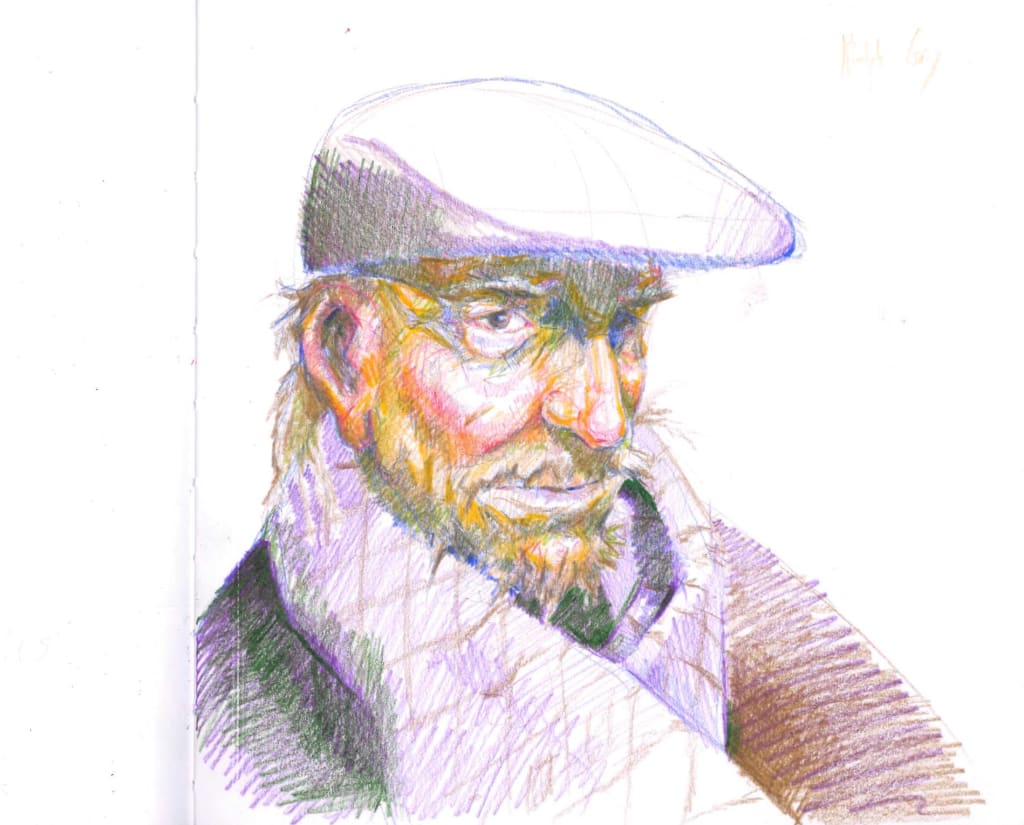
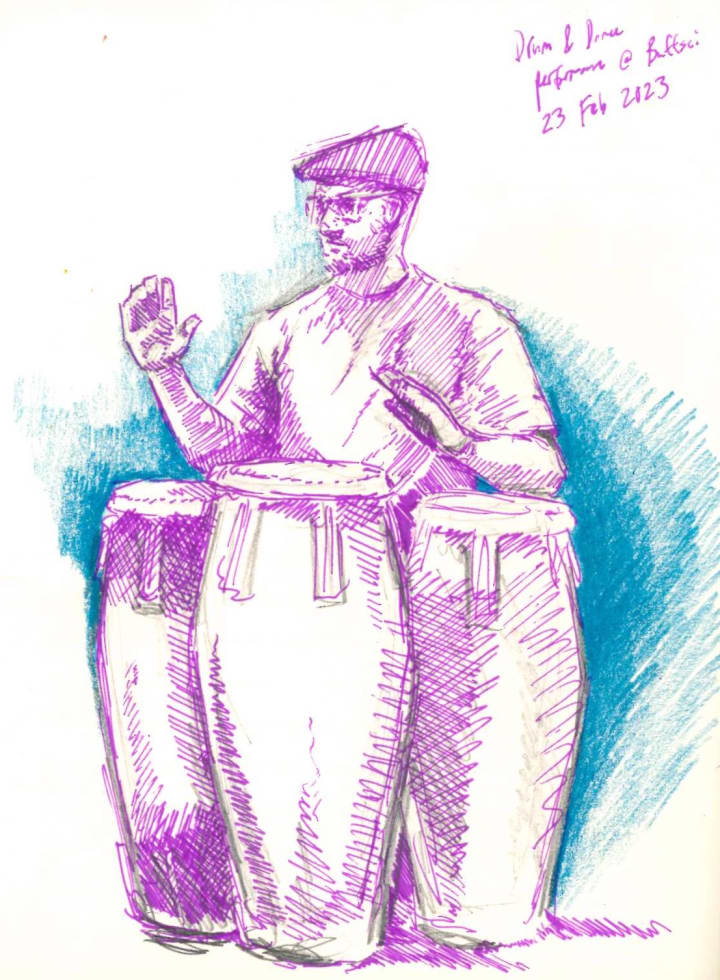
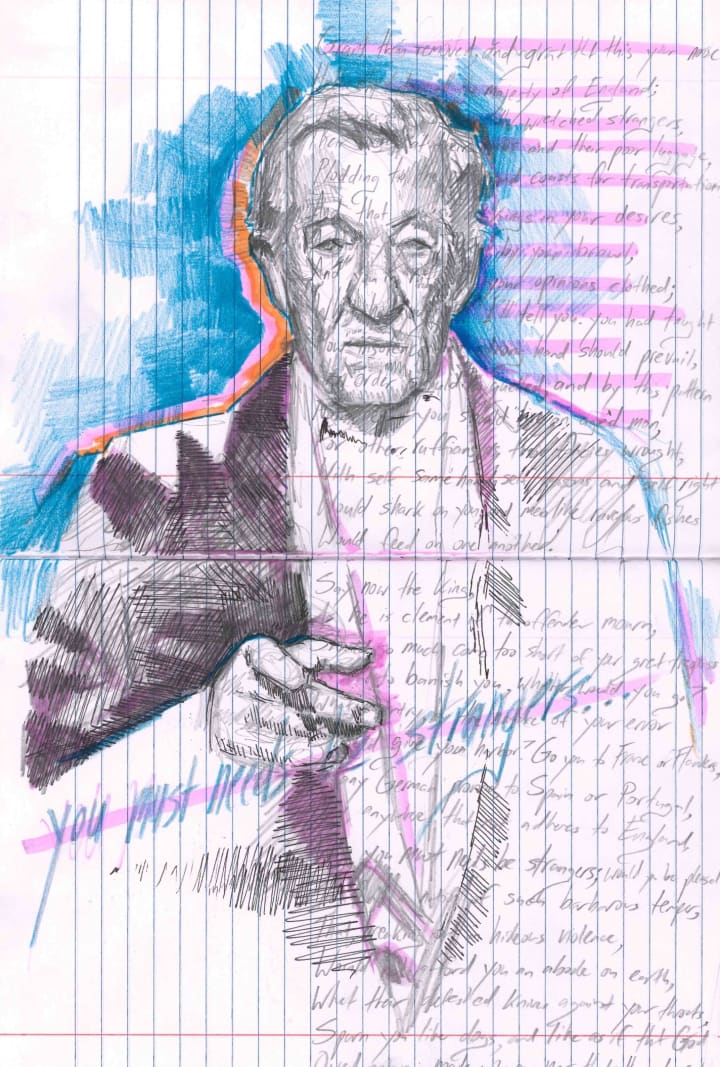
I sketch a lot of strangers. While sitting in a cafe on weekends, while taking the bus or train, in airports, or across a park. Whenever an opportunity presents itself for me to discreetly and unobtrusively capture a fascinating character, I strive to do so. It's great practice for developing the speed and accuracy of my drawing, and I've come to really enjoy the challenge of capturing a person's distinct features with precision.
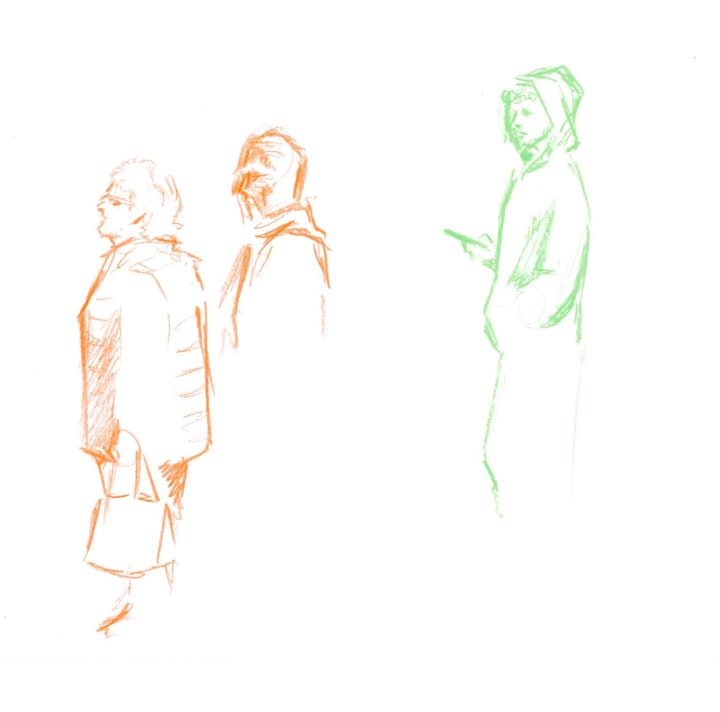
Often when I am sketching someone, I try to reflect for at least a moment on the concept of the Imago Dei in that individual. This is an ancient Latin phrase representing a crucial idea to the Christian faith: namely, that each person (however much I am willing to look for it or not) carries in some profound way the image of our divine, loving, and beautiful Creator.
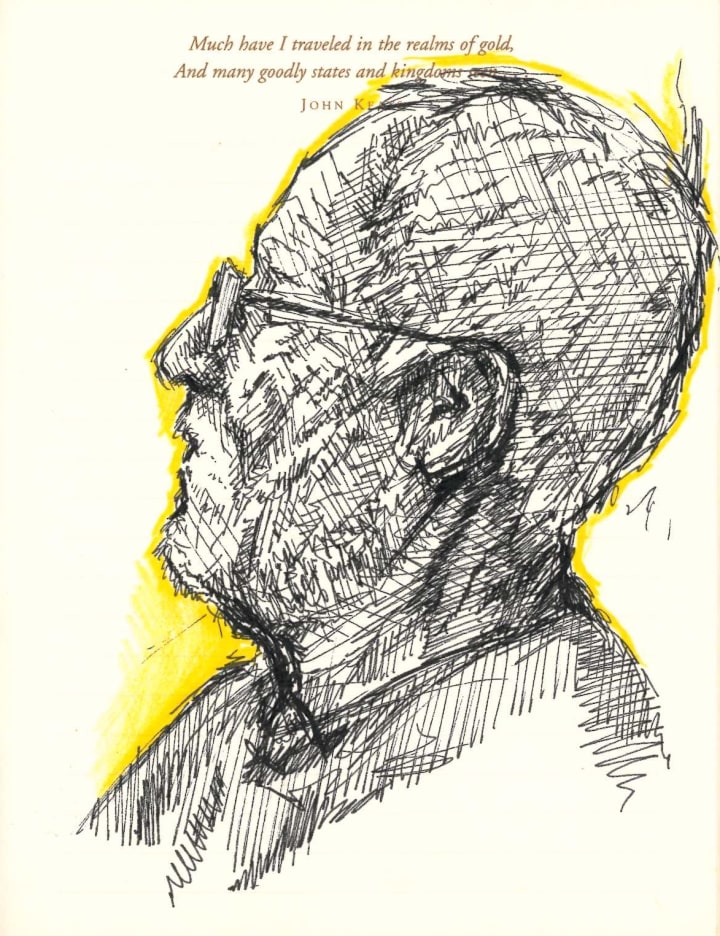
The more that I look around me at the world today, the more I am convinced that one of the greatest failures of the American Evangelical church has been its failure to look for (or, indeed, even believe in) the Imago Dei in other people. To perceive the image of God in another human must always necessarily mean to afford them dignity, to treat them with basic respect, and to defend them when others would see them treated as less than human.
All too often, we who profess faith in Christ are among the most guilty of failing to do this: the categories and boxes through which we see other people allow us to reduce our estimates of how much grace and justice we think they ought to receive. It is very, very well known that many within American Evangelicalism have actively endeavored to dehumanize, villainize, and expel those with whom they feel uncomfortable living alongside.
Maybe this waffling seems too abstract. Another way of putting it is this: I think that we treat as less than human those in whom we do not make an effort to see the image of God. If you are one who shares with me the Christian faith - or if you are a person interested in reflecting on your own biases/perspective on things - and if you care to humor me for a moment longer, then just ask yourself this: Whose suffering, whether on a personal or global scale, do you mind the least? In my experience, this question is one of the quickest ways to shine a spotlight on one's own problematic biases. If you're willing, actually take a little time (more than fifteen seconds) to think about it.
Whose suffering, whether on a personal or global scale, do you mind the least?
Ask yourself: where have you become okay with turning a blind eye to injustice? What human rights violations do you find yourself scrolling quickly past in the news, or explaining away in a defensive and minimizing rush? Through a theological lens, I believe it is fair to say that this graceless act equates to denying the Imago Dei in that person or people. And it is a failure of which the American Church in particular - but in truth all people who claim faith in Christ - must deeply, daily, repent. We must genuinely and prayerfully seek the Imago Dei in those whose suffering does not much bother us.
To me, there is no more obvious place at present where this willful blindness among people of Christian faith has revealed itself as the destruction of life in Gaza. It has faded into background noise beneath the regular news cycle - but we have watched civilian casualties climb well over 70,000 over the course of a couple of years. And in my experience in Christian communities and online, the American church has for the most part been entirely silent about it. Where is the defense of these people? What cheap arguments and human-made categories have kept the people of Christ from loving and caring for these vulnerable image-bearers?
The U.S. government's current treatment of asylum seekers and immigrant communities is another situation that must be addressed in this conversation. Stories of brutality, deception, and other abuses by the Enforcement and Removal Operations wing of ICE are a daily norm. Anonymous internal reports reveal that resources are being diverted away from cases involving the capture of child predators for the sake of meeting deportation quotas. Legal statuses of lawful immigrants are being repealed for the same reason. Certain Christian-Nationalist-leaning churches fully condone these actions - I have all but given up on changing the minds of such people, as I believe they have fully given themselves to a false reality willing to hate and villainize those whom Christ calls followers to care for most.
Yet for the more 'centrist' churches that have elected to merely remain silent in the face of these atrocities - the time has long passed to speak up. To those churches, I say this: allow Christ, the-fully-God-and-fully-human savior, a child refugee, a steadfast helper of the sick and poor, and the one who was subject to the depths of human abuse and brutality, to convict you. See the image of God in the vulnerable, belittled, and villainized. Speak up for the aching remnant of Gaza. Speak up for the immigrant, asylum seeker, and refugee. And if their suffering does not long hold your attention, ask yourself: do you really believe in the Imago Dei?
*
Alright, those are all the words and edits I can muster up from this reflection for now. If you have any thoughts to add to an ongoing conversation, I am open to hearing all thoughtful perspectives - please feel free to reach out in the comments below. May we all see masterpieces in the human beings surrounding us each day, and treat each other accordingly.
For any who are interested, I also wrote this poem several months back while reflecting on a lot of these same ideas. Feel free to check it out here.
Until next time - all the best, friends.
About the Creator
Gabriel Huizenga
Twas for love of words that I first joined this site:
Poetry, especially, and dear short stories too;
For to live one's best is to read, and to write!
So find me in words here, and I'll find you 💙
Thanks for stopping by! :)
Reader insights
Outstanding
Excellent work. Looking forward to reading more!
Top insights
Easy to read and follow
Well-structured & engaging content
Excellent storytelling
Original narrative & well developed characters
Expert insights and opinions
Arguments were carefully researched and presented
Heartfelt and relatable
The story invoked strong personal emotions
On-point and relevant
Writing reflected the title & theme
Keep reading
More stories from Gabriel Huizenga and writers in The Swamp and other communities.
The Forsyth House Fire
Since 1851, Forsyth House has stood on the corner of Union Street and Gordon Street in the heart of Glasgow. Its iconic, or was... because on Sunday 8th of March, 2026, a fire broke out in a small, seemingly un-named shop in the building and tore all that history down. As I write, the rubble is still unsettled and the street is still blocked off. Central Station is quiet on the upper level, and around 30 small businesses have quite literally gone up in smoke.
By S. A. Crawford5 days ago in The Swamp
History of The Three Stooges (Part I: The Beginnings and Columbia Pictures - 1920s-1936)
I have been itching to write about The Three Stooges on Vocal for close to two years, but I couldn't figure out how to do it. I wanted to do it by third Stooge, but that's a bit complicated. I know this much. I was about eight or nine years old when I first saw The Three Stooges. I remember one of my local channels had the Stooges on for hours, and I tried my damnedest to be up for those shorts. I remember that the Family Channel actually had an hour of the Stooges on from 11PM to midnight, and it was the entire library on during that time.
By Clyde E. Dawkins6 days ago in Geeks


Comments (4)
Great piece, Gabriel, and what a talented artist you are. I was drawn to this because I am currently having lots of debates with a person close to me about what God is really like and heaven vs hell. They are convinced that the things they have done will send them immediately to hell. My argument is, if you recognise what you may have done is wrong and show a different way of life (repentance, I guess), God, whatever his/her form is, is a forgiving God. I think many religions have distorted what faith and God really are.
Excellent write up, one of the most compelling social critiques I’ve read on vocal to date! I’m agnostic myself, or more specially a “Christian absurdist” but I was raised more devout Christian (Catholic) and spent many years really actively believing. The manner of Christian life that I found most relatable and inspiring was that of the OFM branch of Franciscans, and a ton of what you’re saying here resonates with what I liked best about their teachings and thoughts. Also, your question about who’s suffering we best tolerate is an excellent question for self reflection and self criticism. I know which group I’m most willing to see suffer, and that’s straight white men. I’m not saying I hate white men or want white men to suffer, I actually am a straight white man, and I still have some empathy for my own. But I feel like I’m a part of the least marginalized, most privileged group on the planet, and I’ve grown really tired of hearing and seeing people who look like me spew fear mongering or other divisive rhetoric under the thin veil of “fairness to whites” I’ve also gotten pretty jaded towards my own group, to the point where I really worry that complacence is the norm, and we just won’t speak up on injustice until we feel it affecting us directly. On that note, as an anticapitalist I have more ready empathy for working class whites than I do for rich whites, and that scales pretty aggressively, where the billionaire and corporate elite don’t get any patience from me. But your prompt here reminds me I still need l have empathy for the individual people in my in group. A couple more things I want to say: Your art is absolutely incredible! Stunning, love it! You definitely capture a sense of character and beauty within your drawings, which shows how the people who inspired your art really are the image of God for you. I just wrote a poem about a friend who I’ve always had feelings for. The feelings aren’t reciprocated and I try to give myself peace about that, but the main point is to me this woman is for me an obvious example of the “image of God” As much as I’ve drifted away from that particular theology I still occasionally lapse in my agnosticism and find myself believing. And usually that’s when I see something really really good. Beauty in the natural world, and in people. Certain humans, are more obvious about it than others :) I feel that way about my kids, many of my friends, some public figures, and many artists. These days, When I fall into accidental believe I like to look at the world and humankind as God’s artwork, and in a way each of us are masterpieces, but some are tragically beautiful and others are just purely stunning in a radiant kind of way. Anyway, this was a Wonderful read, thank you for writing it and for sharing your art and the intentions behind your art. Excellent stuff!
I am a believer in Christ. However, I am not a follower of the Chrisitan faith or any organized religions. I always find the slightest issues that won't allow me to fully attach/commit to any. That being said, my beliefs are closer to Christianity than any other. I commend the effort of anyone actively involved with helping and seeking solutions to the issues in Gaza. And you're right, it feels like it's fading away from awareness when that is not the case. God knows where I stand in this abyss of shameful conduct. Unfortunately, the unrighteous won't realize how wrong they were until after their judgement day, unless they have some kind of divine epiphany while they are alive that sends them on a new path of good intentions. For now, we can continue to participate in raising our voices in the hopes that someone will hear and understand them. One thing I never see changing when it comes to righteousness, is majority rules. The vast majority of us know the difference between right and wrong. Good and bad. Love and hate. The rest, well, we know what fuels their pursuits. Money, power and greed. I really enjoyed reading this, Gabriel. Thank you for sharing your voice here. I will forever believe in the Imago Dei. 🙏🏾
While I have many issues with Christianity as it is practiced today, I can definitely appreciate such an insightful view separate from the shackles of dogma. I wish it were easier for everyone to embrace the message of love versus the message of “us versus them.”