
The Real Inheritance
A Parent's Greatest Foresight: The Five Gifts to Leave Your Children Before You Go
The day my father passed away was a very ordinary Wednesday.
There were no howling winds or torrential rains, nor was there the dramatic scene of a heart monitor flatlining like you see in TV dramas. He simply drifted away in my mother’s arms, losing his breath as gently as if he had fallen asleep.
That night, my sister and I kept watch by his bed, neither of us saying a word. My mother sat in the living room, restlessly fingering a ring of keys my father had left behind, muttering to herself, "Old man, you just left like that, without even a single word for the children."
At that moment, I felt like the sky had collapsed.
But later, I slowly came to understand that my father hadn't left us with nothing. While he was alive, he had been tucking the most important things into our lives, bit by bit. I just didn't understand it then; I thought they were just useless nagging and stubbornness.
Today, I want to talk to you about what is truly the most valuable thing parents can give their children.
It’s not a house, not a savings account, and not the meager belongings they’ve spent a lifetime amassing. Truly visionary parents leave these five things behind before they go.
1. The Ability to "Shoulder the Load" on One’s Own
When I was a kid, I was incredibly jealous of my desk-mate, Liu Yang.
His parents did everything for him. His mother packed his schoolbag, his father checked his homework, and if he even had a small disagreement with a classmate, his mother would rush to the school to stand up for him.
My parents? They were the exact opposite.
In the third grade, I lost my lunch money. Most kids would go home, have a good cry, and their parents would replace it. My mother, however, just asked: "How did you lose it? Think for yourself—where did you forget it, or did it fall out when you reached into your pocket on the road?"
I said I didn't know.
She replied, "Then you’ll just have to go hungry this meal to gain some memory. Next time, keep your money safe."
My father was even tougher. When I started boarding school in junior high, I tried washing my clothes for the first time. I scrubbed for ages but couldn't get them clean, so I called home asking him to pick me up. My father said, "Pick you up for what? If other kids can learn, why can't you? If it’s not clean, scrub it twice more. If all else fails, ask your classmates how they do it."
At the time, I thought they were so heartless.
But later, when I got to university and my roommate didn't even know how to strip and wash a moldy duvet, I handled it all myself. When I graduated and looked for work, I was rejected seven or eight times, but I didn't cry to my family once. After I started working, a project hit a major snag and my colleagues were panicking, but I pulled three all-nighters to fix the proposal.
That was when I realized what my parents had done. They gave me the most vital tool—the capacity for independent survival.
This isn't like money that disappears once spent. It is grown into your very being; wherever you go, you can't lose it. Isn't a parent's greatest fear that once they are gone, their child won't be able to handle life's challenges? That’s why, while they are alive, they must harden their hearts to let you stumble, so you can learn to pick yourself up.
This "hard-heartedness" is actually the most far-reaching love they can give.
2. The Confidence of "No Matter What, Someone Has Your Back"
This sounds like it contradicts the first point. Making you shoulder things alone while telling you someone is backing you—isn't that a paradox?
It’s not.
When my sister failed her College Entrance Examination (Gaokao), she was a mess of tears. She felt too ashamed to see anyone and hid in her room. My mother pushed the door open, didn't say a word about why she hadn't performed well, but sat on the bed and pulled her close. She said, "If you didn't pass, you didn't pass. The sky isn't falling. If you want to repeat the year, we’ll repeat it; if you don't, we’ll go learn a trade. Your mom and dad are still here—what is there to fear?"
My sister repeated the year and got into a good university. She’s doing well now, but she once told me something I’ve remembered half my life. She said, "During that hardest year, I always had a baseline in my heart: even if the whole world didn't want me, our parents would still be there."
I have a friend who is the complete opposite.
His parents were extremely strict, scolding him even if he placed second. After graduation, he worked desperately to make money, bought a big house, and drove a nice car. He looked successful, but once, when he was drunk, he told me: "You know, I never dare to stop. I always feel that if I fail, my parents won't love me anymore."
Hearing that made my heart ache.
The deepest sense of security parents can give is not "I love you only if you’re first," or "I respect you only if you make money," but rather, "Whether you are doing well or poorly, you are always my child."
This security is the diqi—the inner confidence—a person carries through the world. With this, you dare to venture, dare to try, and dare to stand up again after falling. Because you know that even if the world abandons you, there is one door that is always left open.
After parents are gone, though that physical door closes, the feeling of "having been unconditionally loved" transforms into a strength that follows you forever.
3. A Set of "Rules" for Living and Working
My father was a carpenter with little formal education, but he was very particular about guiju—the traditional rules of conduct and etiquette.
When I was small, he required that I wait for the whole family to be seated before picking up my chopsticks. When taking food, I wasn't allowed to rummage through the dish; I could only take what was directly in front of me. I wasn't allowed to interrupt others, and even if it was "grown-up talk," children couldn't just butt in.
Back then, I found him tedious, thinking, What era are we in to still be doing this?
But one incident left a deep impression on me.
In the fifth grade, a classmate had a family emergency, and the teacher organized a donation. I went home and told my father I wanted to donate five yuan. He looked at me and asked, "What exactly is the situation with that classmate’s family?"
I said I didn't really know, just that they were in trouble.
My father took ten yuan out of his pocket and said, "You can donate, but first you must understand what people actually need. Are you sincerely trying to help, or are you just trying to show off in front of the teacher?"
The next day, I asked the classmate and learned his father was hospitalized and they were indeed struggling. I donated the ten yuan and didn't tell a soul. Later, when the teacher praised the donors and read my name, I actually felt a bit embarrassed.
But I understood my father’s meaning—doing good isn't for others to see. The rules of being a person are for yourself, not for show.
He taught me many other rules: always return borrowed items on time, always keep your promises, don't bully the weak, and don't grovel before the powerful.
These rules might sound old-fashioned, but after years of tumbling through society, I feel more and and more that they are a protective amulet. Only by living by rules can your path be long and steady.
4. The Bond Between Siblings: "Broken Bones Still Connected by Sinews"
My mother often told me: "If your father and I are gone one day, you and your sister are the closest people in the world. If you two don't stand together, you’re digging away at your own foundation."
She didn't just say it; she actively cultivated the relationship between us.
When my sister and I fought over the remote as kids, she never took sides. She would take the remote away and say, "When you two have reached an agreement, then you can watch."
When my sister went to boarding school for high school, every time she came home, my mother would insist she bring back snacks for me. My sister would grumble about it being "so annoying," but she always did it.
One winter when my sister was away at college, my parents were sending her a winter coat and insisted I write a letter to put inside. I was a grown boy—what was I supposed to write? My mother said, "Your sister is out there alone; receiving a letter from home will warm her heart."
So I wrote it. A single page of crooked handwriting, telling her about things at home, ending with: "Sis, eat well over there, don't try to lose weight."
Years later, on her wedding day, she pulled that letter out to show me; it was stained with tear marks. She said, "That winter I was so homesick. When I got that letter, I cried all night."
My sister and I both have our own families now, and we don't live close. But no matter what happens, she’s there at the end of a phone call. Two years ago, when I was short on money for a house, she transferred 200,000 yuan to me without a second thought. When I said I’d write a formal IOU, she scolded me: "You're writing an IOU to me? Are you out of your mind?"
My mother is old now, but her greatest peace of mind comes from knowing my sister and I have a good relationship.
She knows that when she and my father are gone, we will still look out for and support each other. That is the true meaning of "leaving your child a companion."
5. An Example of "Living Well"
In my father's last two years, his health was poor. Late-stage lung cancer, several rounds of chemo—he was skeletal.
But he never once cried out in pain in front of us. Every morning he got up as usual, slowly brushed his teeth and washed his face, and slowly ate his breakfast. When the pain was severe, he would sit alone on the balcony in the sun, saying nothing.
My sister, pained for him, said, "Dad, if it hurts, just yell it out. Don't bottle it up."
He just smiled and said, "What use is yelling? It’ll hurt regardless. Don't worry about me. Go to work, live your lives."
The week before he passed, he had my mother give him a haircut and a shave. He said, "Even if I'm leaving, I have to leave clean and tidy."
At the time, I didn't understand. Why care about such things when you’re that sick?
Later, I realized he was using his own way to tell us one thing: no matter how great the hardship, you must live with dignity and take your daily life seriously.
This is the most powerful form of education.
Think about it: if parents sigh and complain to the heavens at the slightest trouble, can their children learn to be strong? If parents live sloppily and give up on themselves, can their children have the spirit to live well?
What kind of person a parent is is ten thousand times more important than what a parent says.
I have a colleague whose father was timid and mediocre his whole life, always shrinking back from trouble and being submissive at home. My colleague grew up to be exactly like him—never daring to strive at work or take responsibility in his marriage. He told me, "I actually hate that my father was like that, but I’ve found myself slowly turning into him."
How heartbreaking is that?
So, the best thing parents can give their children is themselves—a version of themselves that lives life with earnestness. Your attitude toward life, your courage in the face of difficulty, the care you put into your family—children see it all and etch it into their hearts, eventually growing into it themselves.
My parents were ordinary people who never did anything world-shaking. But they lived their lives seriously, they were honest people, they didn't complain in hardship, and they didn't get carried away when things went well.
That was enough.
After they passed, every time I face an issue, I think: What would Dad do? As soon as that thought arises, I feel a great sense of peace, as if they are still alive, still by my side watching over me.
The day my father passed away was a very ordinary Wednesday.
At the time, I felt like the sky had collapsed.
But now I see clearly: the sky didn't collapse. Because he had already left my sister and me everything he needed to.
The ability to survive independently, so we can stand on our own no matter the storm.
The confidence of being unconditionally loved, so we know where our roots are and always have a branch to lean on.
The rules of conduct, so we can walk straight and far in society.
The sibling bond, so we always have someone to talk things through with in this world.
The example of living earnestly, so we know how to face our own lives.
These five things are the true "inheritance" parents give their children.
Houses get old, savings get spent, but these things stay with a child for a lifetime, passed to the child’s child, and then to the child’s child’s child.
So, if you are a parent, don't just think about how much money you can save for them. Save up some skills for them, some rules, and the affection between siblings—and then live your own life as a worthy example.
They might not think much of these things at the time, but after you are gone, they will slowly discover that what you left them is the most valuable thing in this world.
And if you are still a child and your parents are still with you, look more closely at the good things in them. Don't wait until they are gone to realize that they had already placed the most important things in your hands long ago.
Three years after my father passed, I had a son of my own.
On his one-month anniversary, I held him while standing on the balcony in the sun.
I suddenly remembered my father holding my sister and me just like that. He never lectured us with grand theories; he just quietly showed us how to be.
I know that in the future, I will hold my child like this too, and pass these things down, one by one.
About the Creator
Water&Well&Page
I think to write, I write to think
Keep reading
More stories from Water&Well&Page and writers in Lifehack and other communities.
A Sandwich Isn't a Meal
The sky was pitch black by the time I finished working overtime. A biting November wind, laced with fine needles of rain, seemed to seep directly into my bones. I huddled under the awning of the office building, staring at the "Vehicle Arrived" notification on my phone, feeling a sharp pang of displacement. It was nearly ten o’clock; I couldn't hail a cab, and there wasn't a shared bike in sight. Left with no choice, I bit the bullet and called my older sister to see if her husband could pick me up.
By Water&Well&Pageabout 10 hours ago in Lifehack
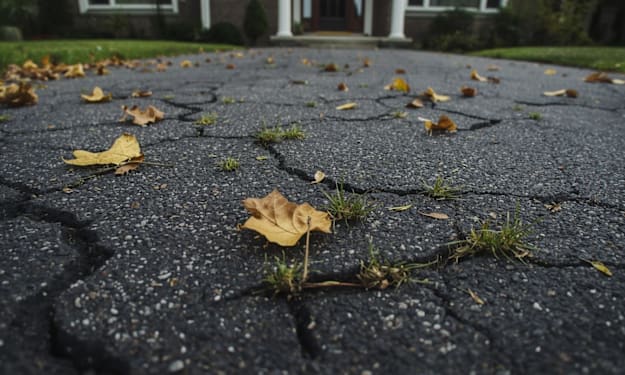
How to Fix Driveway Cracks: DIY Tips, Professional Solutions, and Prevention
Your driveway isn’t just a pathway to your garage—it’s a critical part of your home’s curb appeal and long-term value. Over time, cracks appear due to weather, heavy vehicles, or soil movement. Left untreated, these cracks can worsen, leading to expensive replacements or even safety hazards.
By Neck Akilaa day ago in Lifehack
What is the 963 Hz Tuning Fork Good For?
Sound is more than just a vibration we hear—it has the power to heal, energize, and even awaken higher consciousness. Among the many tools in sound therapy, the 963 Hz tuning fork stands out for its unique ability to harmonize the mind, body, and spirit. Whether you’re curious about spiritual growth or seeking a natural method for emotional balance, understanding the 963 Hz frequency can open new possibilities in your wellness journey.
By Adria Hargrave3 days ago in Lifehack



Comments
There are no comments for this story
Be the first to respond and start the conversation.