
10 Everyday Products You May Rethink Buying After Today
The Hidden Truth Behind Common Items in Your Home

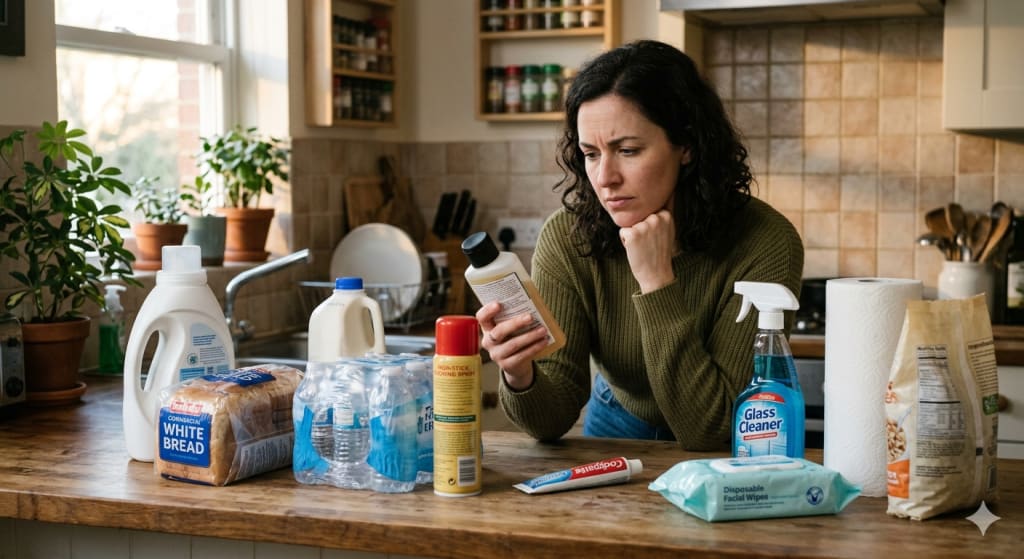
These days, our lives revolve around buying, upgrading, and replacing. A new smartphone drops? We’re already watching reviews. A gaming console launches? We’re refreshing checkout pages.
Our kitchens, bathrooms, bedrooms, and offices are filled with products we rarely think twice about.
But here’s the uncomfortable question:
Do we really know how these everyday products are made?
Behind some of the most common items in our shopping carts are stories of animal testing, environmental destruction, child labor, and unsafe working conditions. Today, we’re counting down 10 everyday products you might see differently after learning what goes on behind the scenes.
10. Tissue and Paper Napkins
Tissues and napkins feel harmless. They’re soft, disposable, and part of daily hygiene routines.
But here’s what many people don’t realize:
Some large paper product manufacturers have been linked to animal testing, using animals to test chemical treatments, dyes, or additives to ensure “safety” for humans.
While many brands now promote cruelty-free practices, others still conduct animal testing when required by certain regulations. It’s easy to overlook something as simple as a tissue, but even paper products aren’t always as innocent as they seem.
9. Lotions and Skin Care Products
Moisturizers, petroleum jelly, makeup, anti-aging creams, and entire store aisles are dedicated to promising us younger, glowing skin.
Unfortunately, the beauty and skincare industry has long faced criticism for:
- Animal testing
- Harsh chemical experimentation
- Lack of transparency in ingredient sourcing
Animal rights groups worldwide continue to pressure major cosmetic brands to adopt cruelty-free standards. While progress has been made, not all companies have completely eliminated harmful testing practices.
That “healthy glow” sometimes comes at a cost we don’t see.
8. Plastic Bags
Plastic bags are convenient. Quick. Cheap. Everywhere.
What most people don’t know is that some plastic bags contain “slip agents”, additives that reduce friction so the bags don’t stick together.
In some cases, these slip agents are derived from animal fats.
Although many countries are transitioning to biodegradable alternatives, traditional plastic production still dominates in many regions. Beyond environmental damage, there are ethical sourcing concerns tied to certain additives used in manufacturing.
7. Rubber Products
Rubber is everywhere: car tires, furniture, and industrial tools.
In countries like Liberia, rubber production plays a significant role in the national economy. However, investigations over the years have revealed troubling labor concerns in parts of the rubber industry, including:
- Poor working conditions
- Allegations of forced labor
- Lack of proper regulation
When supply chains aren’t transparent, companies may unknowingly (or knowingly) source materials from exploitative environments.
The global demand for rubber is massive, and workers often bear the hidden cost.
6. Sticky Notes
Those bright little squares on your desk seem harmless.
However, adhesive manufacturing sometimes involves chemical testing, and historically, some manufacturers have tested these substances on animals to meet safety requirements.
In certain regions, testing chemicals on animals has even been required by law. While regulations are evolving, the past (and in some cases, the present) raises ethical concerns.
Even something as small as a sticky note can carry a bigger story.
5. Palm Oil
Palm oil is everywhere, in snacks, cosmetics, cleaning products, and even biofuels.
The majority of global palm oil production comes from regions in Indonesia, including parts of Borneo and North Sumatra.
The industry generates billions of dollars annually. But it has also been linked to:
- Deforestation
- Habitat destruction
- Allegations of forced labor and exploitative contracts
Workers in some plantations have reportedly been trapped in debt systems, forced to purchase goods from company stores, and prevented from leaving their employment.
The environmental damage tied to palm oil production has also endangered wildlife habitats, making it one of the most controversial ingredients in global supply chains.
4. Counterfeit Handbags
A designer bag at a fraction of the price sounds tempting.
But the counterfeit handbag industry, valued in the hundreds of billions globally, has been associated with:
- Child labor
- Unsafe factories
- Organized crime financing
In many developing regions, children have reportedly worked long hours under abusive conditions to produce fake luxury goods.
Authorities worldwide continue cracking down on counterfeit markets. But demand fuels supply. As long as buyers continue to seek cheaper alternatives, the cycle persists.
3. Branded Clothing
Fast fashion and even some luxury clothing brands have faced scrutiny over:
- Sweatshops
- Unsafe factory conditions
- Underpaid workers
- Child labor
In countries like Bangladesh, garment factories have been under international spotlight after tragic building collapses and unsafe working environments were exposed.
While many brands now promote “ethical sourcing,” watchdog groups continue to monitor supply chains for violations.
Cheap clothes often come with hidden human costs.
2. Electronics
Smartphones, laptops, tablets, we rely on them daily.
Yet parts of the electronics manufacturing industry have faced criticism for:
- Excessive overtime
- Poor factory conditions
- Mental health crises among workers
In some manufacturing hubs in China, reports have surfaced over the years describing cramped living conditions and extreme pressure on factory workers assembling devices for major global tech brands.
Our gadgets make life easier, but the people assembling them may not share the same convenience.
1. The Bigger Picture: Consumer Responsibility
Here’s the hard truth:
The global retail industry responds to consumer demand.
As long as we prioritize speed, convenience, and low prices without asking questions, companies have little incentive to change questionable practices.
But awareness is power.
In 2026, more consumers than ever are:
- Researching brands
- Supporting cruelty-free products
- Choosing ethical fashion
- Avoiding exploitative supply chains
Even small purchasing decisions can send a message.
Final Thoughts: Should You Stop Buying Everything?
Not necessarily.
The goal isn’t guilt, it’s awareness.
We live in a world built on consumption. But informed consumers have the power to reshape industries. Before your next purchase, take a moment to ask:
- Where was this made?
- Who made it?
- At what cost?
Because sometimes, the real price tag isn’t printed on the label.
.
.
.
.
.
.
.
.
.
.
ethical consumerism 2026, hidden truth about everyday products, animal testing in cosmetics, palm oil labor issues, child labor in fashion industry, electronics factory conditions, counterfeit handbag industry, sweatshops in Bangladesh, ethical shopping guide
About the Creator
Areeba Umair
Writing stories that blend fiction and history, exploring the past with a touch of imagination.
Keep reading
More stories from Areeba Umair and writers in Lifehack and other communities.
How to Improve the Immune System During Pregnancy?
Immunity is your body’s capacity to defect against infections and harmful health effects caused from viruses, bacteria, pathogens, and other complications. During a pregnancy, your immune system is focused on supporting your wellness. Thus, it can become vulnerable to illnesses from all the overactivity. In this blog, we will discuss how to improve immune system during pregnancy and why strong immunity is needed when you are expecting.
By Jessica Perry3 days ago in Lifehack
How to Recover a Yahoo Account: The Ultimate Step-by-Step Guide for 2026
Losing access to your Yahoo account can feel like losing a digital key to your personal and professional life. With a history that includes some of the largest data breaches globally, securing and knowing how to recover your account is more critical than ever. Whether you’ve been locked out due to a forgotten password, a hacked account, or an old, inactive email address, this comprehensive guide walks you through every official method to regain access. We will cover explicit recovery techniques, essential protection strategies to prevent future lockouts, and answer the most frequently asked questions, all based on professional insights.
By Alexander Hoffmann5 days ago in Lifehack
Sometimes It's Like That and That'sThe Way It Is
It was the late 1960s, and ten-year-old Gloria Coleman was standing with her grandmother on the side of the highway waiting for the bus. As the Greyhound pulled up, it seemed monstrous and intimidating. Grandma Elizabeth grabbed Gloria's hand, holding it tightly as they boarded.
By Cheryl E Preston5 days ago in Fiction




Comments
There are no comments for this story
Be the first to respond and start the conversation.