
The Unexpected Benefits of Documenting Your Travels as You Go
Benefits of Documenting Your Travels as You Go

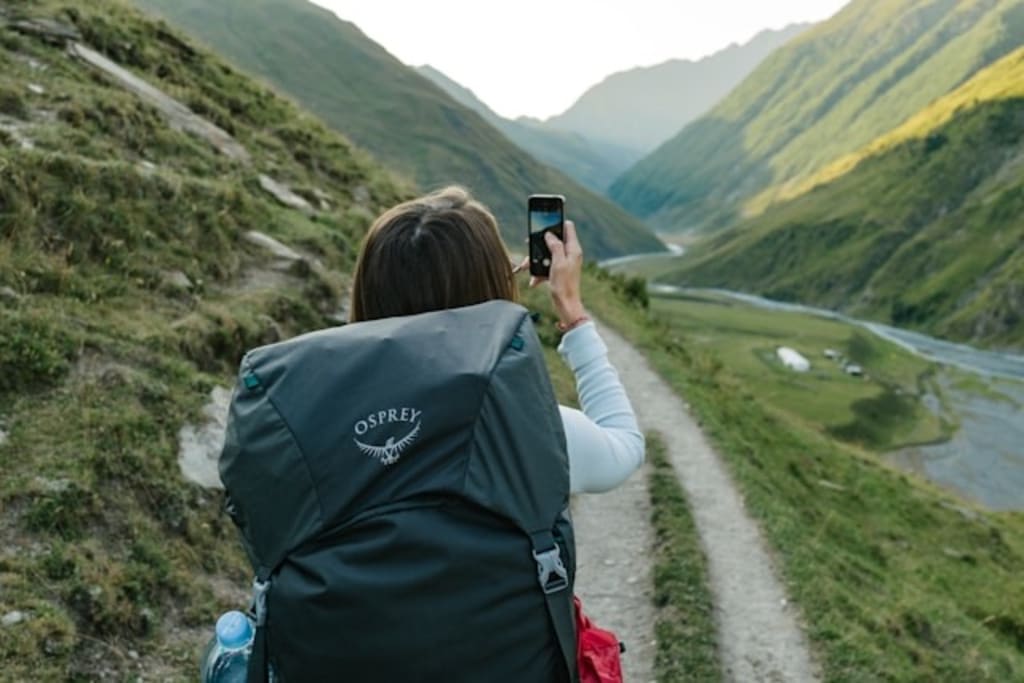
Most people document their travels in some form – a few photos here, a short video there, maybe a note or two in a phone.
But there's a difference between passively capturing things and making documentation a deliberate part of how you travel. The latter tends to change the experience in ways that aren't obvious until you're doing it.
The benefits go well beyond having something to look back on. They show up during the trip itself, often in ways that make the travel more absorbing rather than less.
It Forces You to Actually Pay Attention
One of the quieter ironies of modern travel is how easy it is to be physically somewhere without being mentally present. You're moving through a place, ticking off the things you planned to see, but the impressions don't settle because nothing is making you slow down and notice.
Deliberate documentation changes that. When you're using an action camera to capture the texture of a street or writing a few lines about a conversation you just had, you're forced to observe more carefully than you otherwise would.
The act of trying to record something makes you look at it differently – you start asking what's actually interesting about this place, rather than just passing through it.
You Remember More
Memory is selective and surprisingly unreliable. The details that feel vivid immediately after an experience have a way of blurring within weeks, and the specific things – the smell of a particular market, the way the light hit a building at a certain hour – are often the first to go.
When you document as you go rather than trying to reconstruct things afterward, you preserve details that would otherwise disappear.
A voice note recorded in the moment captures things that a journal entry written three days later can't. Photos taken while actively paying attention contain more information than those taken reflexively. The record you build in real time is almost always richer than the one you'd construct from memory.
It Gives You a Reason to Talk to People
One of the harder parts of solo travel, and even group travel in unfamiliar places, is initiating conversation with strangers. Documentation gives you a natural entry point. Asking someone if you can photograph their stall, their street, their neighborhood, opens conversations that wouldn't happen otherwise.
Those conversations are often the most memorable parts of a trip. They're where you find out about the place that doesn't appear in any guide, the context behind something you've been looking at without fully understanding, or simply the texture of daily life that no amount of research can give you in advance.
It Shapes How You Plan the Next Day
When you review what you've captured at the end of each day – even briefly – patterns start to emerge. You notice what you found genuinely interesting versus what you felt obligated to see. You realize there's a neighborhood you passed through that deserves more time, or that the kind of thing you've been photographing all day tells you something about what you actually want from the trip.
This kind of reflection naturally shapes the days that follow. Travelers who document consistently often find that their trips get better as they go, because they're paying closer attention to what's actually working for them rather than moving through an itinerary on autopilot.
The Archive Becomes Useful Long After You're Home
A documented trip doesn't stop being useful when you get back. The notes, photos, and recordings you made become a resource you return to – for recommendations when friends ask about the place, for your own reference if you ever go back, or simply for the pleasure of revisiting something in detail.
The difference between a well-documented trip and an undocumented one becomes most obvious about six months later. One gives you a detailed, searchable record of an experience. The other gives you a general sense that it was good, with a handful of images that don't tell the full story.
You Don't Have to Do It Perfectly
The main thing that stops people from documenting more deliberately is a vague perfectionism – the sense that it's only worth doing if the photos are good or the writing is polished. That's the wrong frame entirely.
The value of travel documentation is in the capture, not the quality. A blurry photo of something that mattered is worth more than a technically perfect shot of something you were indifferent to. A rough voice note recorded on a moving bus captures something real. The standard you need to meet is entirely your own.
Taking the Camera Out Changes the Trip
The decision to document your travels deliberately – with whatever tools suit you – shifts your relationship to the places you're moving through. You become a slightly more active participant in the experience rather than a passive consumer of it.
That shift tends to make travel more satisfying, more memorable, and more personal. The trip you document carefully is the one you carry with you most completely, long after you've come home.
About the Creator
Sarah
With an experience of 10 years into blogging I have realised that writing is not just stitching words. It's about connecting the dots of millions & millions of unspoken words in the most creative manner possible.
Author’s Advice
If you would’ve asked me 20 years ago did I know I’d become a writer and an author, I would’ve said “nope, ain’t happening”. As fate would have it I did become an author and I can honestly say I’m loving it so far. It really does feel good to be a writer. I’ve learned a lot on this journey and I feel like with even me being as new to this world as I am, there’s some wisdom I need to share with every other aspiring author.
By Joe Patterson7 days ago in Journal
How to Plan a Romantic Couples Spa Getaway in Siem Reap
If you’re travelling to Thailand as a couple and want to experience both the local culture and relaxation, booking a spa holiday in Siem Reap is sure to be a memorable experience. While the ancient temple complexes of Angkor draw in most tourists, Siem Reap is developing as a spa destination that offers both luxury and the traditional healing techniques of the Khmer people. While a spa holiday for couples may seem like an indulgence, you are sure to remember it long after your trip.
By Jeewanthi Armstronga day ago in Journal
Babbling Dixie
The short form of tomorrow is never the whole story. Abbreviations mean nothing when we are born to die and we all are aren't we? Being spoken for before birth is something we're not supposed to remember like some kind of karma after effect. Still here we are spending our lives looking for each other.
By Canuck Scriber Lisa Lachapelle2 days ago in Fiction




Comments
There are no comments for this story
Be the first to respond and start the conversation.