
How to Decide Between Tuk-Tuks, Drivers, and Public Transport in Sri Lanka
The Best Way to Travel, Your Way
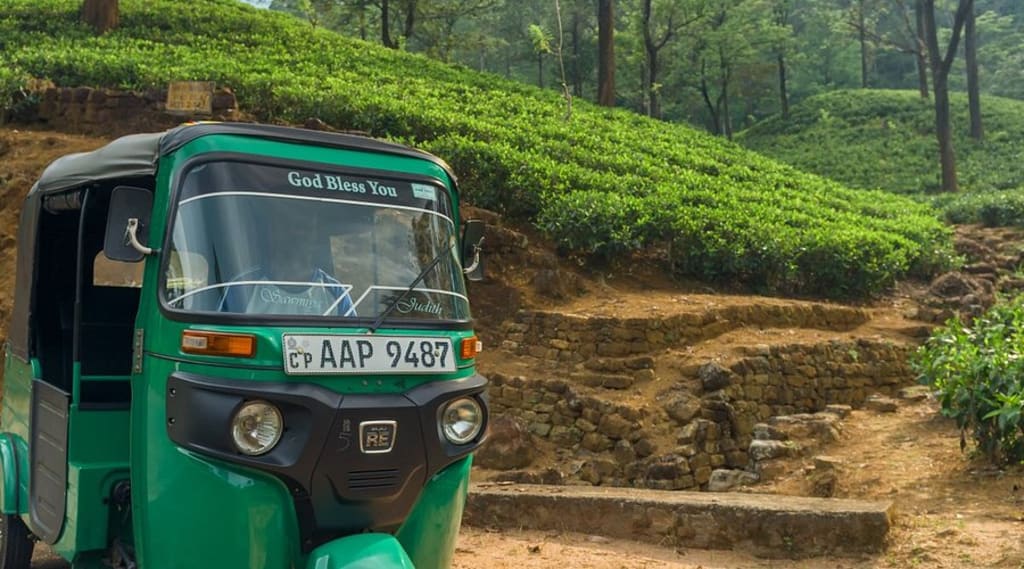
Sri Lanka offers numerous transport options to suit different budgets, travel styles, and comfort preferences.Understanding the advantages and limitations of each method helps travellers make informed choices that match their specific needs.
Tuk-Tuks for Flexibility
The three-wheeled tuk-tuk serves as Sri Lanka's most iconic transport option. These motorised vehicles navigate narrow streets and traffic with ease. Tourists can hire tuk-tuks for short trips within cities or book them for full days of sightseeing. Prices typically range from 200 to 500 rupees for short distances and 15,000 to 18,000 rupees for full-day hires. The PickMe app functions like Uber in Sri Lanka and provides fare estimates that help with negotiations. Many travellers prefer this app because it connects them with rated drivers at transparent prices. Things to do in Kandy, Sri Lanka, become much more accessible with a knowledgeable driver who can navigate to sites like the Temple of the Tooth, Peradeniya Botanical Gardens, tea plantations, and viewpoints around Kandy Lake whilst explaining their significance. Adventurous visitors can rent tuk-tuks and drive themselves. Rental companies like TukTukRental charge approximately 3,000 to 4,000 rupees daily. Drivers need an international driving permit plus a Sri Lankan temporary licence. Self-driving allows complete freedom to stop at viewpoints, take photographs, and explore hidden locations without time pressure. The compact size makes parking simple and navigation through villages straightforward. However, passengers should expect minimal protection from the weather and road dust. Luggage space remains limited compared to cars.
Private Cars for Comfort
Hiring a private driver with a car provides the most comfortable way to explore Sri Lanka. Most drivers know the best routes, speak English reasonably well, and offer insights about local culture and history. Daily rates typically cost between 8,000 and 12,000 rupees, depending on distance and vehicle type. The price usually includes the driver's meals and accommodation but excludes fuel. This option suits families, elderly travellers, or anyone preferring air conditioning and spacious vehicles. Many drivers work as informal tour guides, suggesting attractions, restaurants, and photo opportunities along the route. Properties like Earls Regency in Kandy often assist guests in arranging excursions with reliable drivers, ensuring safe and professional experiences. The main disadvantage involves higher costs compared to public transport and less spontaneity than self-driving. Drivers typically expect to follow agreed-upon itineraries rather than making frequent unplanned stops.
Public Transport for Authenticity
Sri Lankan buses and trains offer the cheapest way to travel while providing authentic local experiences. Bus fares rarely exceed 500 rupees, even for long distances. The train network connects major cities with scenic routes that rank among the world's most beautiful. The Kandy to Ella train journey passes through tea plantations and mountain landscapes that attract photographers worldwide. Second-class tickets for this route cost approximately 150 to 300 rupees. Buses reach nearly every town and village on the island. They display colourful decorations and often play loud music that creates a festive atmosphere. Express buses offer faster journeys with fewer stops, whilst regular buses stop frequently to pick up passengers. Bus drivers maintain aggressive schedules, and the vehicles can become extremely crowded during peak hours. Passengers should expect minimal personal space and no guaranteed seating. Trains provide more comfort with reserved seats available in second and first class. Public transport requires patience and flexibility. Timetables exist, but delays occur regularly. Stations and bus stops can feel chaotic for first-time visitors. Language barriers sometimes complicate ticket purchases and route planning. Asking accommodation hosts for help typically resolves these issues. Homestays and guesthouses usually assist with booking seats and providing directions. The cultural immersion and cost savings make public transport worthwhile for budget travellers and those seeking genuine Sri Lankan experiences.
The ideal transport method depends on individual priorities and circumstances. Budget-conscious backpackers gain the most value from buses and trains. Families with children or elderly members benefit from private drivers who eliminate stress and provide comfort. Adventure seekers enjoy the freedom of renting tuk-tuks or scooters. Business travellers might alternate between PickMe app taxis for short trips and hired drivers for day excursions. Many visitors combine different transport types during their stay. They might use trains for scenic long-distance journeys, hire drivers for multi-day tours, and rely on tuk-tuks for quick city navigation. This flexible approach balances cost, comfort, and experience. The key involves matching transport choices to daily activities and energy levels whilst remaining open to spontaneous changes when interesting opportunities arise.
About the Creator
Keep reading
More stories from Jeewanthi Armstrong and writers in Journal and other communities.
How To Discover Galle Fort the Local Way
Galle Fort is one of the most interesting places to visit on Sri Lanka’s southern coast. Behind its stone walls lies a lively neighbourhood filled with colonial buildings, cafes, as well as views of the ocean. Many first-time visitors expect to see a historic monument and instead discover a community where people live and work every day. Here is the best way to explore Galle Fort as a first timer.
By Jeewanthi Armstrongabout 19 hours ago in Journal
Author’s Advice
If you would’ve asked me 20 years ago did I know I’d become a writer and an author, I would’ve said “nope, ain’t happening”. As fate would have it I did become an author and I can honestly say I’m loving it so far. It really does feel good to be a writer. I’ve learned a lot on this journey and I feel like with even me being as new to this world as I am, there’s some wisdom I need to share with every other aspiring author.
By Joe Patterson26 days ago in Journal
The Unsent Letter
Writing to Someone Who Will Never Read It Changed My Life THE WEIGHT OF UNSPOKEN WORDS 😔 For eleven years I carried the weight of things I never said to my father who walked out of our family when I was twelve years old and who I had not spoken to since because he disappeared so completely that finding him would have required a private investigator and an emotional investment I could not justify in someone who had demonstrated through his absence that he did not want to be found, and the things I needed to say, the anger and the grief and the confusion and the desperate unanswerable question of why he left and whether it was my fault, sat in my chest like stones that I carried everywhere and that made everything heavier including relationships that should have been light and opportunities that should have been exciting and moments that should have been joyful but that were always tinged with the background radiation of abandonment that colored everything without ever being directly addressed 💔
By The Curious Writer4 days ago in Journal
Ghostly Happenings in Colorado
Disturbed Spirits In Denver, an expanse of greenery, Cheesman Park comes with a macabre history since it was once a burial ground known as Mount Prospect Cemetery established by General William Larimer in 1858. The job of exhuming bodies began, and some were left behind resting beneath the park. However, the ghostly spirits don’t wish to rest in peace beneath the park, and visitors here have felt cold touches, seen ghostly children playing at night, and heard a singing lady who disappears when approached.
By Rasma Raisters5 days ago in Horror




Comments
There are no comments for this story
Be the first to respond and start the conversation.