
Parkdale: A Work in Progress
Toronto's Community With Heart

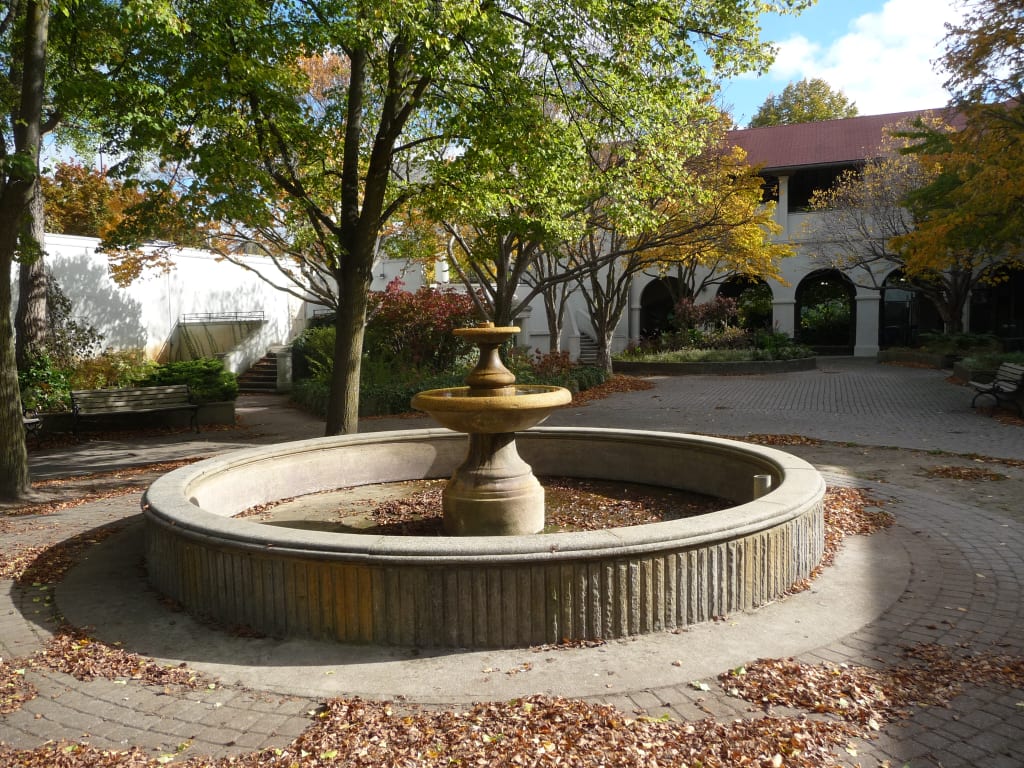
Parkdale, located in Toronto’s west end between High Park and Liberty Village, is one of the city’s most historically rich and layered communities. It began as a wealthy Victorian suburb in the late nineteenth century, later transforming into a vibrant, working-class neighbourhood shaped by generations of immigrants. Today, Parkdale continues to evolve, often surprising even its harshest critics. While gentrification is on the rise, the neighbourhood has always been defined by its resilience, and that spirit remains as strong as ever.
Parkdale reflects the broader story of social change in Toronto. It also serves as a kind of open book one that offers valuable lessons not just for Toronto, but for many North American communities that have faced the challenges of twentieth-century urban life, crime, gun control, and drugs for example.
Founded in 1879, Parkdale was its own village for just a decade before being annexed by Toronto in 1889. Even so, it has held onto a strong and distinct identity through waves of economic uncertainty, shifting urban planning decisions, and demographic changes. The story of Parkdale traces its evolution from those early beginnings to today, showing how geography, transportation, public policy, and social forces have shaped the neighbourhood, sometimes for the better, and sometimes for the worse.
Although Parkdale was incorporated in 1879, its history stretches back much earlier to the era of the War of 1812. The land that would become Parkdale was granted to James Brock, a relative of Sir Isaac Brock, famed for the Battle of Queenston Heights. This period represents Canadian history at its best, though the land itself remained largely undeveloped. Over time, it was subdivided, gradually attracting settlers and early development.
By 1860, Parkdale began to emerge as a distinct settlement on the periphery of Toronto. Its boundaries were Dufferin Street to the east, the Howard and Rideout properties to the west (which later became High Park and Sunnyside), and the tracks of the newly laid railways to the north. The arrival of the Grand Trunk Railway in the 1850s particularly the opening of a station near Queen and Dufferin helped establish the area as a commuter suburb. Rail access allowed residents to live outside Toronto’s downtown core while maintaining strong connections to the city. Parkdale was then named “The Floral Suburb.”
In 1879, Parkdale was incorporated as a village after reaching a population of over 750 residents. At the time, it encompassed 487 acres and was primarily a residential community, with its main street known as Lakeshore Road, later renamed Queen Street. The area gained a reputation as a “floral suburb,” with clean, pure air from the lake, views of the city to the east, and the charming Humber Valley to the west. It was characterized by Victorian mansions, tree-lined streets, and the cool blue waters of Lake Ontario to the south.
The village developed its own governance structure, including a reeve (or mayor) and council, and began establishing civic institutions such as schools and churches. The Anglican Church of St. Mark, opened in 1881, became one of the first community landmarks. Schools also expanded to accommodate the growing population. Holy Family Catholic School and Parkdale Collegiate both began in rented rooms within the Masonic Hall before moving into purpose built structures.
However, Parkdale’s independence was short-lived. Surrounded by the expanding city of Toronto, it faced increasing pressure to amalgamate with its larger neighbour. After financial and political debates, sometimes heated, Parkdale was annexed by Toronto in 1889, becoming part of St. Alban’s Ward.
After annexation, Parkdale entered a period of prosperity and cultural vibrancy. Its lakeside location became a defining feature, attracting residents and visitors to the western beaches, often referred to as the “Poor Man’s Riviera.” By 1905, Parkdale was widely regarded as one of Toronto’s most desirable neighbourhoods. At the time, much of Toronto was affected by industrial pollution, including coal smoke and contaminated water from factories along the Don River. Parkdale offered a cleaner and more pleasant environment to bring up a family.
Between 1911 and 1922, the Toronto Harbour Commission undertook major projects that reshaped the shoreline from the Humber River to the Don River and beyond to Ashbridges Bay. Land was reclaimed, and new recreational spaces including boardwalks and beaches were planned and created alongside industrial developments on newly formed land.
A major success story from this period was the opening of Sunnyside Amusement Park in 1922. This transformed Parkdale into a key leisure destination for Torontonians. Along with Sunnyside Beach, the Palais Royale dance hall, Club Top Hat, and Palace Pier, the area became a hub of entertainment, tourism, and economic activity especially during the dark days of the Great Depression.
During this period, Parkdale developed a strong cultural and social framework. The Parkdale Canoe Club (now the Boulevard Club), established in 1905, became a focal point for recreation and boating. The area also featured theatres, hotels such as the Ocean House Hotel at Roncesvalles and Queen Street West, and numerous sports clubs, all contributing to its lively atmosphere. However, there was also a darker side. The Mercer Reformatory, located on the edge of Parkdale, was widely viewed as a troubling presence, a women’s prison representing a difficult chapter in Toronto’s history.
Architecturally, Parkdale retained its character as an upper middle class enclave, with large Victorian homes and later Edwardian designs. Its reputation as a prestigious residential district persisted into the early twentieth century. However, significant change was on the horizon. The winds of change were blowing.
In 1953, Toronto became part of a federated system known as Metropolitan Toronto, ushering in major regional changes. Parkdale was significantly affected. A combination of projects and shifting economic conditions led to a dramatic transformation, almost overnight.
The most significant change was the construction of the Gardiner Expressway in 1956. Built along the waterfront, it separated Parkdale from Lake Ontario, severing a key part of its identity. Sunnyside Amusement Park was demolished after the 1955–1956 season, marking the end of an era. Parkdale would never feel this happiness again.
Urban planning decisions further reshaped the neighbourhood. Large single family homes were subdivided into low cost apartments, and rooming houses. High rise buildings often exceeding seven storeys were constructed along streets such as Jameson Avenue, Close Avenue, and Dunn Avenue, increasing population density.
These changes contributed to a major socioeconomic shift. Parkdale transitioned rapidly from an affluent suburb to a working class neighbourhood. While housing became more affordable, many properties were poorly maintained, raising concerns about living conditions.
The closure of local attractions, including theatres, contributed to economic decline. However, the Gardiner Expressway also improved accessibility, bringing people into the area. Increased density ultimately helped sustain Parkdale in the long run. By the 1960s, Queen Street West began to recover after a period of decline.
Despite these challenges, Parkdale became a hub of cultural diversity and resilience in the late twentieth century. Affordable housing attracted new Canadians, and marginalized populations.
By the 1970s and 1980s, Parkdale had developed a reputation as one of Toronto’s most ethnically diverse neighbourhoods. Communities from South Asia, the Caribbean, and Eastern Europe established strong roots. “Little Warsaw,” a Polish community centred around Roncesvalles Avenue, emerged after World War II and remains visible today. Social service agencies and community organizations grew to support these populations and continue to play a vital role.
Parkdale also became known for its concentration of mental health facilities and supportive housing. While this contributed to a reputation as a “rough,” neighbourhood, it also fostered a strong network of social services, and community centres.
Residents organized to address issues such as housing, tenant rights, and redevelopment pressures. These efforts helped preserve affordable housing and maintain the neighbourhood’s social fabric.
In recent decades, Parkdale has undergone significant change due to gentrification. Its proximity to downtown, combined with relatively affordable housing compared to neighbourhoods such as Yorkville, the Annex, and Riverdale, has attracted new residents, including young professionals and artists.
This influx has led to rising property values and increased demand for housing. New businesses, and restaurants, have emerged along Queen Street West, revitalizing the commercial landscape.
However, gentrification has also raised concerns about displacement and affordability. Longtime residents, particularly low-income tenants, face pressure from rising rents and redevelopment. Community organizations continue to advocate for protections and affordable housing.
At the same time, Parkdale has maintained its identity as a culturally diverse and socially engaged neighbourhood. It remains home to vibrant immigrant communities, independent businesses, and grassroots initiatives.
The history of Parkdale is a story of transformation shaped by geography and social change. From its origins as a wealthy lakeside suburb to its current status as a diverse and evolving neighbourhood, it reflects the broader dynamics of Toronto’s growth.
Its early prosperity, driven by natural beauty and recreation, gave way to challenges brought on by urban planning decisions such as the Gardiner Expressway. Parkdale adapted, becoming a centre of immigration and community activism. This resilience has set it apart. While firmly part of Toronto, it maintains a strong and distinct identity.
Parkdale stands at a crossroads in 2026. While gentrification brings new opportunities, it also poses risks to the affordability and inclusivity that have long defined the neighbourhood. The challenge moving forward is to balance growth with preservation, ensuring that Parkdale remains a place where diverse communities can thrive.
In many ways, Parkdale symbolizes both growth and resilience. It offers insight into the complexities of urban life its capacity for reinvention, its struggles with inequality, and its enduring sense of community making it not only a place shaped by history, but one that continues to shape the future.
About the Creator
Julius Karulis
Life is fun and unexpected. But it's even better when you add horror to the mix. I write dark fantasy, and each day is a learning experience, and sometimes the darker is the better. Oh and I am a Toronto historian as well.
Keep reading
More stories from Julius Karulis and writers in History and other communities.
The 1904 Great Toronto fire!
The destruction of Toronto’s downtown began on a windy, cold night in early spring. It sounds like the opening line of a Victorian mystery, something cloaked in fog and gaslight. But on that April evening, the story that unfolded in old Hog Town was far more real—and far more devastating.
By Julius Karulis6 days ago in History
🔥 Edge of Fire: Iran, USA, and Israel Push the World Toward Global War
🔥 Edge of Fire: Iran, USA, and Israel Push the World Toward Global War The world is once again gripped by fear as tensions between Iran, the United States, and Israel erupt into open confrontation. What began as a series of strategic warnings and limited strikes has now evolved into a dangerous and unpredictable conflict. Across the Middle East, explosions, air raid sirens, and military mobilizations are no longer isolated incidents—they are part of a growing crisis that threatens global stability.
By Wings of Time 3 days ago in History
Calakmul: The Three Stones and Two Pyramids of the Ancient Maya City
Calakmul is a genuinely lost ancient Maya city. It is located on the Yucatan Peninsula of Mexico, deep within the Petén Basin's lush forests. The magnificent metropolis was quickly recovered by the jungle once it was abandoned.
By Francis Dami3 days ago in History


Comments
There are no comments for this story
Be the first to respond and start the conversation.