
10 Powerful Symbols in History That Lost Their True Meaning
From Ancient Spiritual Icons to Modern Misunderstandings, Why These Famous Symbols Don’t Mean What You Think Anymore

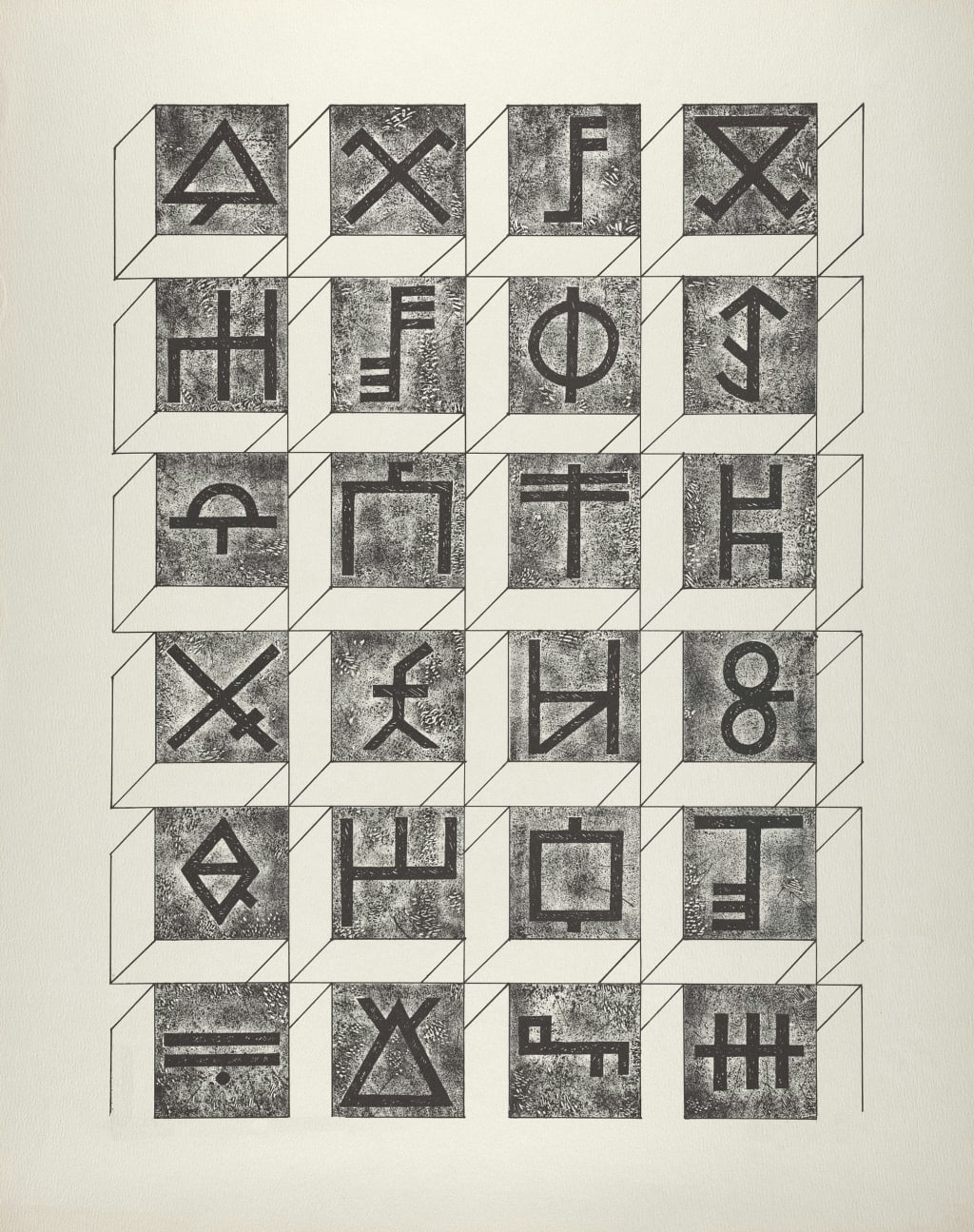
There’s something incredibly powerful about a symbol.
Sometimes, a single image can say more than an entire paragraph. A well-designed icon can communicate belief, identity, heritage, and purpose in seconds. From prehistoric cave paintings to the emojis we use daily, symbols have shaped human civilization for thousands of years.
But here’s the twist: many of the most recognizable symbols in the world today no longer mean what they originally did.
Over time, history, politics, pop culture, and simple misunderstandings have transformed their meanings. Today, we’re exploring 10 iconic symbols that have lost, or dramatically shifted, their original purpose.
10. The Caduceus
Often seen in hospitals and medical logos, the Caduceus is widely associated with doctors and healthcare.
Traditionally, it’s the staff of Hermes, depicted as a winged rod entwined by two serpents.
Here’s the problem: Hermes had nothing to do with medicine. He was the god of commerce, trade, and travelers.
The true medical symbol belongs to Asclepius, whose staff features a single serpent and no wings.
The confusion reportedly began when the U.S. Army Medical Corps mistakenly adopted the wrong symbol. While the Caduceus represents commerce in many parts of the world, in the United States, it’s still commonly used as a medical emblem.
A centuries-old mix-up that stuck.
9. Fleur-de-Lis
The Fleur-de-Lis is everywhere: architecture, fashion, royal emblems, and interior design.
Today, it’s strongly associated with French royalty and nobility.
But its roots stretch much further back. It originated as a stylized lily connected to ancient goddess worship and was believed to represent purity and divine femininity.
Over time, it became a political and aristocratic emblem. In modern culture, it’s often decorative, beautiful, yes, but largely stripped of its deeper spiritual symbolism.
8. The Bluetooth Icon
You probably tapped this symbol today without thinking twice.
The Bluetooth logo was developed by the Swedish telecom company Ericsson. But the design is much older than smartphones.
The symbol combines two ancient Nordic runes:
- Hagall (ᚼ)
- Bjarkan (ᛒ)
These represent the initials of Harald Bluetooth (Harald Blåtand), a 10th-century Viking king who united Denmark and Norway.
“Blåtand” roughly translates to “Bluetooth.”
The symbolism is actually clever: just as Harald united tribes, Bluetooth technology connects devices. Surprisingly, this is one icon that has retained much of its original metaphorical meaning.
7. The All-Seeing Eye
The All-Seeing Eye is most commonly associated with Christianity as a symbol of divine watchfulness, the eye of God observing humanity.
In other traditions, it represents higher knowledge, spiritual awareness, and enlightenment.
Today? It’s often linked to surveillance, conspiracy theories, and secret societies.
What once symbolized spiritual insight is now frequently interpreted as control and monitoring, a dramatic shift in meaning.
6. Skull and Crossbones
Instantly recognizable, this symbol now has two common meanings:
- Poison warning
- Pirate emblem
Thanks to pop culture, we associate it heavily with pirates. But historically, in countries like Spain, it was used to mark cemeteries and graveyards.
Its original purpose wasn’t adventure; it was a reminder of mortality.
5. The Barber’s Pole
That red-and-white striped pole outside barber shops seems harmless enough.
But historically? It was anything but.
In ancient times and even into the Victorian era, barbers were also surgeons. One of their most common procedures was bloodletting.
The red stripe represented blood. The white stripe symbolized bandages. Barbers would hang blood-soaked cloths outside their shops to advertise their services, and wind would wrap them around the pole.
Today, it simply signals a haircut. Its surgical origins are largely forgotten.
4. The Ichthys (Christian Fish)
You’ve likely seen this fish symbol on the back of cars.
Known as the Ichthys, it became an identifying mark for early Christians under Roman persecution. When two believers met, one would draw half the fish; the other would complete it to confirm shared faith.
Interestingly, the fish symbol predates Christianity. Pagan cultures associated it with fertility and the “Great Mother” goddess.
After Christianity became established, the crucifix overshadowed the Ichthys. Yet some sects still use it today.
3. The Peace Symbol
Strongly linked to the 1960s hippie movement, the peace sign represents pacifism and harmony.
But its true origin lies in political protest.
It was designed in 1958 by Gerald Holtom for the British Campaign for Nuclear Disarmament. The symbol combines semaphore signals for the letters N and D (Nuclear Disarmament).
Holtom described it as a figure standing with arms outstretched downward in despair.
Over time, it transformed into a global emblem of peace and freedom, a meaning that, while beautiful, differs from its specific original political message.
2. The Pentagram
Today, many people associate the pentagram with Satanism or occult practices.
But historically, the five-pointed star symbolized:
- Mathematical perfection
- Harmony
- Mystical balance
Ancient Greeks believed it held magical properties. In early Christian symbolism, it even represented the five wounds of Christ.
Long before it was linked to dark imagery, it was a symbol of protection and proportion, even reflecting the geometry of the human body.
Few symbols have been more misunderstood.
1. The Swastika
Perhaps no symbol has undergone a more tragic transformation than the Swastika.
Today, it is inseparable from Nazi Germany and the atrocities committed under Adolf Hitler during World War II.
However, the symbol existed thousands of years before the 20th century.
In Hinduism, it represents life, prosperity, and good fortune. In Buddhism, it symbolizes harmony and eternity. The ancient Romans, Celts, and other civilizations employed variations of it in their art and architecture.
Even in the early 20th century, it appeared in benign contexts, including as part of the branding of Carlsberg before the Nazi regime appropriated it.
Unfortunately, history has permanently altered public perception. For many, its ancient meaning has been overshadowed by modern horror.
Why Symbols Matter More Than Ever
Symbols shape identity. They influence branding, religion, politics, and culture. But as we’ve seen, meanings evolve, and sometimes get lost entirely.
In today’s digital world, where icons are everywhere, from app logos to social movements, understanding their origins matters more than ever.
Because behind every simple image lies a story.
And sometimes, that story is far more complex than we realize.
.
.
.
.
.
.
.
.
.
.
Symbols in history, symbols that changed meaning, ancient symbols explained, misunderstood symbols, history of symbols, Caduceus meaning, Swastika original meaning, Pentagram history, Peace symbol origin, Ichthys meaning, Barber pole history, All Seeing Eye meaning, Fleur de Lis origin, Bluetooth symbol meaning.
About the Creator
Areeba Umair
Writing stories that blend fiction and history, exploring the past with a touch of imagination.
Keep reading
More stories from Areeba Umair and writers in History and other communities.
Ancient Super Weapons That Changed Warfare Forever
Throughout recorded history, warfare has shaped civilizations. Long before drones, missiles, and cyber warfare, ancient societies were already engineering terrifying and brilliant machines designed to dominate the battlefield.
By Areeba Umair3 days ago in History
Is This the End of Netanyahu? | War Strategy or Something Worse?
The night was unusually tense in Jerusalem. Television screens flickered inside homes, cafés, and military offices as people waited for the next announcement. For many citizens of Israel, the question echoing across the nation was simple but heavy:
By Imran Ali Shah2 days ago in History
Shaping South Asia’s Historical Narrative
In the annals of South Asian history, few figures evoke as much discussion and debate as Mahmud of Ghazni. The ruler of the Ghaznavid Empire, Mahmud (971–1030 CE), is remembered not only for his military campaigns but also for his repeated raids into the Indian subcontinent, culminating in the infamous attack on the Somnath Temple in 1025 CE. This episode has become a central reference point in the region’s historical narrative, influencing perceptions of conquest, religion, and politics for centuries.
By Irshad Abbasi 5 days ago in History



Comments
There are no comments for this story
Be the first to respond and start the conversation.