
Watching Foreign Language Films
Pretentious, Moi?



I’ve seen three subtitled movies in a row over the past three weeks – pretentious, moi? Well, let me give you some clues...
I like jazz. I don’t mean easy, sing-a-long trad jazz. I mean the sort of jazz that improvises over chords and wanders into solo soarings and meandering drumming. I sit in an audience and slowly nod along.
I drink red wine.
I own several hats.
I watch art-house movies in the afternoon and then write about them using a certain eclecticism that draws on film studies, social theory and pretend conversations with a 1940s imaginary screenwriter.
So, yes. I think I qualify as pretentious.
And I’m fine with that.
But sometimes it gets in the way of writing things in a way that says what I really want to say. I’ve struggled to write about my last three cinema visits. I was a little derailed by a conversation after one film. A group of movie-goers joined me on the back row (which felt a little intrusive. Normally I can guarantee quite a bit of space between myself and anyone else during an afternoon showing of an obscure European release). At the end of the screening, one of the group asked me whether I’d enjoyed the film I said yes. I said I thought it was bold, stylish and gripping. And the woman sitting next to me shook her head. “No,” she said, “I didn’t like it. I couldn’t follow it.”
It bamboozled me, because the film followed a fairly conventional narrative structure for a thriller. I found myself thinking about what I needed to explain about audience interpretation and analysis of films. I went down a rabbit hole of pretension. I started making notes on film literacy, narrative theory and the role of the critic.
I wanted to say something grand about the allure of a subtitled film. How cinema forces my focus away from my phone, into a world of the filmmaker’s vision. Subtitles and a foreign language demand another layer of my attention. Foreign language films add to my understanding of the world. They show how humans are both similar and strange. How things like manners are contextual, but horror and disgust is universal.
After I read through my notes, I put down my glass of red wine (a cheeky, full-bodied Merlot) and thought this has to stop. Rachel, just write some words about the films and get on with your day.
So, here goes.
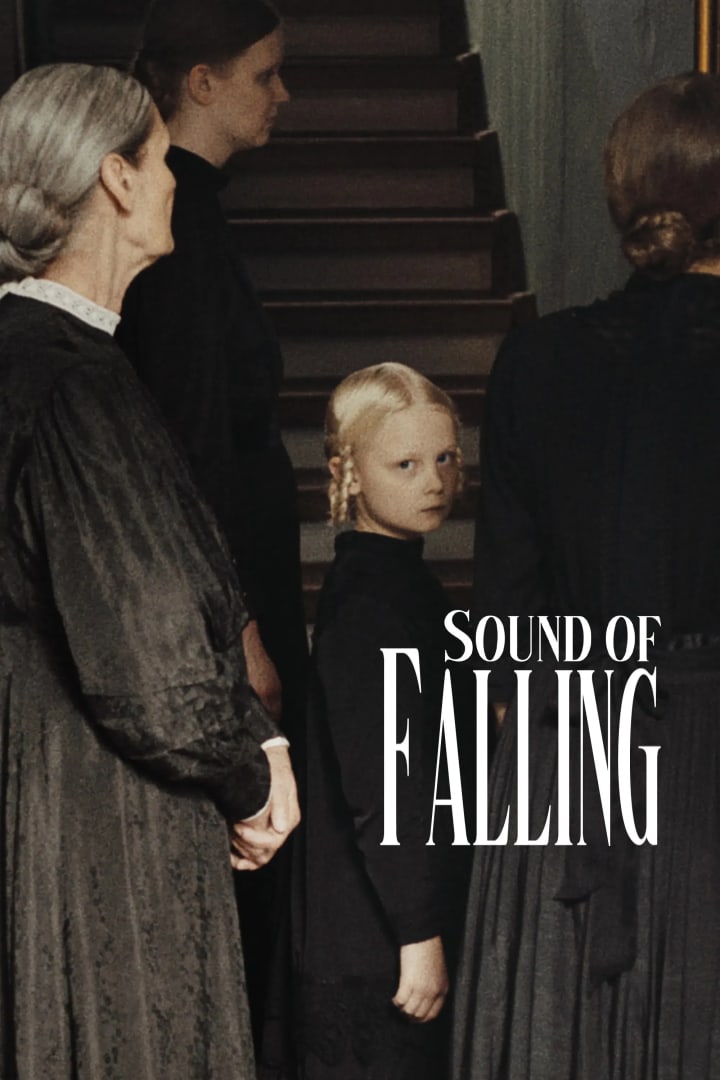
Sound of Falling
This is a time-shifting narrative across four generations of inhabitants of an East German farmhouse from the 1910s to the 2020s. Critics called it mesmeric, which is a word that appealed. I was also drawn in by an intriguing trailer that showed women looking into the camera, aware that that we were watching them.
Unfortunately, the trailer was a little misleading and I wasn’t mesmerised. I found the film, despite some complex emotional moments, dull and cruel. The surveillance and trauma inflicted on bodies was unrelenting. I remained patient, hoping for lightness, but I was not rewarded.
Two stars ⭐⭐
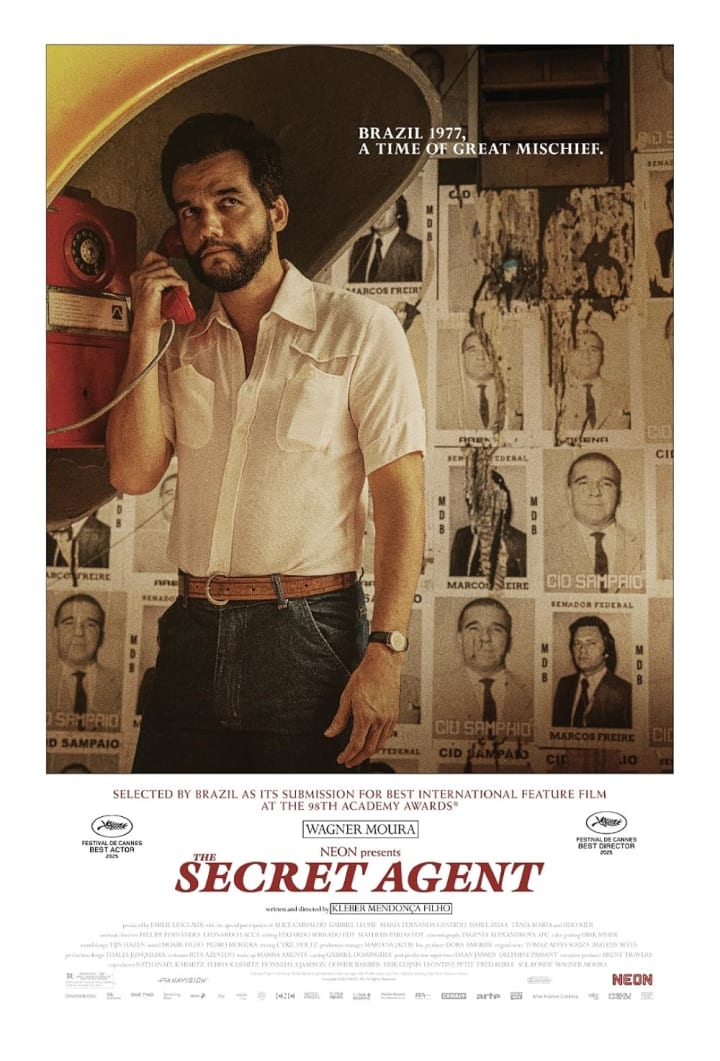
The Secret Agent
This was the film that my fellow audience member didn’t follow. The Secret Agent is a neo-noir historical political thriller set amidst the corruption of 1970s Brazil. The period detail is meticulous.
The story follows the fortunes of Armando, an ex-academic forced out of his research by anti-communist politicians and corrupt businessmen. He becomes a political dissident seeking refuge with others on the edges of society and supported by an underground network. He discovers that he is being hunted by contract killers abetted by an easily-bought police force.
This is a cinematically literate piece of storytelling. If you enjoy thrillers and suspense this is for you. It wears its references and influences comfortably (Spielberg, de Pama, Hitchcock, Carol Reed). It has something to say about how corruption impacts lives, how ideologies can be hollowed out from principles, but most importantly it never forgets that it is telling a story. As for not being able to follow the piece, I would argue that it uses cinematic tropes, but is never too obscure. It is told in a mainly linear fashion, with occasional flashbacks and a final flashforward. And it has one surreal scene narrating a satirical newspaper piece about a “Hairy Leg” on the rampage. There is gore. Violence is always waiting to be unleashed, so possibly not for the fainthearted.
I loved this film.
Four stars ⭐⭐⭐⭐
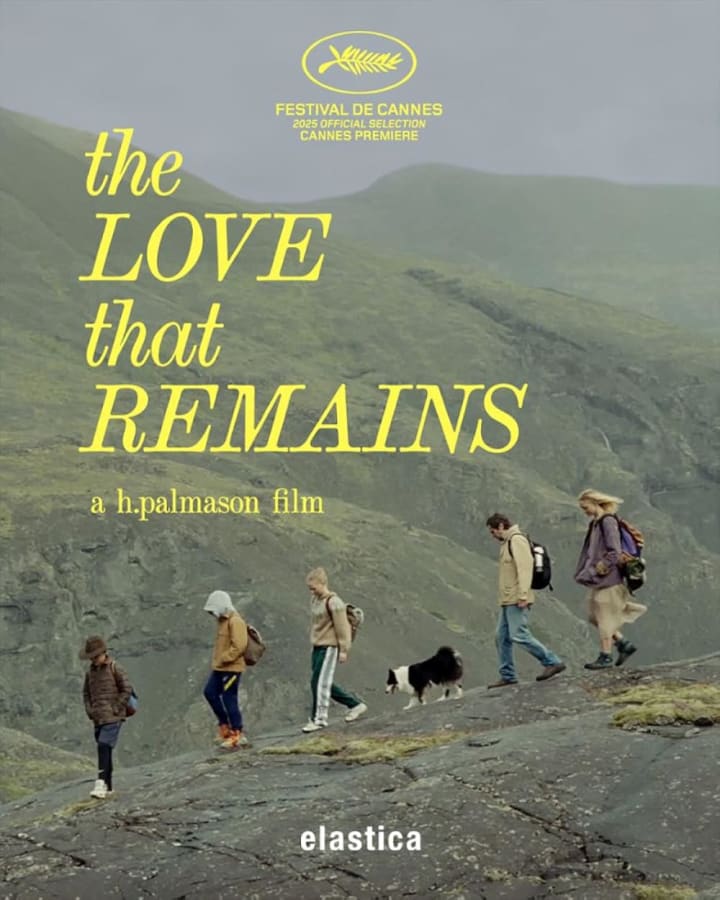
The Love That Remains
An Icelandic darkly comedic saga that follows the fortunes of a family over a year, post-separation of the parents. It has an easy, naturalistic style to begin with, which morphs into something more surreal as the movie progresses. There are some funny character moments, as the three children bicker and a comedy of manners section when Anna, the mother and ‘struggling artist’ entertains a Swedish gallery owner. These scenes capture the frustration of boring, boorish company that one nevertheless must try and impress.
As an animal lover the film tore my vegetarian sensibilities in two. There is a prize-winning appearance by an Icelandic sheepdog called Panda. But there are also a number of scenes of fish being gutted.
Iceland looks beautiful and desolate. Icelanders look beautiful and desolate. And I would say that if this is being billed as a comedy, Icelandic humour is more desolate than beautiful.
It is told as a series of vignettes, leaving the audience to piece together the bigger narrative, which is focussed on love and loss and dealt with tenderness and candour.
Glad I got to see it.
Three stars ⭐⭐⭐

So, a final word about film literacy.
Cinema like most artforms can be consumed in different ways. It can be beautifully light and fluffy and undemanding. It can also be esoteric and demanding. Most films sit somewhere in between and require some translation or interpretation to understand. Even kids’ movies can use cinematic tropes that need deciphering – the Muppets Movie has a sequence where they travel by map, and Frozen has an introductory voice-over. We are very rarely completely passive observers of the screen.
Complete film illiteracy is rare. Most of us can decipher a film.
Pauline Kael argues:
“The role of the critic is to help people see what is in the work, what is in it that shouldn’t be, what is not in that could be.”
Nothing more complicated than that.

If you've enjoyed what you have read, consider subscribing to my writing on Vocal. If you'd like to support my writing, you can do so by leaving a one-time tip or a regular pledge. Thank you.
About the Creator
Rachel Robbins
Writer-Performer based in the North of England. A joyous, flawed mess.
Please read my stories and enjoy. And if you can, please leave a tip. Money raised will be used towards funding a one-woman story-telling, comedy show.
Keep reading
More stories from Rachel Robbins and writers in Geeks and other communities.
The Source Code of Animanga: Ranking the Top 10 Anime Arcs by Narrative Architecture
In the world of software engineering, we talk about "clean code," "scalability," and "system architecture." But as a student of AI and development, I’ve realized that the greatest mangakas are essentially master architects. They don't just draw; they build massive, interlocking systems of lore and logic that have to run without "crashing" for decades.
By Abhijeet Singha day ago in Geeks
Waiting
It could have been the perfect summer day. The hot July sun warmed the water in the backyard pool just enough to be comfortable and refreshing. The laughter of the five little girls echoed against the splashing water as they chased each other in a classic game of Marco Polo. The game distracted them enough that they failed to notice the dipping sun nearing the horizon. Their fingers and toes had long ago turned wrinkly like raisins, but none wondered why they had been left to play so long today.
By A. J. Schoenfeld8 days ago in Fiction


Comments (4)
And now congratulations on the TS
Good job dodging the pretension, while also embracing some of what makes for the pretension. Uh...I'm feeling pretentious! OK, this was just a fun read and I really wanna see The Secret Agent.
In the right mood I can go for foreign language film but prefer to watch without subtitles if it is something I have seen before. Each of your reviews intrigues me and I only wish someone would create a universal movie library that I could just pick from as the mood took me. BFI in London have a movie view library but hardly anything in it.
I like the quote about a critics role. Too bad the internet turned everybody into movie critics. Great story!