
The Boys Season 5 Review (No Spoilers): A Dark, Emotional Ending
What happens in The Boys season 5?

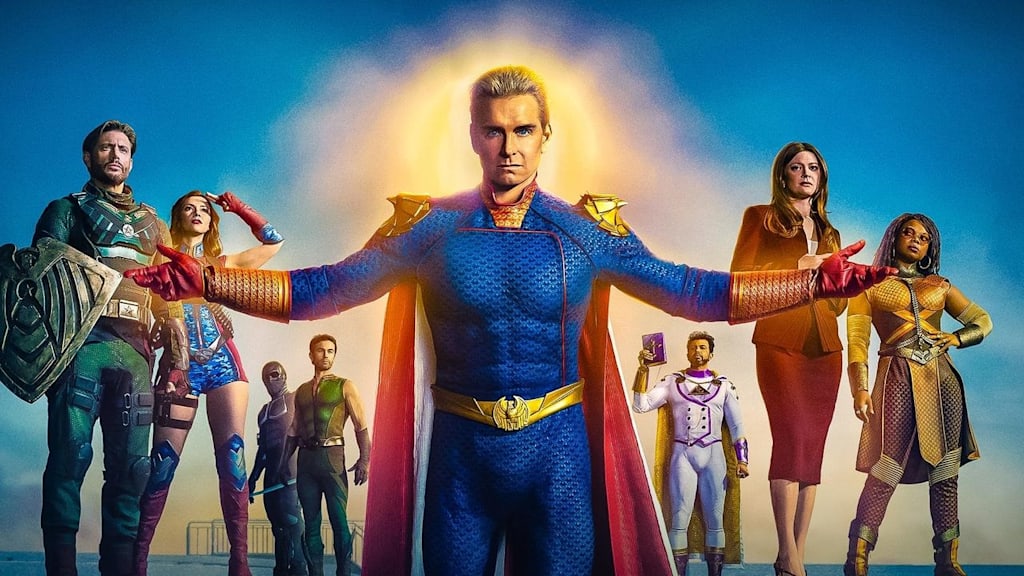
If you’re expecting the final season of The Boys to feel like Avengers: Endgame—big, explosive, and packed with nonstop spectacle—you might want to recalibrate. This last chapter leans far more into something bleak and introspective. It’s closer in tone to a slow, emotional collapse than a triumphant grand finale.
There’s a lot of tension, a lot of conversations, and a heavy emotional weight hanging over nearly every scene. And honestly? That shift is noticeable right away.
Part of that comes down to scale. Showrunner Eric Kripke has already confirmed this season didn’t get a Game of Thrones-level budget—and it shows. Especially when you compare it to Season 3, which delivered massive, memorable set pieces that raised expectations for the endgame.
A Slow Start That Doesn’t Feel Like “The End”
This review covers episodes 1 through 7 (with episode 8 being held back), and the biggest issue early on is pacing.
The first four episodes? They’re solid—but they don’t feel like a final season.
There’s no immediate sense of urgency. No bold new strategy to deal with Homelander. And surprisingly, not many major new characters shaking things up either.
It almost feels like the show is stalling—revisiting familiar ideas instead of pushing toward a conclusion.
Even Homelander himself feels… simplified. Stripped of some of his psychological nuance and pushed more into pure chaos. And while that can be entertaining, it also makes things feel a bit too easy for a character who’s always been more layered than that.
Things Finally Pick Up in Episode 5
Then episode five hits—and suddenly, the show wakes up.
This is where the creativity kicks in. The risks feel bigger. The storytelling becomes sharper. You start getting those “this is the end” vibes that were missing earlier.
There are also some standout cameo moments that inject fresh energy into the story. It finally feels like the writers are going all-in—trying ideas they may have been holding back until now.
And most importantly, Homelander gets his depth back.
Homelander: Power, Isolation, and Vulnerability
What makes Homelander so compelling has never been just his strength—it’s his fragility.
And in the back half of the season, that finally comes back into focus.
Antony Starr delivers a much more layered performance here, reminding us that beneath all the power is someone deeply isolated. The show leans into that loneliness in interesting ways, even highlighting how out of place he can feel in ordinary settings.
It’s a subtle but powerful shift: despite being nearly invincible, Homelander often feels… small.
And emotionally? That’s where he’s most vulnerable. Characters land psychological blows that hit harder than any physical attack ever could.
The Return of Soldier Boy and Familiar Faces
Fans of Soldier Boy will be pleased—he plays a significant role this season.
Portrayed again by Jensen Ackles, the character continues to bring a chaotic, unpredictable energy. His dynamic with Homelander—especially as a father figure—is as unsettling as it is fascinating.
There’s also a strong connection here to Supernatural, another project tied to Eric Kripke, and longtime fans will definitely notice (and appreciate) the crossover energy.
That said, not every storyline lands. Some character motivations—particularly involving past relationships—feel forced and a bit out of sync with what we’ve seen before.
Missed Opportunities: Ryan and Character Focus
One of the more surprising choices this season is how little it uses Ryan.
For a character who has been built up for so long, his limited presence feels like a missed opportunity—especially now that he’s old enough to play a more active role.
Instead, the spotlight shifts elsewhere. Some of those shifts work (like the deeper exploration of supporting characters), but others leave you wondering what could have been.
The Boys Team: Stronger Together, Still Human
The core team remains one of the show’s greatest strengths.
Billy Butcher continues to mirror Homelander in fascinating ways—two sides of the same coin, both capable of terrible things, but driven by very different emotional cores.
Meanwhile, relationships take center stage:
- Starlight and Hughie share meaningful, quieter moments
- Frenchie and Kimiko deliver one of the season’s strongest emotional arcs
- MM stands out as the grounded, human anchor of the group
It’s these character dynamics that keep the show engaging—even when the larger plot stumbles.
A More Political—and Risky—Direction
Like Season 4, this final chapter leans heavily into political commentary. But this time, it goes even further—bringing religion into the mix.
The story explores ideas around power, influence, and control, blurring the lines between church and state. It’s bold, no question—but also divisive.
For some viewers, this direction will feel thought-provoking. For others, it may feel like the show is prioritizing messaging over storytelling.
New Additions That Actually Work
One of the standout new additions is Daveed Diggs, who brings a unique presence to the cast.
His character starts off feeling underutilized but gradually becomes one of the more interesting elements of the season. It’s the kind of performance that makes you wish he’d been introduced earlier.
A Final Season That Hits Emotionally—But Not Always Spectacularly
There are major character deaths throughout the season—and they hit hard.
This is still a character-driven show at its core, and when it leans into that, it’s incredibly effective. Some moments are genuinely heartbreaking.
But in terms of spectacle? It doesn’t quite reach the highs of earlier seasons—especially Season 3, which still stands as the peak.
Final Verdict: Good, But Not the Grand Finale Fans Expected
So, is this the final season fans were hoping for?
Not quite.
It’s darker. More emotional. More introspective. But also more restrained.
If you’re here for character drama and psychological tension, there’s a lot to appreciate. If you were expecting a massive, action-packed sendoff… you might walk away a little disappointed.
Still, with one episode left unseen, there’s always the chance that everything changes with the finale.
Final Season Rankings (So Far)
Here’s how things stack up:
- Season 3 (Peak storytelling and action)
- Season 1 (Strong, iconic introduction)
- Season 4 (Bold and eventful)
- Season 5 (Emotional, but uneven)
- Season 2 (Still good, but least impactful)
The Big Question: How Should It End?
Should Homelander die?
Or should he lose his powers?
There’s a strong argument that taking away his powers would be the more interesting—and poetic—ending. Watching someone who once felt like a god confront his own humanity could be the most fitting conclusion of all.
Either way, the show has managed to do one crucial thing:
Keep us guessing.
About the Creator
Bella Anderson
I love talking about what I do every day, about earning money online, etc. Follow me if you want to learn how to make easy money.
Keep reading
More stories from Bella Anderson and writers in Geeks and other communities.
Invincible Season Update: The Controversial Tech Jacket Twist Explained
Hollywood is going to do what Hollywood does. That’s just the reality of it. If you care about a story, a character, or a franchise, the safest mindset is to not get too attached—because the moment it gets adapted for the screen, chances are it’s going to be different.
By Bella Anderson8 days ago in Geeks
The Drama - A Movie Review
Are you sure you want to do this now? The Drama was released to theaters in 2026. Charlie and Emma are a week away before getting married. However, when Emma reveals a dark secret from her past, it makes Charlies reluctant and question the woman he is about to marry.
By Marielle Sabbag4 days ago in Geeks
The Super Mario Galaxy
When it comes to iconic video game experiences, few titles shine as brightly as Super Mario Galaxy. Released in 2007 for the Nintendo Wii, this game didn’t just continue the legacy of Mario—it elevated it to a whole new dimension. Blending creativity, innovation, and sheer joy, Super Mario Galaxy remains one of the most beloved entries in the Mario franchise. Even years later, it stands as a testament to how games can be both simple in concept and breathtaking in execution.
By Hafe Watson3 days ago in Geeks


Comments
There are no comments for this story
Be the first to respond and start the conversation.