
Where Is Education the Most Expensive in the World?
A closer look at the countries where the cost of learning reaches its highest levels

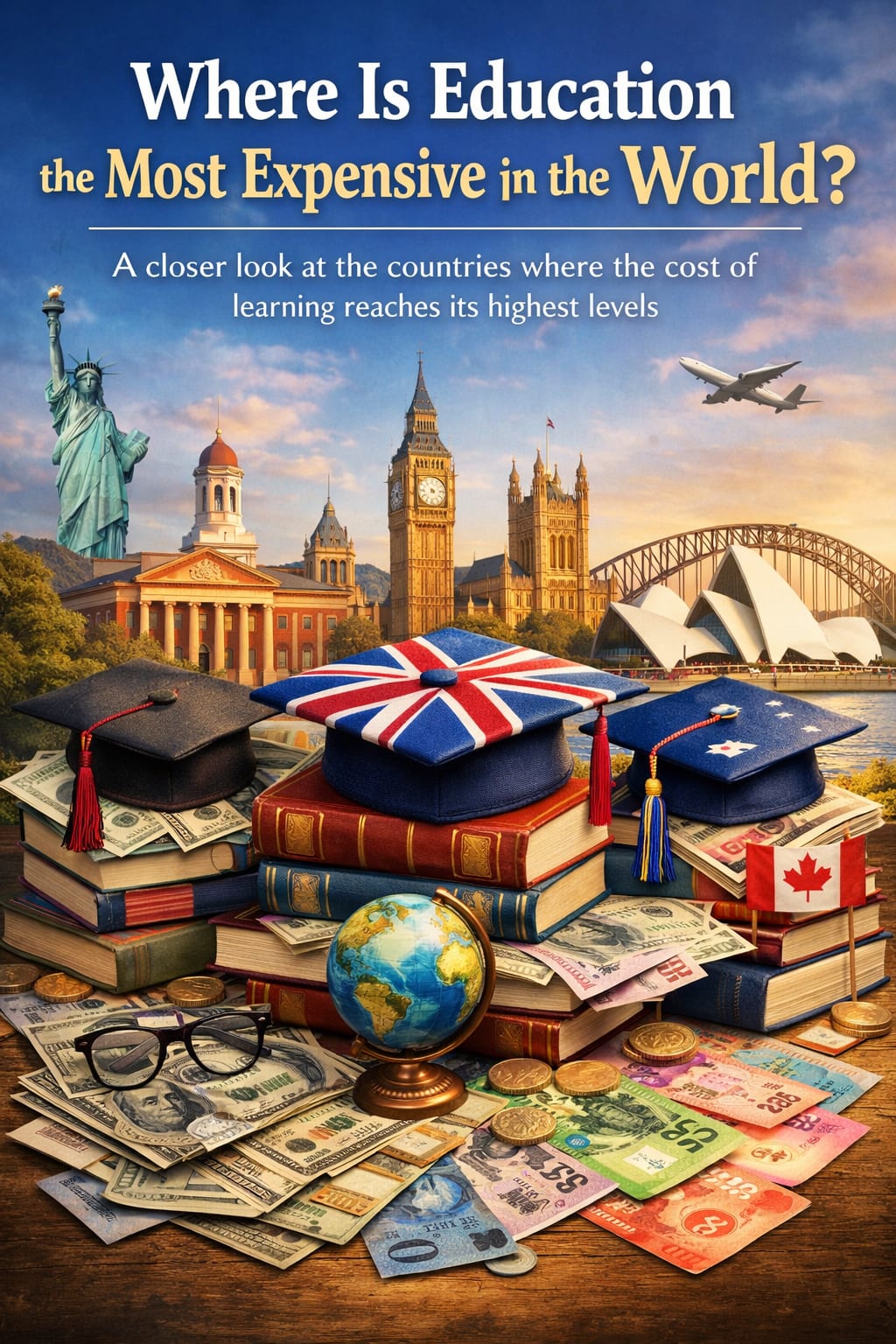
Education is often described as an investment in the future, but in many parts of the world, that investment comes with an extremely high price tag. While access to education has expanded globally, the cost of obtaining quality schooling—especially higher education—varies significantly from country to country. Some nations stand out for having the most expensive education systems, where tuition fees, living expenses, and associated costs can place a heavy financial burden on students and their families.
One of the most prominent countries known for expensive education is the United States. Universities in the U.S., particularly private institutions, charge some of the highest tuition fees in the world. Prestigious schools such as Harvard University and Stanford University can cost tens of thousands of dollars per year in tuition alone. When accommodation, food, books, and healthcare are included, the total annual cost can easily exceed $70,000. Even public universities, while cheaper than private ones, can still be costly for international students.
Another country with notably high education costs is the United Kingdom. Universities such as University of Oxford and University of Cambridge charge substantial tuition fees, especially for international students. While domestic students benefit from government-regulated tuition caps, international students often pay significantly more, sometimes exceeding £30,000 per year depending on the program. Additionally, living in cities like London further increases the overall cost.
In Australia, education is also among the most expensive globally. Universities such as University of Melbourne and University of Sydney are highly ranked and attract international students, but their tuition fees can range from $20,000 to $45,000 annually. Australia’s high cost of living adds to the financial pressure, making it one of the priciest destinations for higher education.
Similarly, Canada has seen a steady increase in tuition fees, particularly for international students. Institutions like University of Toronto and McGill University offer world-class education, but students can expect to pay between $20,000 and $50,000 per year depending on the field of study. Although Canada is often considered more affordable than the U.S., it still ranks among the higher-cost countries globally.
Interestingly, some European countries offer a different perspective. Nations such as Germany and Norway provide free or very low-cost tuition at public universities, even for international students. However, the overall cost of education is not just about tuition. Living expenses in cities like Berlin or Oslo can still be high, which means students must budget carefully despite the absence of tuition fees.
In Asia, countries like Japan and Singapore also have relatively expensive education systems. Universities such as University of Tokyo and National University of Singapore are globally recognized and charge significant tuition fees, particularly for international students. However, these countries often provide scholarships and financial aid options that can help offset costs.
It is important to note that the “most expensive” education is not determined by tuition alone. Factors such as accommodation, transportation, healthcare, and daily living expenses all contribute to the overall cost. For example, studying in cities like New York, London, or Sydney can dramatically increase expenses compared to smaller towns.
Despite the high costs, many students still choose these countries because of the quality of education, global recognition of degrees, and better career opportunities. Universities in these regions often have advanced facilities, experienced faculty, and strong industry connections, which can provide long-term benefits that justify the initial investment.
In conclusion, the most expensive education systems in the world are typically found in developed countries like the United States, United Kingdom, Australia, and Canada. While these countries offer exceptional academic opportunities, the financial burden can be substantial. As a result, students must carefully evaluate their options, explore scholarships, and consider long-term returns before making decisions about studying abroad. Education may be costly, but for many, it remains one of the most valuable investments in life.
About the Creator
Irshad Abbasi
Ali ibn Abi Talib (RA) said 📚
“Knowledge is better than wealth, because knowledge protects you, while you have to protect wealth.
Keep reading
More stories from Irshad Abbasi and writers in Education and other communities.
Does Expensive Education Truly Deliver What We Desire?
Education has long been considered one of the most powerful investments a person can make. In today’s world, however, the cost of education—especially higher education—has risen dramatically. Prestigious universities, private institutions, and specialized programs often come with hefty price tags, leading many to believe that expensive education automatically translates into better opportunities, higher status, and a fulfilling career. But the critical question remains: does expensive education truly deliver what we desire?
By Irshad Abbasi about 7 hours ago in Education
Cybersecurity in EdTech Market to Surpass USD 243 Billion By 2034
Cybersecurity in EdTech Market Overview The Global Cybersecurity in EdTech Market was valued at USD 36 billion in 2024 and is projected to reach approximately USD 243 billion by 2034, expanding at a CAGR of 21.2% from 2025 to 2034. The expansion of digital learning platforms, online classrooms, and cloud-based education systems has significantly increased the need for stronger cybersecurity frameworks across educational institutions. As schools, universities, and training organizations store large volumes of student records, financial data, and academic research online, protecting these digital assets has become a critical operational priority.
By Roberto Crum2 days ago in Education
Everyone Is Acting Normally Challenge Winners
In the Everyone Is Acting Normally challenge, something is clearly wrong, but no one stops to name it. Across the shortlist, that wrongness appears as resurrections, surveillance, disappearance, and denial, each treated as part of daily life.
By Vocal Curation Teamabout 3 hours ago in Resources


Comments
There are no comments for this story
Be the first to respond and start the conversation.