
The Curved Edge of History: A Masterclass in the Karambit Knife
Karambit Knife
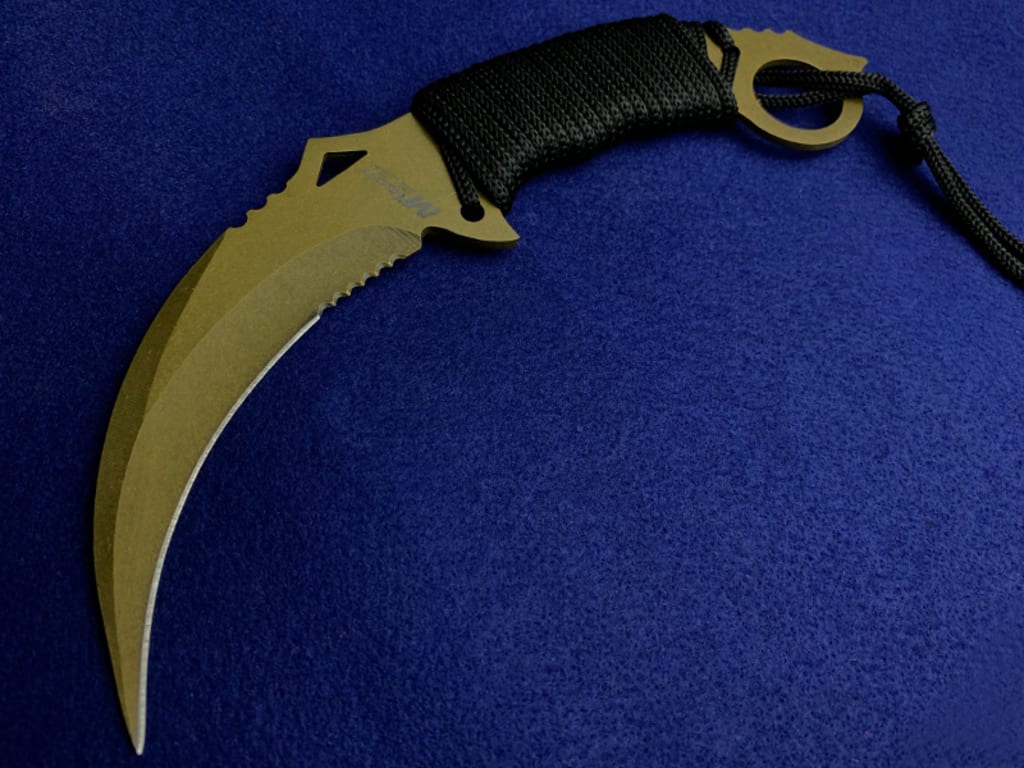
In the world of tactical equipment and historical weaponry, few designs are as instantly recognizable as the karambit knife. With its distinctive hawkbill blade and integrated finger ring, it represents a specialized blueprint that has evolved from an 11th-century agricultural tool into one of the most sophisticated personal defense instruments in the modern era. Originating from the Minangkabau people of West Sumatra, the design was inspired by the claws of a tiger, intended to provide a powerful, hooking mechanical advantage that feels more like an extension of the hand than a handheld tool.
Understanding the karambit requires looking past its aggressive profile to analyze the engineering, the mechanical versatility, and the specialized training required to master its unique geometry.
The Mechanical Blueprint: Form Following Function
The karambit knife is defined by two primary structural features that separate it from straight-edged tactical knives: the curved blade and the safety ring.
The Hawkbill Blade: The inward-curving edge is engineered for pull-cutting and hooking. Unlike a straight blade that requires a pushing motion to slice, the karambit utilizes the natural mechanics of a pulling arm to exert maximum force on a single point. This makes it exceptionally efficient for tasks involving cordage, heavy fabric, or high-tensile materials.
The Finger Ring (Safety Ring): Positioned at the end of the handle, the ring provides unparalleled retention. It ensures that the knife cannot be easily disarmed and allows the user to transition between an open hand and a gripped weapon without dropping the tool. This is a critical feature in tactical environments where multitasking—such as manipulating a flashlight or a door handle—is a necessity.
The Diversity of Design: Fixed vs. Folding
Modern iterations of the karambit knife fall into two distinct categories, each catering to a different operational blueprint.
Fixed Blade Karambits: These are the "purist" choice for tactical professionals. Without moving parts, they offer maximum structural integrity. They are often preferred for their speed of deployment; since the blade is already exposed, the draw from the sheath is the only movement required.
Folding Karambits: For the everyday carry (EDC) enthusiast, the folding karambit knife provides a more discreet profile. Many high-end folders utilize the Emerson Wave opening feature—a small hook on the spine of the blade that catches the edge of the pocket as it is drawn, deploying the blade automatically.
The Training Paradigm: A Specialized Discipline
Because of its curved geometry, the karambit knife cannot be used with the same techniques as a standard Bowie or drop-point knife. It requires a dedicated study of Silat or Kali—martial arts that emphasize flow, circular movement, and close-quarters leverage.
The Extended Grip: Holding the knife with the blade pointing out from the bottom of the fist allows for a wider reach and powerful hooking strikes.
The Reverse Grip: This is the most traditional way to wield a karambit knife, with the blade curving forward over the index finger. This position offers the most stability and is optimized for defensive maneuvers and "raking" techniques.
The Transition: Master practitioners can "flip" the knife around the finger ring, shifting between grips mid-motion to catch an opponent off-guard or to adjust the leverage of a cut.
Material Stewardship: Maintaining the Edge
Due to the concave curve of the karambit knife, sharpening and maintenance require a specific set of tools. You cannot use a flat whetstone; doing so would ruin the "belly" of the blade.
Conical or Rod Sharpeners: To maintain the edge, one must use a ceramic rod or a tapered diamond hone. This allows the sharpener to maintain contact with the entire inward curve of the blade.
Corrosion Resistance: Many tactical karambits are crafted from D2 steel or S35VN, which offer excellent edge retention but require a light coat of mineral oil to prevent oxidation, especially in humid environments.
Ring Integrity: The safety ring should be inspected for smooth edges; even a minor burr in the metal can cause friction or injury during high-speed transitions.
A Shard of Cultural History
Ultimately, the karambit knife is a testament to the power of specialized design. It is not a general-purpose tool, nor is it a weapon for the untrained; it is a sharp, silent witness to the tactical brilliance of Southeast Asian history. Whether sitting in a collector's display case or riding in the pocket of a first responder, it remains a symbol of precision, retention, and defensive prowess.
About the Creator
I Live By the Bottle
For about a week I had the Norovirus. The Norovirus is a gastrointestinal virus that causes vomiting and diarrhea. Most people get over it within three days. It is troublesome for the elderly and young children, as well as people with medical conditions. I, myself, have a rare medical condition called Nephrogenic Diabetes Insipidus.
By Sid Aaron Hirji2 days ago in Education
Chasing Opportunity: The Real Truth About High-Stakes Equity Careers
High-stakes equity has become one of the most talked-about parts of modern careers. Many companies now offer ownership opportunities instead of larger salaries. Employees are often promised stock options, restricted shares, or other forms of equity in exchange for their work and loyalty. For some people, this can lead to life-changing financial success. For others, it can create pressure, uncertainty, and difficult choices.
By John Olin Killgore3 days ago in Education



Comments
There are no comments for this story
Be the first to respond and start the conversation.