
Werewolf Trial of 1521: Pierre Burgot and Michel Verdun
Serial killers or supernatural sadists? Cases like those of Pierre Burgot and Michel Verdun inspired werewolf lore

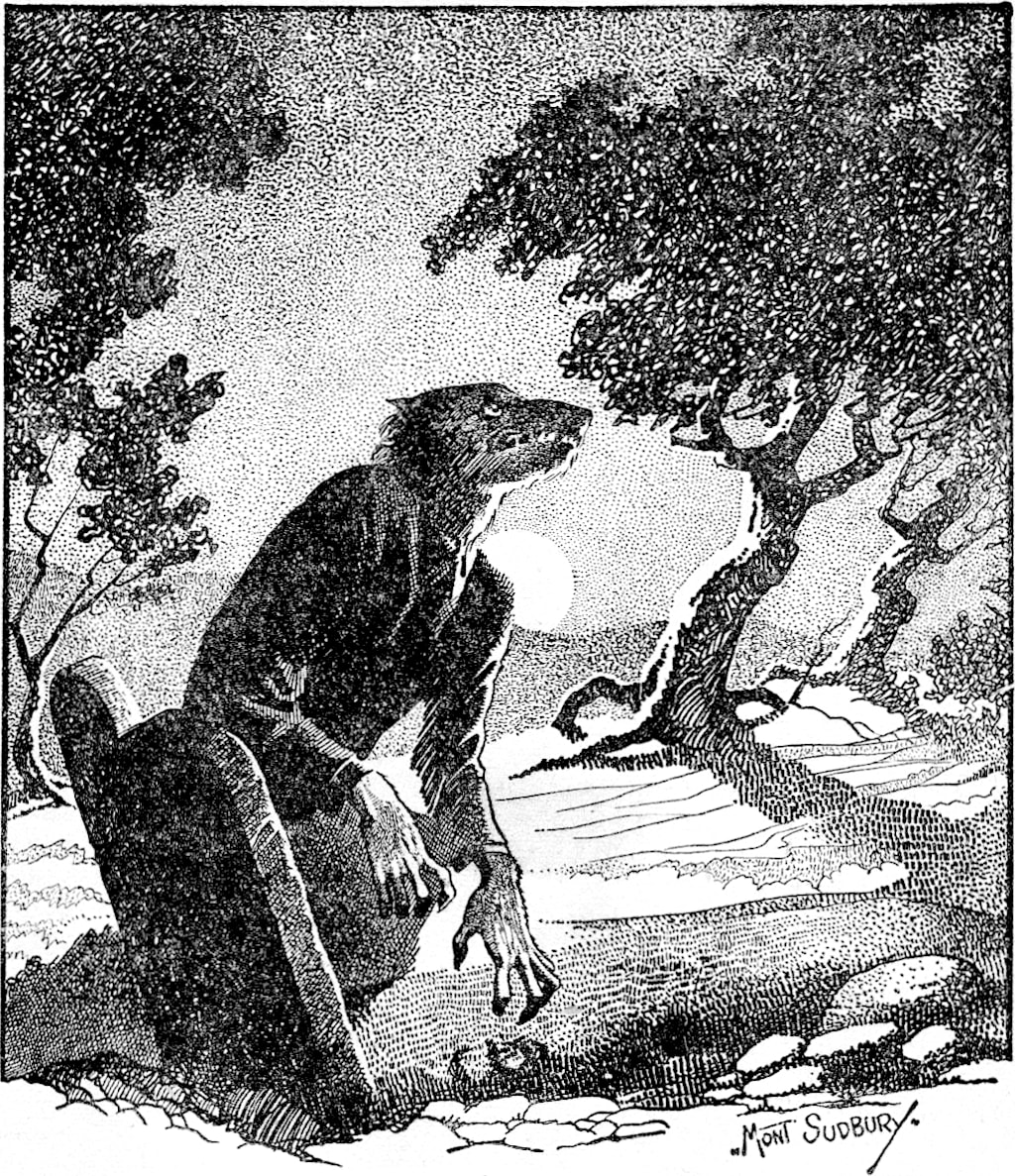
In the early 16th century, a chilling case emerged from eastern France that would become one of the most infamous werewolf trials in European history. The story of Pierre Burgot and Michel Verdun, executed in 1521 in Besançon, sits at the crossroads of folklore, fear, and the brutal justice systems of the time.
A Pact in the Storm
According to Burgot’s own confession, his path toward damnation began nearly two decades before his trial. While tending sheep during a violent storm, he claimed to have encountered three mysterious horsemen. One of them offered protection for his flock in exchange for loyalty. Burgot agreed. He later described sealing this pact by renouncing God and kissing the rider’s hand, which he said felt “black and ice-cold as that of a corpse.”
For years, nothing more came of the encounter. Then he met Michel Verdun.
Verdun, by Burgot’s account, drew him back into the supernatural pact he had once made. He allegedly persuaded Burgot to renew his allegiance to the devil and led him into the woods. There, the two men stripped naked and applied a special ointment, an unguent said to transform them into wolves.
You know, it's the sort of thing that could happen to anyone (just kidding)!
Crimes in Wolf Form?
What followed in their confessions was a series of deeply disturbing acts. They claimed that, as werewolves, they roamed the countryside hunting humans “like any other prey.”
Among the crimes they described:
The killing and partial consumption of a young boy
The near-complete devouring of a four-year-old girl
The brutal murder of another child, whose throat was torn out
The killing of a woman gathering peas and a man who tried to help her
The strangling of a girl, followed by drinking her blood
These accounts, graphic and horrifying, helped the case’s notoriety. Whether true or not, they reflected the fears of a society where the boundaries between human and beast were believed to be dangerously thin.
Trial and Execution
The trial drew significant public attention. It was overseen by the influential jurist Jean Bodin, a figure known for his writings on witchcraft and demonology. Under his authority, the proceedings treated Burgot and Verdun not just as murderers, but as practitioners of witchcraft.
They were ultimately convicted of murder, cannibalism, and sorcery. In 1521, both men were executed by burning at the stake, the standard punishment for witchcraft at the time.
Truth, Torture, and Hysteria
Modern historians approach this case with caution. Confessions in early modern Europe were often extracted under torture or extreme psychological pressure. That raises serious doubts about how much of Burgot and Verdun’s testimony reflects reality.
The broader context matters. Between the 15th and 17th centuries, Europe experienced waves of witch hunts and werewolf trials, fueled by religious anxiety, superstition, and social tension. In such an environment, accusations could spread quickly, and confessions could be shaped by what authorities expected to hear.
Scholars today tend to see cases like this as part of a spectrum. On one end are individuals who may have committed real, violent crimes and whose actions were interpreted through a supernatural lens. Figures like Peter Stumpp and Gilles Garnier fall into this category, often described as possible serial killers whose confessions aligned with their crimes.
On the other end are those more likely to have been swept up in hysteria: vulnerable individuals, outsiders, or people suffering from mental illness. The case of Jean Grenier, a young boy who claimed to be a werewolf, illustrates how easily belief and delusion could intertwine.
Between Myth and Reality
The story of Pierre Burgot and Michel Verdun endures because it resists a simple explanation. Were they killers who used the fear of werewolves to mask their crimes? Or victims of a system that demanded confessions shaped by superstition and fear?
Most likely, the truth lies somewhere in between.
What remains certain is that their case reflects a time when belief in the supernatural was not just folklore but a force that shaped law, justice, and life itself. In that world, the line between human and monster was not just imagined. It was enforced, confessed, and, ultimately, punished in fire.
About the Creator
Wade Wainio
Wade Wainio writes stuff for Pophorror.com, Vents Magazine and his podcast called Critical Wade Theory. He is also an artist, musician and college radio DJ for WMTU 91.9 FM Houghton.
Keep reading
More stories from Wade Wainio and writers in Criminal and other communities.
Blaž Hrvat, A Medieval Croatian Serial Killer and the Harsh World of 15th-Century Justice
Serial killers have always been part of human history, and fear of strangers has always been with us. Yet many cases go largely unmentioned, even when the killers are just as ruthless as the infamous names we all know.
By Wade Wainio6 months ago in Criminal
The Devil in the Living Room: Susan Woods’ Second Chance at Life was Cut Short by a Monster She Called a Friend.
Imagine, for a second, it’s a humid Friday night in July 1987. You’re at a local fair in a small Texas town called Hico. You can smell the funnel cakes, hear the mechanical whir of the Ferris wheel, and the distant, muffled screams of kids on the tilt-a-whirl. For thirty-year-old Susan Woods, this was supposed to be the night she finally felt "normal" again.
By KWAO LEARNER WINFRED2 days ago in Criminal
Something Is Beginning, I Think Challenge Winners
This challenge wasn’t about clean starts. It was about that weird in-between where something is beginning, but no one really knows what yet. A lot of these stories leaned into hesitation, into pauses and false starts and that feeling that something is about to happen but hasn’t quite.
By Vocal Curation Team5 days ago in Resources



Comments
There are no comments for this story
Be the first to respond and start the conversation.