
The Man Interrogated for Six Hours with Bullets in His Brain
On Christmas 2006, Ryan Waller was shot twice in the head. Police arrested and interrogated the disoriented teen for six hours before realizing he was a victim. He survived maimed but died from seizures in 2016.
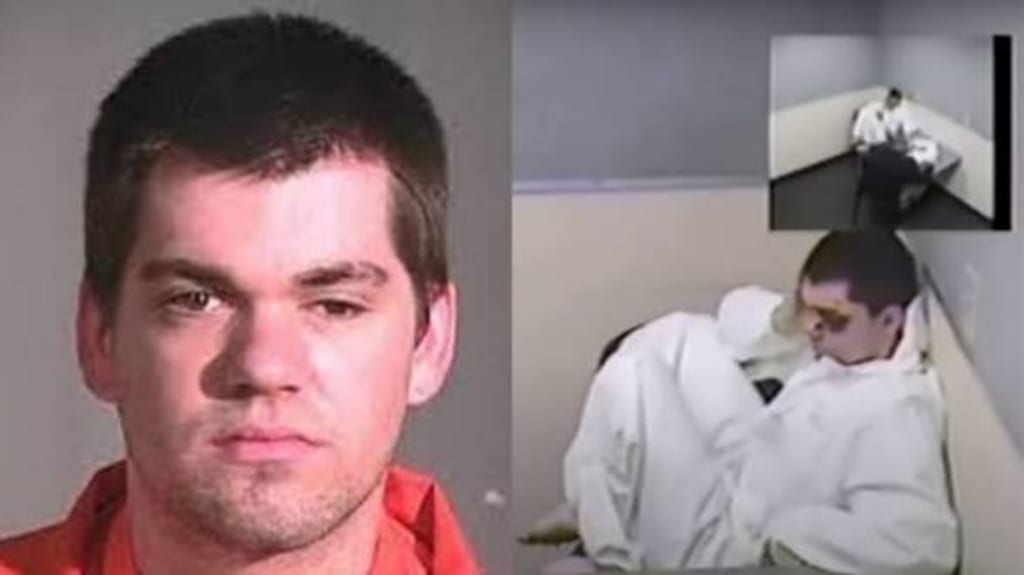
On Christmas Day 2006 18-year-old Ryan Waller and his 19- or 20-year-old girlfriend Heather Quan (sometimes referred to as Heather M. Quan) were at home in their Phoenix apartment which they shared with a roommate named Alicia. The young couple had been dating for about eight months. Ryan had recently graduated high school, while Heather was pursuing college studies. They planned to spend the evening at Ryan’s father Don Waller’s house for Christmas dinner a family gathering they both looked forward to.Instead their lives were shattered by a brutal home invasion. The attackers were Richie Lee Carver (Ryan’s former roommate) and his father Larry Lloyd Carver. The Carvers forced their way into the apartment seeking revenge over a perceived altercation. Richie reportedly reached through the doorway and shot Ryan in the head—twice. One bullet struck Ryan in the face entering near his left eye causing severe trauma brain swelling and lodging fragments behind the eye. Ryan collapsed but miraculously survived the initial assault. The intruders then entered the residence fully. Heather who had been resting on the couch was shot in the head and died instantly. She was apparently killed because she had witnessed the attack. The Carvers also burglarized the apartment stealing items such as guitars and other valuables before fleeing.
Ryan, despite his catastrophic injuries—including bullets or fragments in his brain—somehow remained alive and mobile in the immediate aftermath. He was disoriented, confused, and suffering from a major traumatic brain injury (TBI). In his impaired state, he did not (or could not) call for emergency help. The couple’s roommate or others may have been absent during the incident.
Ryan’s family grew worried when he and Heather failed to arrive for Christmas dinner and phone calls went unanswered. His parents, particularly his father Don, eventually contacted police and went to the apartment to check on them. When officers arrived, they discovered Heather’s body on the couch with a gunshot wound to the head. Ryan was still inside, alive but exhibiting clear signs of distress: a severely swollen and bruised face (one eye swollen shut), scratches, bruises, and obvious disorientation. Rather than immediately treating him as a victim in need of urgent medical care, police suspected him of involvement in Heather’s murder. They arrested the dazed and incoherent 18-year-old and transported him to the police station.
At the station, Ryan endured hours of interrogation by detectives, including lead detective Paul Dalton in some accounts. He was held for approximately six hours total—some reports describe four hours in a police car followed by two hours of questioning. Throughout this period, Ryan appeared confused and repeatedly stated he had no recollection of the incident, which was consistent with his brain trauma and memory loss from the gunshot wounds. Police dismissed his claims, believing he was lying or being evasive about what happened to Heather. They treated him as a suspect rather than a victim. Only after several hours did authorities finally realize (or accept) that Ryan had been shot twice in the head. Paramedics were eventually called, and visible wounds near his nose and eye were recognized as gunshot-related. Ryan was rushed to the hospital for emergency treatment.
The delay in medical care was devastating. Doctors performed life-saving surgery, but the damage was permanent and severe. Ryan spent 35 days in the hospital. He lost his left eye entirely. Surgeons had to remove part of his brain due to swelling and injury. He suffered profound neurological deficits, including significant loss of brain function, cognitive impairments, personality changes, and chronic, severe seizures stemming from the traumatic brain injury. The police mishandling—failing to recognize or promptly address his obvious head trauma despite his disoriented behavior—likely worsened his long-term prognosis. Some accounts note timeline discrepancies in the case (official records sometimes list the shooting around December 23, while family, roommates, and Heather’s obituary/date of death cite December 25), raising questions about the exact sequence and whether the delay compounded the harm.
Ryan survived the initial ordeal but was maimed for life. He lived with ongoing medical challenges, epilepsy, and the physical and emotional scars of that Christmas Day. His family supported him through years of recovery and legal proceedings. The perpetrators were eventually brought to justice: Richie Lee Carver was convicted and sentenced to natural life in prison in 2008. His father, Larry Lloyd Carver, was found guilty in 2012 on multiple counts, including murder and attempted murder, and later sentenced to life in prison in 2013.
Tragically, Ryan’s story did not end with survival and justice for the killers. The long-term effects of his brain injury continued to plague him. He experienced recurrent seizures for years. On January 20, 2016, at age 27, Ryan suffered a final, fatal seizure. While in a grocery store, he collapsed, hit his head, and bled out as a result of the seizure-related trauma. His death was a direct consequence of the injuries inflicted nearly a decade earlier.
The case of Ryan Waller has become infamous online, primarily due to the disturbing interrogation footage and audio that surfaced. It highlights shocking failures in police response: officers allegedly missed or ignored clear signs of a gunshot wound and traumatic brain injury, prioritizing suspicion over immediate medical aid. Critics argue the hours of interrogation without treatment constituted a profound injustice to a victim who had already endured a horrific attack. Ryan’s story underscores the critical importance of recognizing medical emergencies at crime scenes, especially involving head trauma, and has fueled discussions about law enforcement training, victim rights, and accountability.In total, this event destroyed two young lives—Heather’s instantly, Ryan’s gradually over the following years—and left families devastated. It remains a cautionary tale of violence, survival against odds, institutional shortcomings, and the enduring ripple effects of trauma. Ryan’s resilience in living nearly ten more years despite his disabilities is remarkable, yet the preventable aspects of his suffering and ultimate death continue to provoke outrage and calls for reform in how first responders handle potential victims with hidden but life-threatening injuries.
About the Creator
Keep reading
More stories from Kure Garba and writers in Criminal and other communities.
Spoiled Son’s Deadly Betrayal: The Whitaker Family Massacre
In the affluent suburbs of Sugar Land Texas, the Whitaker family appeared to embody the American dream. Kent and Tricia Whitaker worked hard to provide their two sons with every advantage. Their elder son, Thomas Bartlett Bart Whitaker born in 1979 received luxury cars during high school and a beautiful lakeside townhouse in Willis Texas as a young adult. The family spared no expense to support his education and ambitions.On December 10 2003 the Whitakers celebrated what they believed was a major milestone. Bart had supposedly completed his final exams at Sam Houston State University. To mark the occasion, his proud parents gifted him an expensive Rolex watch worth around $4 000. The family—Kent Tricia, 23-year-old Bart and 19-year-old Kevin—enjoyed a festive dinner at a popular Cajun restaurant. Photos from that evening captured smiles and warmth. Unbeknownst to them, it would be their last night together as a complete family.
By Kure Garbaa day ago in Criminal
The Shocking Case of Brian Stewart:
The Shocking Case of Brian Stewart: When a Father Injected His Own Son with HIV In 1992, the quiet city of St. Charles County, Missouri, became the backdrop for one of the most chilling and unsettling crimes in modern medical history. Brian Stewart, a trained phlebotomist, used his knowledge and access to medical resources to deliberately harm his infant son. The case is not only a tragic story of parental betrayal but also a cautionary tale about the vulnerabilities inherent in medical access, the motivations that drive horrifying decisions, and the resilience of the human spirit.
By Dakota Denise 4 days ago in Criminal
Oil at War: The Strait of Hormuz Crisis and the Rising Iran–Israel–US Conflict
Oil at War: The Strait of Hormuz Crisis and the Rising Iran–Israel–US Conflict The Middle East has once again become the center of global attention as tensions between Iran, Israel, and the United States intensify. At the heart of this crisis lies one of the world’s most strategic waterways: the Strait of Hormuz. This narrow maritime corridor carries a huge portion of the world’s oil supply, and any disruption here has the power to shake the global economy.
By Wings of Time 3 days ago in Criminal
The Rivers of Babylon
The iconic disco group Boney M from the 1970s left an indelible mark on the music world with their infectious beats and unforgettable melodies. Formed in West Germany, the group's vibrant sound, blending Caribbean rhythms with European pop sensibilities, quickly catapulted them to international stardom.
By Rasma Raisters5 days ago in Beat


Comments
There are no comments for this story
Be the first to respond and start the conversation.