
Understanding Organoclay and Its Role in Modern Materials
Exploring how modified clays enhance performance, stability, and flow in modern industrial applications.

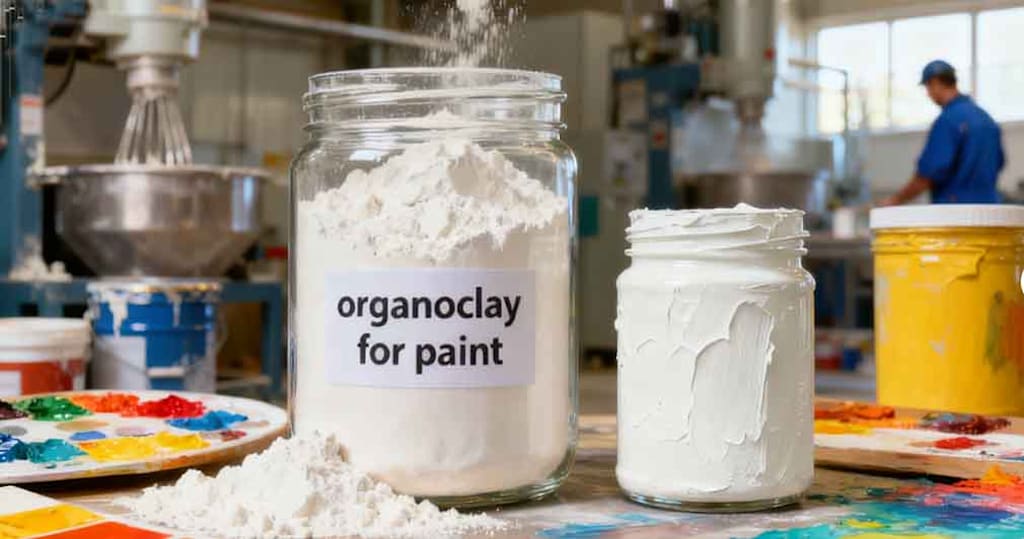
In the world of industrial chemistry and material science, few substances demonstrate the versatility and functional value of organoclay. Known for its ability to modify flow behavior and enhance product stability, organoclay has become an essential component in industries ranging from paints and coatings to oil drilling and cosmetics.
What Is Organoclay?
Organoclay refers to a modified clay material, typically derived from bentonite, that has been treated with organic compounds to make it compatible with non-aqueous systems. This transformation allows the clay to interact effectively with organic liquids such as oils, solvents, and resins.
To better understand its structure and composition, you can explore this detailed resource on Organoclay Bentonite.
Unlike natural clays, organoclay exhibits enhanced dispersion and thickening capabilities in hydrophobic environments. This makes it especially valuable in formulations where water is not the primary medium.
Key Properties of Organoclay
Organoclay is widely recognized for a range of functional properties that make it highly valuable in industrial and scientific applications. These properties are not only important individually, but they also work together to improve the overall performance, stability, and usability of complex formulations.
Rheological Control
One of the most significant properties of organoclay is its ability to control rheology, or the flow behavior of materials. In many formulations—such as paints, inks, and drilling fluids—controlling viscosity is essential. Organoclay allows formulators to fine-tune how thick or fluid a product behaves under different conditions. This ensures ease of application while maintaining structural integrity during storage.
Thixotropic Behavior
Organoclay exhibits thixotropy, meaning it becomes less viscous when subjected to mechanical stress (such as stirring, shaking, or brushing) and returns to a thicker state when at rest. This property is particularly useful in coatings and suspensions, where materials need to flow smoothly during application but resist sagging or dripping afterward.
Suspension Stability
Another key advantage is its ability to prevent sedimentation. In many industrial mixtures, solid particles tend to settle over time due to gravity. Organoclay forms a network-like structure within the liquid medium, effectively holding particles in place. This leads to longer shelf life, improved consistency, and reduced need for re-mixing.
Enhanced Compatibility with Organic Systems
Unlike natural clays that are typically hydrophilic (water-loving), organoclay is modified to be organophilic (compatible with organic substances). This makes it ideal for use in oil-based systems, solvents, and resins where traditional clays would not disperse effectively.
Shear Sensitivity and Recovery
Organoclay responds dynamically to shear forces. Under high shear conditions, such as mixing or pumping, it allows the formulation to flow easily. Once the shear is removed, it quickly rebuilds its internal structure. This reversible behavior is critical in applications where both flow and stability are required.
Thermal and Chemical Stability
Organoclay maintains its performance across a wide range of temperatures and chemical environments. This makes it suitable for demanding industrial processes, including those involving high heat or reactive substances. Its stability ensures consistent performance without degradation over time.
Efficiency at Low Concentrations
Another practical advantage is that organoclay is effective even at relatively low concentrations. Small additions can significantly alter the viscosity and stability of a system, making it a cost-efficient solution for manufacturers.
Versatility Across Formulations
Finally, organoclay is highly adaptable. It can be used in a wide variety of formulations, from low-viscosity liquids to thick pastes. This versatility allows it to serve multiple roles—such as thickener, stabilizer, and anti-settling agent—within a single system.
Together, these properties make organoclay an indispensable additive in modern material science, enabling the development of high-performance products across numerous industries.
Applications Across Industries
Organoclay is used in a wide range of applications due to its adaptability:
1. Paints and Coatings
In coatings, organoclay functions as a thickening and anti-settling agent. It ensures uniform distribution of pigments and improves application performance. For a deeper look into such materials, explore more about rheological additives.
2. Oil and Gas Drilling
In drilling fluids, organoclay enhances viscosity and helps maintain the suspension of solids. This is crucial for efficient drilling operations and well stability.
3. Adhesives and Sealants
Organoclay improves the consistency and application properties of adhesives, ensuring better bonding and durability.
4. Cosmetics and Personal Care
In products like creams and lotions, organoclay acts as a stabilizer and texture enhancer, contributing to a smooth and appealing formulation.
Organoclay in Rheological Systems
The interaction between organoclay and organic liquids plays a central role in rheology—the study of flow and deformation of materials. Organoclay is often categorized under organoclay systems that are specifically engineered to control viscosity and structural integrity.
When dispersed properly, organoclay forms a network structure within the medium. This network traps particles and prevents them from settling, resulting in a stable and uniform product.
Environmental and Practical Considerations
While organoclay offers many advantages, its use also requires careful formulation. Proper dispersion techniques and activation methods are essential to achieve optimal performance. Additionally, environmental considerations are becoming increasingly important, prompting ongoing research into more sustainable and eco-friendly clay modifications.
Conclusion
Organoclay represents a significant advancement in material science, bridging the gap between natural minerals and engineered performance. Its ability to modify rheological properties, enhance stability, and adapt to various industrial needs makes it a cornerstone ingredient in modern formulations.
As industries continue to evolve, the demand for efficient and adaptable materials like organoclay is expected to grow, reinforcing its importance in both current and future applications.
About the Creator
Keep reading
More stories from charliesamuel and writers in 01 and other communities.
The Rise of Super Clone Watches: Craftsmanship, Controversy, and Consumer Curiosity
In recent years, the global watch market has witnessed a growing fascination with what are often referred to as “super clone” watches. Discussions across online communities, including platforms like VSF watches hub, reflect how these timepieces sit at the intersection of craftsmanship, consumer psychology, affordability, and ethical debate. These timepieces, designed to closely replicate the appearance and functionality of luxury watches, have sparked conversations that go far beyond simple imitation. They sit at the intersection of craftsmanship, consumer psychology, affordability, and ethical debate.
By charliesamuelabout 9 hours ago in 01
Grocery App Development Cost: The Ultimate 2026 Pricing Guide
Building an app is pricey. You probably already knew that. But the actual grocery app development cost in 2026 depends on how many bells and whistles you want to cram into the code. It is not just about a shopping cart anymore.
By Sherry Walker7 days ago in 01
How to Get Around in the Changing Crypto World: Trends, Insights, and the Future
Cryptocurrency has transformed from a niche technological experiment into a global financial phenomenon. Over the past decade, digital assets have redefined how people think about money, investment, and decentralized systems. As blockchain technology continues to evolve, the crypto landscape presents both opportunities and challenges for investors, developers, and everyday users alike.
By Nimra kanwal2 days ago in 01



Comments
There are no comments for this story
Be the first to respond and start the conversation.